Why Video Marketing Is Essential to Your Social Strategy
Discover techniques for your social media video strategy, including different video types and how to use them to grow your audience.

Contents
What Is a Video Marketing Strategy?Why Video Marketing Is Important to a Social Media StrategyHow Video Marketing Improves Social Media PerformanceChallenges With Video MarketingHow To Build a High Quality Video Marketing Strategy for SocialSocial Media Video Marketing Best Practices and TipsBrands Doing Video Marketing The Right WayVideo Marketing Strategy FAQs
There once was a time when imagery ruled social. Every post was a singular, static moment in time, and that was enough to keep users entertained and, even more importantly, scrolling.
Fast forward to now, a single image or two isn’t going to cut it. Social media users are inundated with content all day, every day, meaning it’s getting harder and harder to keep their attention. So, what are brands to do?
Break up the monotony and break through the noise with video marketing.
Key Takeaways:
- Video is essential for social media success. As feeds become more crowded, video helps brands stand out, capture attention, and keep audiences engaged.
- A strong video marketing strategy requires planning. Setting clear goals, identifying your audience and platforms, developing a creative brief, and measuring performance are all key to producing effective content.
- Video improves social performance in multiple ways. It increases reach through algorithm favorability, improves message retention, and boosts conversion potential.
- Successful video content balances creativity with strategy. Storytelling, influencer partnerships, SEO optimization, and content repurposing all help maximize video impact.
- Top brands use video to entertain and build community. Many companies succeed by creating engaging, platform-native videos that audiences genuinely want to watch and share.
What Is a Video Marketing Strategy?
A video marketing strategy is a structured plan that outlines how a brand will use video content to achieve specific marketing goals, such as increasing brand awareness, driving engagement, or generating conversions. A full funnel video marketing strategy defines the types of videos a brand will create, the platforms they will be distributed on, the target audience, and how success will be measured.
Popular Types of Video
The wonderful thing about video marketing is that the sky is the literal limit. There are countless ways in which video can be used, and new and exciting types are popping up every single day.
Here are some of the most popular methods of video marketing and what they entail:
- Educational: Educational videos are meant to teach viewers things. For brands, this can be anything from product education to brand education, anything that helps users learn something new.
- Scripted: Scripted videos are more formalized, promotional videos that brands create to ensure they hit all of the marks of their messaging. They can be skits or simple sit-down videos explaining whatever it is they’re trying to promote.
- Infographic: Infographic videos use animated visuals, icons, charts, and text to present data in a clear and engaging way. They help brands simplify statistics or comparisons, making the information easier to understand.
- Testimonials: Testimonial videos feature customers or users sharing their experience with a product or service. This type of content is an extremely valuable form of user-generated content (UGC video) that brands can repurpose across multiple marketing channels.
- Product-focused: Product-focused videos work to highlight the capabilities or availability of a certain product. These types of videos should answer any questions users may have, including launch date, variations, etc.
- Behind the scenes: Behind-the-scenes videos are especially popular because they are often lo-fi video vs. hi-fi and give users a peek behind the curtain to see how your brand works. This video type helps humanize your brand and build trust with your audience.
- Thought leadership: Thought leadership videos often feature industry experts or brand leaders sharing insights, expertise, or perspectives on relevant topics within their field, helping position brands as trusted authorities.
- Commercials: Commercials are promotional videos designed to highlight a product, service, or brand message in a compelling way. Often short and story-driven, they aim to capture attention quickly and encourage viewers to take action.

Why Video Marketing Is Important to a Social Media Strategy
Video marketing plays a key role in social media marketing because video content is one of the most engaging and widely prioritized formats across all social platforms.
Video often receives higher reach, more shares, and increased interaction in comparison to static posts. Video marketing helps brands capture attention quickly, communicate messages more effectively, and build stronger connections with audiences through engaging storytelling, visuals, and sound.
How Video Marketing Improves Social Media Performance
Video marketing enhances social media performance by helping brands reach wider audiences, making messages easier to understand, and encouraging audiences to take action. As social platforms increasingly prioritize video content, brands that incorporate video into their strategy are better positioned to capture attention and drive meaningful engagement.
From reaching new audiences through algorithm-friendly formats to improving message retention and increasing the likelihood of conversions, video offers several advantages that can elevate overall social media results.
Broader reach and algorithm favorability
It’s no secret that most platforms favor video content. In fact, most platforms actually prioritize video content in their algorithms, especially short-form formats like Reels, TikToks, and YouTube Shorts. As a result, video posts are most likely to be surfaced in feeds and discovery pages, helping brands reach larger audiences, increase engagement, and gain visibility beyond their existing subset of followers.
Better message retention
Video helps increase the overall effectiveness of social content by combining visuals, motion, and audio to make information easier for audiences to process and remember. Because of this, viewers can better retain key messages, understand complex ideas, and recall the brand later after seeing the video content.
Higher conversion potential
By demonstrating products, services, or value in action, video marketing helps audiences better understand what a brand is actually offering. This clearer understanding, combined with engaging storytelling and visuals, builds trust and increases the likelihood that viewers will take action, whether it be clicking a button, signing up for a newsletter, or making a purchase.
More shareable content
Videos are highly engaging and easy for users to share, especially when they are entertaining, informative, or emotionally compelling. As viewers share videos within their own networks, brands can understand what types of videos are landing with their target audience, iterate on future versions, and expand their reach organically.
Challenges With Video Marketing
While video marketing can significantly improve social media performance, producing effective video content comes with its own set of challenges. It requires significant planning, effort, and coordination to get it right.
By understanding these common obstacles and building strategies to address them, brands can create a more efficient video workflow and maximize the impact of their content.
Formatting issues
As easy as it would be to post the same video asset to every channel, that just isn’t going to cut it. Every social media channel has its own unique video requirements, and if you want your content to perform, it’s important you follow them. Check out our blog on social media image sizes to learn what your platform of choice requires.
Prioritizing production over promotion
You can spend days, weeks, or even months creating the perfect video content, but it won’t mean anything if you don’t have a strong distribution plan in place. Be sure to work closely with your team to nail down how you’re going to promote your video content before, during, and after launch, and how it needs to be adjusted across different platforms.
Setting it and forgetting it
Many brands think that once you hit ‘Post,’ the hard work is done. To get the most out of your video content, it’s important to keep tabs on performance to see what users are liking, what they aren’t, and learn how that needs to impact your video content for the next time.
How To Build a High Quality Video Marketing Strategy for Social
Building a high-quality video marketing strategy requires more than simply producing content. It involves clear planning, defined goals, and a structured approach from concept to measurement. By setting objectives, identifying your audience and platforms, planning creative direction, and analyzing performance, brands can create videos that deliver meaningful results on social media.
The steps below outline how to build a video marketing strategy that ensures every video you create has a clear purpose, strong creative direction, and measurable impact.
Set goals
One thing you really want to avoid with your video marketing strategy is creating videos just for the sake of creating videos. Setting goals allows you to define your purpose and define your “why”. This is the time when you decide exactly what you want your video to do. Do you want it to drive brand awareness? Promote a new product? Provide education? These are all things to consider, and that will help you set tangible, reachable goals.
Determine your audience and platforms
Now that you know the purpose of your video, it’s time to narrow in on the logistics of who it’s for and where they’re going to see it. Your target audience is likely going to be the same as it is for your other campaigns, but there are always nuances that come up with a different content type. When it comes to platforms, remember you don’t need to leverage every single one in order to make an impact.
Develop a creative brief
Your creative brief is where you will lay out all the details of your video content and campaign. This is where you will discuss the overall concept of your video, as well as the finer details that will need to be known by production. This is also the time when you will write any scripts or copy that is needed for the project.
Produce your video
Once your creative brief has been approved, it’s time to actually create the content. Many social teams will do this in-house, whereas others will outsource bigger projects that they may not have the capacity to complete. During this step, is when you’ll also create your video thumbnails and other creative assets.
Work on post-production
Post-production is just as important as the production of the video, as this is where the magic happens. Not only does the video you’ve just filmed come to life through editing and effects during this stage, but you also get to work on how it’s going to be distributed and when in order to keep the momentum going.
Launch your content
By the time launch day comes around, your content should be fully ready to go. Using a scheduler can help ease any live-posting anxieties, ensuring that everything goes off without a hitch. Stay close to your comments and DM’s so that you can interact with viewers and answer any questions in real time.
Measure your video performance
Measuring your performance is the most important aspect of video marketing. With the amount of effort that goes into creating video content, it’s crucial that you know what’s working and what isn’t. A recommended reporting cadence can vary, but it’s always good to report on initial (day 1) performance, and then move to a weekly or monthly scale, depending on the results you’re seeing and what you want to know. Performance metrics like Dash Social’s Entertainment Score, will give you insight into exactly how your video content is resonating with audiences to help inform future production.
Social Media Video Marketing Best Practices and Tips
Creating effective video content for social media requires a thoughtful approach that balances creativity, strategy, and optimization. By focusing on strong storytelling, strategic partnerships, discoverability, and smart campaign budgeting, brands can produce videos that reach the right audiences and maximize their impact.
Have a story to tell
Every good story has a beginning, middle, and an end, and your videos should be no different. Now, this doesn’t mean you need to create an entire 15-minute-long script with a plethora of characters and an epic climax; it just means that there should be some sort of narrative running throughout your video that makes it clear to a viewer what they’re watching and why it matters.
Partner with influencers
Influencers are a great way to cast a wider net with your video content. This can work in a couple of different ways. You can partner with a creator directly on the video content and have them featured in the video, you can get the influencer to create the video content (like UGC), or you can work with them to promote the video that you’ve made on your own. Each of these options comes with its pros and cons, but all are great ways to get influencers involved in your video strategy.
Optimize captions and descriptions
By optimizing your captions and descriptions with specific keywords and topics that are relevant to your video, you’re not only making it easier for users to find your content, but for algorithms too. Sticking to social media SEO best practices such as these makes your content work for you rather than against you, so you’re never left wondering why no one saw your post.
Set a budget (and stick to it)
It’s very easy to go over budget when creating video content because it often requires more time, more takes, more editing, and more production than you originally thought. Plan for these types of financial setbacks from the jump so that you can set a singular budget, stick to it for the remainder of the project, and be prepared when things don’t necessarily go to plan.

Repurpose content where possible
Video content takes effort and a lot of it. Because of this, brands need to be thinking of creative ways to repurpose content across channels without just hitting copy and paste. Every channel has its own parameters, so it’s important to adapt your video content to fit within those. If you’re creating a longer form piece of content for YouTube, find moments in which you can clip the content for TikTok or Instagram. If it’s a video for Reels, ensure the aspect ratio and dimensions work for Facebook or Pinterest.
Brands Doing Video Marketing The Right Way
Some brands have mastered video marketing by creating content that feels native to social platforms while still reinforcing their brand identity. The companies we highlight below succeed by prioritizing entertainment, storytelling, and community engagement, with their strategies showing that the most effective video marketing doesn’t just promote a product, it creates content audiences genuinely want to watch.
Duolingo
Duolingo’s video marketing strategy focuses on social-first, short-form video content designed to entertain rather than directly promote the app. The brand uses its mascot, Duo the Owl, as a central character to create humorous, meme-driven content that aligns with internet culture and trending topics. By prioritizing platforms like TikTok, Instagram, and YouTube, Duolingo produces fast, responsive videos that feel native to each channel and can easily be repurposed across platforms.
Personality, pop culture references, and community interaction help the brand participate in conversations rather than interrupt them.

GoPro
Instead of relying on traditional advertising, GoPro’s video strategy centers on user-generated adventure content that showcases the camera’s capabilities while building a global creator community. The brand encourages customers, athletes, and creators to capture and share their experiences using the camera, turning users into storytellers and ambassadors. GoPro also incentivizes users to submit their best footage for prizes and the opportunity to be featured on official channels through their GoPro Awards.
By combining stunning action footage, influencer collaborations, and community-driven storytelling, GoPro’s video strategy positions it as a lifestyle centered on adventure and creativity.

Old Spice
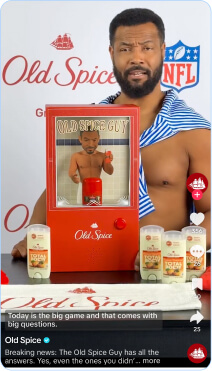
Old Spice became widely known for its viral video campaign “The Man Your Man Could Smell Like,” which uses absurd humor, fast-paced storytelling, and charismatic characters to transform the brand from a dated “dad brand” into something entertaining and culturally relevant. The campaign spread rapidly across YouTube and social media, generating millions of views, significantly boosting sales and engagement, and making the brand highly shareable and memorable.
With surreal comedy, strong recurring characters, influencer brand partnerships, and real-time interaction, Old Spice turns video content into entertainment and conversation.
Video Marketing Strategy FAQs
What role should video play in the marketing funnel?
When done right, video should support every stage of the marketing funnel from building awareness to driving product-focused conversions or retaining customers. Brands' videos should demonstrate value, answer questions, and reinforce brand trust.
What types of video content drive ROI?
Product demos, customer testimonials, educational/how-to videos, and short-form social content often drive the strongest ROI as these formats clearly communicate value while also encouraging engagement and conversions. Videos that directly address customer needs and showcase real results tend to perform best because they build trust and influence decisions.
How often should brands post video content?
When it comes to video content, consistency plays a bigger role than anything else. 3-4 times a week is ideal, but focus more on creating a schedule that maintains quality and keeps platform performance and resource availability in mind.
What is the right balance between short-form and long-form video content?
While the right balance between short-form and long-form content is dependent on your goals, the strongest strategy prioritizes both in different ways. Short-form videos are most often used for reach and discovery, or hopping on trends, while long-form videos are all about education and authority building.
What video length performs best?
The best social media video length depends entirely on the platform you are posting on. Videos 60 seconds or under thrive on platforms like Instagram and TikTok, while YouTube videos, anywhere between 7-15 minutes, see engagement success.
What video trends should brands participate in vs ignore?
Brands should participate in trends that align with their brand voice, audience interests, and overall marketing goals, and especially those that can be adapted authentically rather than forced. Trends that feel irrelevant, off-brand, or purely opportunistic are often the best to ignore as they can dilute brand identity and credibility.