How To Weave Storytelling Into Marketing
Marketing storytime? The right narratives can make or break your biggest marketing campaigns.

Marketing without storytelling is like posting on Instagram without a caption… technically possible, but low-key awkward.
Storytelling is the ingredient that turns “just another ad” into the thing your audience sends to their group chat with, “omg this is so us.” It’s how brands move from looking at products to looking at purpose. And yes, consumers can feel the difference instantly.
The magic happens when marketing stops shouting the loudest and starts making people feel something. Whether that’s nostalgia, hype, laughter, or the sudden urge to buy a $60 candle because the brand said it “smells like main character energy.”
It isn’t about being a novelist; it's about weaving storytelling, finding the human heartbeat in what you’re offering, and showing your audience why it matters. Your brand becomes unforgettable when you ground your content in a relatable moment, a clear message, or a vibe that taps into real emotions.
Think of it like dressing up your message in a narrative that fits so well it stops the scroll. And lucky for you, it’s way easier than it sounds. You just need the right structure, tone, and story to tell.
Let’s break down exactly how to do that.
Key Takeaways:
- Storytelling in marketing is the difference between “an ad” and “a moment.” Doing this well turns product marketing into purpose-driven, emotional content that stops the scroll.
- Social media is the main stage for brand narratives, prioritizing connection over perfection.
- Good storytelling drives performance by cutting through the noise and building loyalty.
- Lead storytelling with structure. Frameworks like AIDA, Before-After-Bridge, and the 4P’s will help your stories hit harder without feeling stuffy or forced.
What Is Storytelling in Marketing?
Storytelling in marketing is not about writing a fairy tale where your product is the hero, and everyone lives happily ever after. In the digital marketing world, storytelling is the art of making people care about your brand, your mission, your vibe and yes, the thing you’re selling. It’s taking your message and wrapping it in emotion, personality, and energy so your audience doesn’t just see it, they feel it.
And in 2026, social media is basically the stage where all of this storytelling magic happens. It’s where brands go from “just posting content” to “building a universe.” Think about it:
- A TikTok trend becomes your origin story.
- An Instagram Story becomes a behind-the-scenes confession.
- A YouTube video becomes a full-blown mini-documentary.
- A Threads post becomes that unfiltered thought that makes people say, “lol same.”
Social media is where storytelling thrives because people crave connection over perfection. They want brands that speak human, not corporate. They want to laugh with you, relate to you, and root for you, not just scroll past your ad like it’s a pop-up they didn’t ask for.
When you use storytelling in digital marketing, you turn “content” into “community.” You transform your feed from a highlight reel into a living, breathing narrative your audience can join.
And that’s the real power: storytelling doesn’t just sell a product, it sells a feeling. The “I get you” feeling. The “omg this is so me” feeling. The “add to cart because this brand understands my soul” feeling. That’s storytelling and why it’s the secret weapon behind every iconic brand moment online.

Why Is Storytelling Important?
For social media managers, storytelling isn’t just a “nice to have.” It’s the secret sauce that takes your brand from ‘meh’ to memorable, from scroll past to save for inspo, from seen to shared in the group chat.
Storytelling cuts through the noise: People see hundreds (sometimes thousands) of posts a day. When you wrap your message in a narrative, it becomes instantly more engaging, easier to remember, and more likely to survive the algorithm’s mood swings.
It fosters emotional connection, which in turn builds community. Consumers don’t just want products; they want to see themselves in your content. Storytelling helps your brand say, “Hey bestie, we get you.” And that emotional spark? It’s what turns casual lurkers into loyal fans.
For social media managers, storytelling is the key to standing out, scaling up, and staying relevant. It’s not just about posting content. It’s about crafting moments, vibes and narratives that people actually want to follow.
Types of Storytelling
Interactive Stories
Brands aren’t just talking at people anymore, they’re talking with them. And the easiest place to make that magic happen? Ephemeral content like Instagram Stories, TikTok Stories, and YouTube Shorts Stories. These tiny, 24-hour “blink and you’ll miss it” micro-moments are where brands can pull their audience into the story in real time.
Think of it as storytelling with audience participation and spoiler alert: consumers LOVE being part of the narrative.
- Polls? They become quick decision-makers (“Should we drop the new colorway in sage or cherry?”)
- Q&As? Instant feedback loops (“Ask us anything about our skincare routine.”)
- Sliders, quizzes, countdowns? All tiny invitations for your audience to step inside your brand world and stay a little longer.
This format works because it’s low-pressure, casual, and feels like a conversation rather than a corporate broadcast. It’s storytelling that’s happening with your audience, not presented to them, and that two-way energy creates stronger brand loyalty than any perfectly polished campaign.
These snackable stories make your brand feel alive, accessible, and totally human. And that’s exactly the vibe that keeps Gen Z and Millennials tapping through instead of tapping out.
Customer Stories
If there’s one storytelling format that always hits, it’s customer stories aka the “receipts” your brand proudly shows off.
Think of customer stories as the ultimate IRL proof that your product does what it says it does. Because let’s be honest, you hyping up your own brand is cute, but a customer hyping you? That’s social proof gold.
Customer stories take your brand out of marketing mode and drop it straight into the chat with relatable, human-first storytelling. Instead of:
“Our product improves productivity by 40%!”
You get: “I stopped doom-scrolling and finally organized my entire life after using this.”
Instantly more clickable. Instantly more believable. Instantly more shareable.
These stories show the “before and after,” the transformation, the actual vibe shift your product creates. And THAT is what new customers trust and connect with; everyday people solving real problems, celebrating real wins, or simply living their best life with your product in the background like the unsung hero it is.
So if you want storytelling that builds credibility, boosts conversions, and gives your audience that warm fuzzy “maybe this brand gets me” feeling, customer stories are your best friend.
Historical Stories
If your brand has been around long enough to have a few glow-up phases, congratulations, you’ve unlocked one of the most underrated storytelling superpowers: historical stories.
Think of these as the marketing equivalent of that iconic “How it started → How it’s going” meme. People don’t just love a good backstory, they eat it up. Because historical storytelling does one magical thing no trend, tactic, or TikTok sound can replicate: it makes your brand feel human.
Picture this:
You share your brand’s first-ever office (a garage). Your first sketch or mockup (kind of adorable, actually). A throwback post about your first launch (chaotic but iconic). And next to it? Where you are now: polished, growing, thriving.
That’s storytelling gold. That’s emotional engagement. That’s how you turn your brand into a character your audience wants to follow.
Historical stories aren’t about sounding old, they’re about proving your brand has depth, personality, and a journey worth remembering. And in a world where authenticity outperforms everything? This is the type of storytelling that absolutely eats.
Success Stories
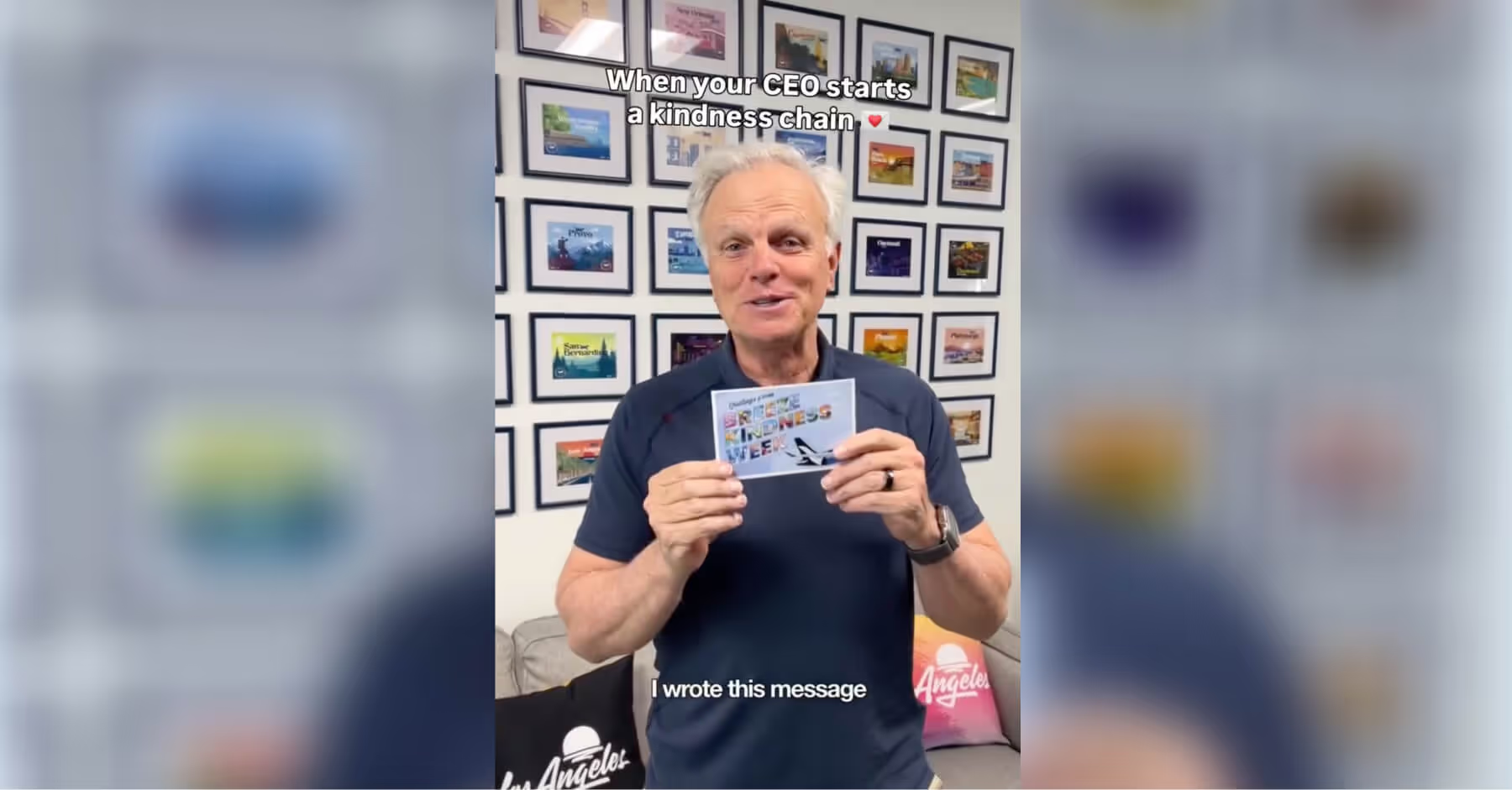
Meet the vibe-shift kings of storytelling in marketing: Breeze Airways. These guys transformed airline marketing from bland to “makes you wanna pack your bag rn” with a simple yet genius formula: real people, real moments, and major feels. Their “Seriously Nice Moments” social strategy shows that storytelling doesn’t need to be complicated to hit hard.
How Breeze Does It (and Why It Works)
- Emotion over polish. Their feed is full of guest-centric stories from brides boarding in their dresses to surprise upgrades and pilot shout-outs. It’s human, relatable, and way more likely to stop a scroll than a slick ad.
- Community and trust. With every positive guest interaction turned into content, Breeze builds trust and loyalty. People don’t just see flights; they see good vibes and genuine care.
- Lean but mighty team. Even with a small social team, they scaled with smart tools (shout-out to Dash Social) to plan, post, and measure. Proving big budgets aren’t always needed for big impact.
Breeze’s wins show that authenticity can out-perform high-budget campaigns — and that’s the kind of storytelling every brand should aim for.
Storytelling Formulas
Alright, let’s spill the tea: there’s a reason some stories just hit differently. It’s not magic, it’s structure. Enter storytelling formulas: patterns that help you craft content that actually makes sense while still hitting those emotional feels. Think of them as cheat codes for marketing, not a replacement for authenticity.
The key? Even the snazziest formula won’t save a story that feels fake. Your audience can sniff out a “forced vibe” from a mile away. So these frameworks are less about turning your brand into a robot narrator and more about giving your content a backbone, a clear beginning, middle, and end that keeps viewers hooked.
Whether you’re creating an Instagram Reel, a TikTok, or a full-blown campaign, storytelling formulas help your message flow, make the punchline land, and get your audience nodding along instead of scrolling past. From the classic hero’s journey to problem-solution arcs or even quick, snackable “before and after” vibes, there’s a pattern for every brand personality.
Think of it like your narrative GPS: it keeps your story on track, lets your creativity shine, and ensures your audience actually remembers you, rather than just double-tapping and ghosting.
AIDA
In marketing storytelling, AIDA is basically your formula for crafting content that actually works. It stands for Attention, Interest, Desire, Action and when done right, it’s like your audience is glued to your story from start to finish.
Attention: First things first, you need to stop the scroll. This is your hook. This is where the bright colors, the bold headline, the quirky meme come in, whatever makes someone go, “Wait, what’s this?”
Interest: Now that you’ve got their eyeballs, keep them curious. Tell them why they should care. Maybe it’s a story, a shocking stat, or a playful narrative that makes your brand feel relatable.
Desire: Here’s where the magic happens. Make them want it. Whether it’s your product, your service, or the vibe your brand is giving off, show them how it solves a problem, levels up their life, or just hits different.
Action: Last step, don’t leave them hanging. Tell them exactly what to do next: click, buy, follow, sign up, or even just share with a friend. A clear, irresistible CTA makes all your storytelling hustle actually pay off.
In short, AIDA isn’t just a formula, it’s the blueprint for taking someone from casual scroller to raving fan. Master this, and your marketing stories start doing the heavy lifting, one scroll-stopping post at a time.
Before-After-Bridge
Sometimes the best stories are the ones that hit home. With the Before-After-Bridge (BAB) formula, it’s basically your “problem -> dream scenario -> how to get there” guide for storytelling.
You start with the Before: the struggle, the chaos, the “ugh why is this so hard?” moment. Then, you hit the After: the dream state, the glow-up, the “wow, life could actually be this easy” moment. Finally, you drop the Bridge: the magic wand that gets your audience from despair to delight.
Example? Let’s talk social media managers.
Before: Reporting on social performance took hours each week, leaving little time for actual strategy.
After: Imagine saving 10 hours a week that you can actually spend brainstorming the next viral campaign instead of drowning in spreadsheets.
Bridge: With Dash Social’s Social Analytics, that dream becomes reality with real-time insights, auto-generated reports, and more time to focus on what really matters: growth, creativity, and maybe even taking a lunch break without guilt.
The BAB formula works because it is both relatable and aspirational at the same time. People feel the pain, see the payoff, and get a clear way to bridge the gap. And honestly, who doesn’t love a good glow-up story?
4P’s
Alright, let’s talk about one of the OG go-to formulas for brand storytelling: the 4P’s. Think of this as your code to crafting stories that stick, because if your content hits the wrong notes, no algorithm in the world is going to save you.
The 4P’s are simple but mighty: People, Places, Purpose, and Plot. Here’s how they work their magic:
People: Your audience wants to see themselves in your story. Who’s in it? Are they relatable? Are they quirky, ambitious, or just plain iconic? Highlight the humans (or pets… we stan pets) behind your brand or in your story.
Places: Context is everything. Where is the story happening? A tiny studio apartment, a buzzing city street, or a sun-soaked beach? The right setting instantly creates a mood and vibes your audience can feel.
Purpose: Why should anyone care? This is your “why.” The heart behind your brand or product. Is it empowerment, sustainability, style, or just pure joy? Purpose is what turns casual scrollers into loyal fans.
Plot: Every story needs a beginning, middle, and epic finale. Whether it’s a journey, a glow-up, or a behind-the-scenes reveal, the plot keeps your audience glued and craving the next post.
Combine all four, and you’re not just posting content, you’re creating mini-movies for social feeds that people actually want to watch, share, and remember.
Storytelling Examples in Marketing
Storytelling in marketing isn’t just about throwing a cute caption on a post or a slick video. It’s about making your audience feel something and giving them a reason to remember, relate to, and hit the “share” button. The examples we’re diving into aren’t just eye candy; they’re masterclasses in connecting with audiences through emotion, authenticity, and clever narratives.
What makes these campaigns so effective? They turn brands into characters, products into plot points, and content into experiences that feel personal. Whether it’s a campaign that taps into nostalgia, humor, empowerment, or that main character energy we all crave, these brands know how to craft stories that stop the scroll and spark real engagement.
Dawn
Dawn’s marketing isn’t just about sparkling plates; it’s about creating a narrative that hits you in the feels. From highlighting real-life heroes like wildlife rescue teams to showing the impact a few drops of their soap can have on saving animals, Dawn’s content transforms a humble household product into a brand with purpose.
Take their Instagram post here; it’s not just a cute pic of bubbles. It’s a mini-story. You see the brand taking a real-world problem (animals affected by oil spills), showing how Dawn plays a role, and wrapping it all up in a way that makes you feel good about choosing them. This isn’t just advertising. It’s storytelling that creates emotional connections and builds trust.

The genius of Dawn’s approach? They’re showing us that marketing can go beyond features and benefits. When done right, storytelling turns even something as ordinary as dish soap into a hero in your daily life. And the best part? Consumers remember it, talk about it, and even advocate for it.
Made By Nacho
If you want a master class in marketing storytelling, look at Made by Nacho, a brand built around Bobby Flay and his iconic Maine Coon cat, Nacho. Their tale isn’t about just launching another product. It’s about a love story between a chef, his cat, and every kitty parent who understands.
The brand story kicks off in Bobby’s kitchen, where Nacho “taste-tests” recipes. That twist - a chef’s passion meeting cat-approved recipes, isn’t just clever - it’s personal! Suddenly, this is not just cat food. It’s chef-crafted care for your pet. People don’t just buy cat food. They buy the warm, fuzzy feeling, “This brand gets me.”
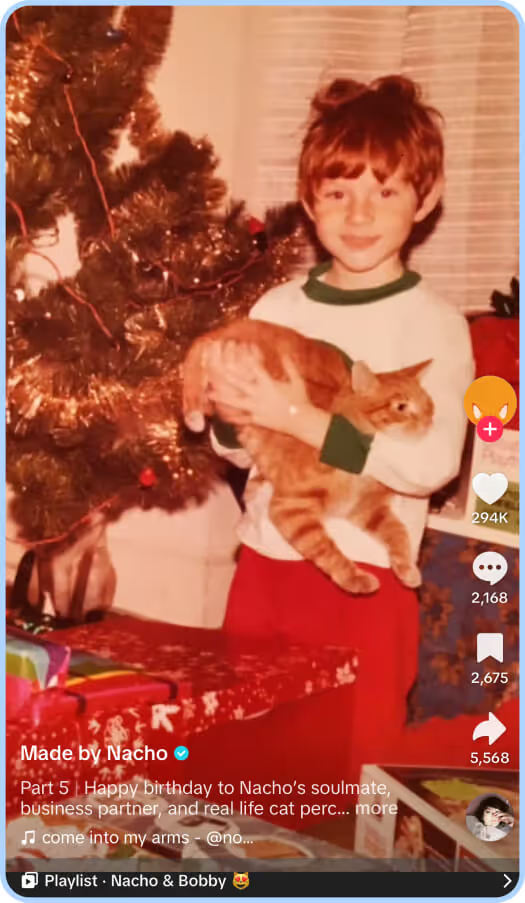
Made By Nacho shares behind-the-scenes moments: Nacho chilling on the kitchen counter, playful grooming clips, or simple “cat-dad” vibes. That blend of authenticity and homey energy makes followers feel like they’re on the brand journey too. Not everyone has a celebrity chef, but almost everyone has a pet. The brand takes the universal love for pets + adds a twist and boom: broad appeal.
Erno Laszlo
When it comes to storytelling in skincare, Erno Laszlo is basically the OG of weaving legacy into content. This brand doesn’t just sell cleansers and serums, it sells a narrative steeped in history, sophistication, and a touch of Old Hollywood glam. Think classic Hollywood starlets, timeless beauty rituals, and a namesake dermatologist whose journey into skincare literally became the foundation of the brand. That's a story that sticks.
On their TikTok, you’ll see Erno Laszlo tapping into this heritage while still feeling modern and scroll-stopping. Their content highlights their iconic products while simultaneously telling a tale of credibility, luxury, and authenticity. For example, a recent TikTok video not only showcases a product in action but also subtly nods to the brand’s rich past, connecting viewers to the legacy while keeping the narrative relatable and aspirational.

What makes Erno Laszlo’s approach so effective? They’re not just selling skincare; they’re selling a story. One that blends trust, history, and modern social appeal. When brands infuse their heritage or purpose into storytelling like this, they create content that’s not just seen, but remembered. It’s a masterclass in using narrative to elevate your brand while keeping your audience engaged, entertained, and inspired to act.
Storytelling in Marketing FAQs
How does a digital marketer use data for storytelling?
Data isn’t just numbers on a spreadsheet; it’s the secret sauce that helps your story actually land. Digital marketers use data to figure out what your audience cares about, when they’re scrolling, and what type of content makes them double-tap or click that “buy now” button.
Think of it like a treasure map: insights from engagement rates, click-throughs, and watch times point you straight to the plot twists your audience will love. You can see which stories resonate, which headlines hook, and which visuals make people pause mid-scroll. Essentially, data lets you tell stories that don’t just look good, they perform.
What are the four pillars of brand storytelling?
The four pillars of brand storytelling are: people, places, purpose, and plot.
People: Who’s at the center of your story? Customers, creators, or even your team, human connection is everything.
Places: Where is your story happening? Whether it’s a city skyline, a tiny indie café, or the metaverse, the setting makes your narrative real.
Purpose: Why do you exist beyond selling? Your “why” is the glue that turns casual viewers into loyal fans.
Plot: What’s the journey? Conflict, challenge, or transformation? Give your audience something to follow and feel invested in.


.jpg)