Community Based Marketing for Social: Strategies for Building Loyalty
Learn how community based marketing on social builds brand loyalty, boosts engagement, and drives organic growth with tactics, metrics, and examples.


In an era where digital screens dominate our interactions, the essence of marketing has undergone a profound transformation. Gone are the days when traditional marketing methods (like relying heavily on one-way communication and blanket advertising) were enough.
Today, we witness the rise of community based marketing, a vibrant approach that weaves together the power of connection and belonging into the very fabric of brand-audience relationships. This shift is more than just a strategic pivot; it's a response to a deep-seated human yearning for genuine connection and a sense of belonging.
Key Takeaways:
- Community based marketing is a mindset shift, not a tactic.
- Strong communities drive both emotional and business value.
- Authenticity is a make-or-break factor when building your community.
- Community building requires real investment and care to be successful.
- The strongest communities are built around a shared purpose.
What Is Community Based Marketing?
Community based marketing is when a brand focuses on building real connections with its audience by encouraging conversation, participation, and discussion. Instead of talking at users, brands spark conversations with them. This fosters loyalty and creates a sense of shared purpose and belonging.
Community based social marketing is about embracing a new philosophy that values meaningful engagement over purely exposure.
Community based vs. Community oriented
Community based marketing and community oriented marketing may sound similar, but they differ in a few key ways. Community based marketing is about building a desirable space for your customers to connect and interact with each other and your brand. While community oriented marketing focuses on listening to customer groups and creating products and messaging tailored to their needs. Look at it like this:
- Community Based Marketing is like throwing a party for your brand where everyone invited is a fan or customer. At this party (location: online forums, social media groups, events, etc.), your guests (customers) talk to each other and to you about how much they love your products or what they'd like to see next. This kind of organic interaction mirrors how running clubs generate authentic community and UGC, driven by shared passion. It's all about creating a fun and engaging space where your brand's fans can hang out, share their experiences, and feel like they're a part of something special.
- Community Oriented Marketing, on the other hand, is like being a tailor who makes suits. Instead of making the same suit for everyone, you listen to what specific groups of customers want and then create products just for them. For example, if you find out that a group of your customers is really into eco-friendly products, you might start making and advertising environmentally friendly products. It's all about paying close attention to what specific groups of customers need and want, and making sure your products and messaging speak directly to them.

Why Community Based Marketing Matters
Community based marketing matters because it shifts the focus from simply selling to building genuine relationships. With a solid group of customers who love what you do and what you stand for, you as a brand have a purpose to keep fostering an environment that people want to not only become a part of but stay a part of. But that’s not all, community based marketing also impacts the bottom line. Here’s how:
Boost brand awareness and growth
Brand communities are not just groups of customers; they're dynamic platforms for connection and interaction. By fostering a brand community, you open the door for customers to share their experiences and engage directly with your brand. This interaction doesn’t just build customer loyalty and positive sentiment; it creates a community of brand ambassadors. These ambassadors naturally amplify your brand within their networks, driving organic brand awareness. This community-led approach to marketing results in authentic brand visibility and a stronger, more genuine presence, especially on social media.
Strengthen loyalty and engagement
Statistics show the impact of community engagement, with about 68% of customers feeling more loyal to brands after joining their community, and 49% are basing purchases decisions based on community recommendations. On the business side, 64% of companies community building budgets in the last 12 months. Community is a two-way street that needs to be maintained and worked on over time. By giving your followers true loyalty and engagement, they will give it right back.
Leverage real-time feedback and insights
In community based marketing, social media is vital for real-time interaction with your audience. This ongoing dialogue fosters two-way conversations and builds lasting trust. Engaged users often provide candid feedback, offering invaluable insights into customer challenges and perceptions of your brand initiatives. This inside perspective is crucial for marketers, transforming them from outsiders to active participants in the customer’s world. Prioritizing a safe and open online environment lets brands gather actionable feedback and make strategic adjustments.
Challenges of Community Based Marketing
While the benefits of community based marketing are plentiful, it is not without its challenges. It’s one of the most difficult marketing tactics to get just right, since your efforts are highly visible and open to feedback and critique. Below are a few other major considerations.
Scaling human moderation
Perhaps the most underestimated part of community based marketing is the human moderation of it all. It may seem like an easy task to add to your SMM workflow and schedule, but when done right, it’s more like a full-time job. Without proper moderation, the chances of really nailing your strategy are low, as it’s important to be ‘always on’, interacting with customers whenever possible. It’s also crucial to consider the types of things you’ll be exposed to. Communities aren’t always positive or polished, so successful moderation takes someone with resilience who can handle criticism without taking it personally.
Preserving authenticity
Community based marketing needs to feel authentic, but when done poorly, it can quickly undermine and erode the trust and authenticity you’ve already built. This can happen in a couple of ways. The first and most important is by ‘over-commodifying’ your community. You don’t want to turn it into a marketing asset (full of sales pitches and CTA’s) instead of a shared space. You also want to be cognizant of things like keeping control of the brand narrative (which can quickly be lost to the community) or any performative diversity or inclusion. These are all things that can lead to the downfall of your authenticity and your community.
Proving and measuring ROI
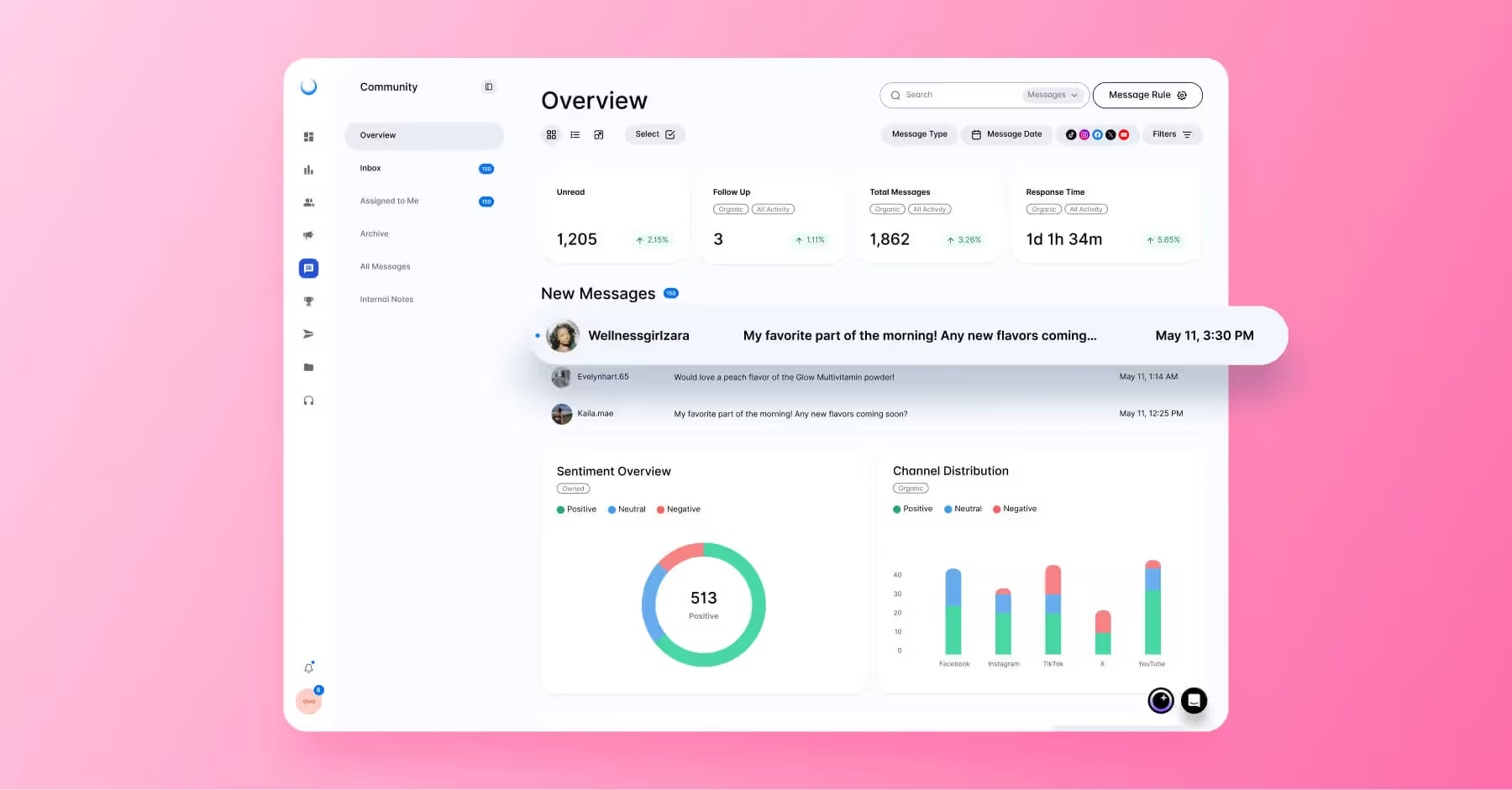
Measuring and proving the ROI of community building can be challenging, since the impact isn’t always directly tied to clear, quantitative results. Community based marketing often delivers more qualitative value, which can make it feel like a lot of effort without immediate payoff. However, signs of success can show up in metrics like higher engagement rates, increased shares, or more direct messages. Tracking sentiment analysis and how people are talking about your brand can also help illustrate how your community based marketing is contributing to your strategy overall.
How To Build and Nurture Your Community
The good and bad thing about community building and community based marketing is that it doesn’t just happen overnight. There needs to be intentional steps taken by your brand from the very beginning to ensure authenticity and long-term success. Here’s how to get started:
Start small and genuine
Don't worry about having a massive group from the start. Focus on a few members who are really into what your brand stands for. Start by identifying your most engaged followers and learn what content resonates with them. These insights are pivotal when starting your community and help you focus on what your audience truly cares about, laying a strong foundation for you to build from in the future.
Value every member
Where possible, treat every single user and customer as an individual. Make sure your earliest followers feel special and seen, and put work into making new customers feel just as valued. Track engagement and understand who your most active community members are to make recognition something that is easy and fun, not a guessing game. You can also use these insights to see exactly what they’re interacting with most, so you can tailor messaging or content specifically to make them feel special.
Set guidelines (and the tone)
When really focusing on community work, it's important to have guidelines. This helps keep the community positive and on track with what you're all about. While these don’t need to be public guidelines, they can act as a north star for your team to know what’s good and what needs to be addressed. Monitor the tone and sentiment of your community's interactions to understand the mood and industry trends within your community. With this knowledge, you can steer conversations in a way that aligns with your brand's values and vision.
Align purpose with values
The roots of your community are in-depth insights, such as what your audience likes, shares, and talks about. This data is invaluable in aligning your brand's message with your audience's values. When your content strikes the right chord, your community becomes a natural extension of your brand's story. A community isn't just about selling stuff. It's about creating a space where people can connect, share, and feel part of something bigger.
Activations To Support and Foster Community Growth
You can reply to every comment under the sun, but it will never hit quite as hard as real-life interactions. While this may feel daunting for social media managers (and may fall under another team's role), it’s always valuable to bring ideas to the table for connecting with your community outside of the DM’s.
Community building events
Are community building events a lot of work? Yes. Are they completely worth it? Also yes. Showing up in person for your community is one of the best ways to make them feel seen and appreciated. This can be done in many different ways, whether it be through pop-ups in your brick-and-mortar stores or standalone events in different cities where a lot of your community resides. Regardless of which way you choose to do it, you must go all in. Show up with the intention of meeting and knowing your community members to help grow your connection moving forward.
Online groups
It’s not always possible for you (or your community) to meet somewhere in person, so online groups are a really helpful way to build that connection from afar. Most platforms like Instagram (Broadcast Channels), Facebook (Groups), and X (Spaces) have features built right into their interface that make creating and maintaining these types of groups simple. Ensure you remain active, present, and engaged so that your groups don’t become a graveyard of your past efforts.
Advocacy and ambassador programs
Advocacy and ambassador programs are a natural fit when it comes to community based marketing because they turn your most engaged and trusted users into visible, credible extensions of your brand. These types of programs help build trust at scale, encourage participation, and keep conversations active. Successful programs can deepen relationships, generate high-quality UGC, and provide more measurable touchpoints for community impact.
Gifting
Chances are, as part of a PR strategy, you’re already putting together some type of package for creators and influencers, but have you ever considered extending the love to your community? Shift your mindset around gifting. See it not as a tactic for more promotion, but as a meaningful way to give back to your community that is unexpected and appreciated. You obviously don’t need to send product to every person in your community, but you can recognize your top contributors with a little something special to show them you care.
Brands Succeeding in the World of CBM
When it comes to community based marketing, there’s no better way to learn how to do it than from the experts. So many brands' entire strategies hinge on their community, making it a core pillar of what they do and why they do it. This approach is a win-win; it benefits brands because they actively get to interact with customers and learn what they want, and it benefits customers because they get to know their voice is not only heard, but listened to.
The following brands set the bar high for what community based marketing means. Let’s learn from them:
LEGO: Fostering community with co-creators
LEGO is the gold standard when it comes to building community, even far beyond social media. The brand works closely with its community to ideate new designs (which are solely credited to the creator), spotlight creations (across social, websites, and campaigns), host conventions (both on and offline), and even support niche communities like AFOL (Adult fans of LEGO) with special events, forums, and early product access. LEGO makes a genuine effort to ensure its customers are helping shape the products it makes, not just reacting to them.
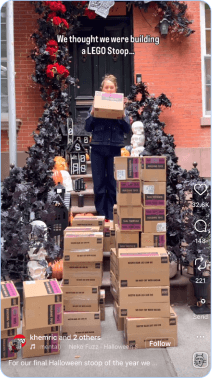
Why this works: Avid members of the LEGO community know that their voice and opinions carry real weight. They know they have real influence on product decisions, which translates from simple feedback into actual ownership. This creates a layer of loyalty that cannot be replicated by simply scanning and responding to comments on Instagram.
Key takeaway: Don’t be scared to let your community actively influence and guide your product strategy where it makes sense. Reward participation through visibility, access, and attribution.
Sephora: Leveraging community as advisors
Sephora was focused on building community from day one. The brand knows that their customer base is full of experts, novices, and everything in between, and that it would be silly not to use that wide array of expertise as the entire basis of their Sephora Community. The Sephora Community is a massive peer-to-peer forum that allows customers to chat, ask questions, review products, and even share tips and routines. The brand also has the Sephora Squad, which helps amplify partnerships with creators and micro-influencers.

Why this works: The beauty space is one that is highly personal, meaning that peer advice and reviews are some of the most effective and necessary tools when it comes to making a purchase decision. By positioning themselves as a facilitator of the expertise, rather than the loudest voice in the room, Sephora creates a frictionless path to purchase for customers and their community.
Key takeaway: Make a conscious effort to build spaces that encourage your customers to interact with each other, not just with you.
Patagonia: Working with community to create a movement
Patagonia is known as a brand that focuses much more on purpose than product and has built an entire community around that mantra. The community is based on shared values, identity, and authenticity, especially in relation to environmental activism, where the brand actively funds and supports grassroots environmental groups and promotes platforms such as Worn Wear that encourage community members to rewear and reuse their clothing.

Why this works: Because of the tactics mentioned above, and by turning authenticity into action, Patagonia has created a brand and community that people are proud to support and associate themselves with. The brand stands up for what it believes in (even if it's controversial), giving community members the courage to do the same.
Key takeaway: Align the purpose of your community with something bigger than the product or service you offer.
Community Based Marketing FAQs
How do you start building a brand community?
The best way to start building your community today is by interacting with customers in real time. Use their comments on your posts as a jumping-off point to show them you really care and that you’re listening. Once you’ve spent some time building rapport in the comments, create specific groups that people can join to get to know each other and your brand better.
Why is authenticity important in community based marketing?
Authenticity is important in community based marketing because your customers and prospective customers are smart. They can smell a planned campaign or marketing push from a mile away, which will immediately make them disengage. That is why your CBM strategy needs to be rooted in a true interest in making your community better, not with any ulterior motives in mind.
How effective is community based marketing?
When done right, community based marketing is extremely effective. By fostering and creating a community of customers and users that love your brand, you’re unlocking one of the most powerful marketing levers: word of mouth. Everyone loves to share stories about when a brand has gone above and beyond to show that they’re listening and they care, so you want to ensure you're giving your customers as many of those stories to tell as possible.
What role does social media play in community based marketing?
Social media plays one of the largest roles in community based marketing. Why? Because it’s where brands have the most direct access to their customers, their feelings, and their feedback. The real-time aspect of social allows brands to be actively engaged in the moment with their customers, creating a real, two-way conversation instead of just talking at them through marketing materials with no response.
Which social platforms are best suited for community building?
Every social platform has its pros for building community, especially when it comes to what type of community you’re looking to build. If you’re looking for a younger, more energized community, platforms like TikTok or Instagram are perfect. For something a little lower maintenance or casual, try Facebook. The beauty of social is that you can actually have different communities on every platform serving completely different purposes. Just be sure to give each of your communities the same amount of attention and love.
How can I measure the impact of community based marketing efforts?
The interesting thing about community based marketing is that there isn’t always a direct metric you can attach to an effort. That being said, it is always effective to track things like engagement rate, shares, likes, and comments to get a better understanding of how your community building efforts are performing.



.jpg)