Digital Marketing Glossary
User-Generated Content
User-generated content has quickly become one of the best ways for brands to integrate content into their strategies that feels authentic, which is key for reaching skeptical Gen Z and Millennials. While curated photoshoots and luxurious aesthetics have their place, today’s buyers want content that feels real and unpolished.
Recent studies showed that 92% of consumers trust word of mouth and UGC more and find it more influential than brand-created content. This means that it's no longer optional to have UGC as a part of your strategy; it’s a necessity. Let’s learn how to integrate it.
What Is UGC (User-Generated Content)?
User-generated content (UGC) is a type of earned media that is defined as community-created content talking about or showcasing your brand. For example, say you’re a luggage company. If a customer posts a photo or video of themselves at the airport and tags your brand, that’s UGC.
Did you know that touching items in stores makes buyers more likely to make a purchase? User-generated content hits on those same sentiments by empowering buyers to visualize how products fit into their lives. Many social media users even say that UGC highly impacts their purchase decisions. Brands that effectively leverage UGC gain authority and credibility, which is particularly impactful since many brands struggle with the perception of inauthentic content.
Who Creates UGC?
Anyone who takes a photo or UGC video, posts it, and tags your brand or product is a person creating UGC. But not all UGC creators are alike. Some UGC is posted as a one-off by someone who really liked a product, whereas other UGC creators have built entire careers on creating and posting UGC for brands. Both are valuable for brands; you just need to know which pieces to use and when.
Different Types of UGC
As mentioned above, there are different types of UGC that can and should be used in different ways and for different purposes. Here is how each different type works:
Organic UGC
Organic UGC is the most authentic type of UGC your brand can have. It can take form in many different ways, including social posts like photos or UGC videos, testimonials or reviews, or even something like a blog post. What makes this content organic is that it’s posted by the user, completely unprompted by the brand. Something about the brand, product, or service was good (or in some unfortunate cases, bad) enough to feel compelled to share with other users. This unfiltered, unpaid post or review shows other potential customers your product is legit, and not just bolstered by paid UGC content.
Paid UGC
While organic UGC is definitely the preference, paid UGC absolutely has its place. When paying creators or UGC-specific influencers, brands end up having to spend less time and effort curating the perfect fit. That being said, it’s important to still have the content remain authentic. This means you have to give the creator freedom to create the UGC in the way that they want, but that doesn’t mean you can’t still give guidance and cues for them to follow to get the result you’re looking for.
Benefits of Leveraging UGC
Brands can leverage UGC in a myriad of ways, from on-site galleries to paid media. The frequency of user-generated content curation and usage has grown enormously in the past decade. This trend will continue as the market continues to become saturated, requiring brands to innovate and embrace new methodologies to stand out. Here are some more easy ways UGC can benefit your brand.
Social proof
Social proof is one of the most powerful tools a brand can have in its arsenal. Many consumers know the tricks of the trade and are unimpressed by fancy marketing or paid ads. But hearing how good something is firsthand (through UGC) from someone they know and trust? That suddenly becomes something they are compelled to try right away.
Brand loyalty
UGC isn’t just about attracting and building trust with new customers; it also plays a powerful role in strengthening brand loyalty. If someone is spending hard-earned money and time to buy your product or service and post about it online, chances are it will mean a lot to them to get recognition and have their content posted straight to your feed or in a story.
Cost efficiency
UGC is one of the most affordable marketing tactics. When you think about the cost that goes into creating a social media campaign, setting up the perfect shot, editing it, and so on, it really adds up. Good UGC eliminates all of those middle, costly steps, making it an almost free asset, depending on whether the asset was organic or not.
Case Study: How CB2 Crafts A Shopping Experience Led By UGC, Editorial, and Creators
How To Encourage User Generated Content
Knowing you need UGC is one thing, but getting it is another. If you’re just diving into the world of UGC and you’re a smaller brand, the pickings may be slim. But don’t fret. Encouraging UGC isn’t hard and should actually be perfectly in line with your strategy or any community-building activities you already have on the docket.
Develop UGC campaigns
This doesn’t have to be complicated. If there is a specific product or service you’re looking to get UGC for, launch a campaign around it where you encourage users to post photos or videos of the product with a specific hashtag. You can also host specific events (think a run club if you’re an athletic brand) where you prompt guests to create and share content in real time. These are really natural ways to foster UGC that can run parallel to whatever strategy you have in place for that product launch.
Host contests and giveaways
Hosting contests and giveaways is one of the more effective ways to foster UGC, as it ends up being a win-win for both parties. Customers will feel more inclined to create content if they know they could possibly win something in return for a post. These UGC posts are often a little more intentional and aesthetically pleasing as the creators know the brand will likely see and use their post. The premise can be as simple or as complex as you want it to be, with customers posting UGC and tagging your brand as a way to enter into the contest to win products, experiences, or anything else you may want to give away.
Launch a product sampling program
There’s no better way to earn UGC than by getting your products directly into the hands of consumers who want to try your product. You can host your product sampling program directly through your website (and post about it on social, of course), where interested consumers can fill out a form with their information to be sent samples to test out. Now, not everyone who samples your product is guaranteed to post UGC, but you're still getting engaged consumers to try and hopefully buy your product alongside the UGC push.
How To Source UGC for Your Brand
Now for the fun part, actually finding the UGC. There are multiple ways to do this, both organically and with tools. We break down both approaches below.
Sourcing UGC Organically
Finding UGC organically is surprisingly easy. All you have to do is search for your brand name and/or your products to see who is posting about you on any given platform. Once you’ve done this, you then have to manually go through every post and pick and choose the ones you think fit your brand ethos and aesthetic the most. This is the part that can be extremely manual and time-consuming. If you have a lot of customers posting about your products, it can be hard to find the right UGC that is usable from a brand perspective, making a sourcing tool a better option for you.
Sourcing UGC With Dash Social
Dash Social gathers and showcases UGC and influencer content in the Library, UGC, and Creators sections of the platform. Brands can quickly sort, find similar content, and use Vision AI’s keyword search to identify the top pieces of UGC that are the best fit for your audience. Additionally, using Visual IQ, brands can better understand the broader visual elements and trends that make up their UGC to understand visually how their audience is talking about their brand.
Dash knows that user-generated content is not just for the feed, so brands can also quickly push it to their onsite galleries and product page widgets to add a shopping ability.
Learn more: Top 10 UGC Platforms To Grow Your Audience.
UGC Best Practices
With UGC comes a world of possibilities and opportunities that can make you eager to jump right in. But like any important part of your social media marketing strategy, implementing UGC comes with some general guidelines you should know and follow before you begin.
Be intentional
User-generated content shouldn't be treated as filler content. Brands must ensure that they’re strategically selecting UGC based on their social goals. While it’s important that UGC feels authentic, that doesn’t mean it can’t be tweaked. Ensure that all content you’re using, whether owned or user-generated, fits your brand ethos.
.avif)
Don’t limit UGC to your feed
User-generated content can be used in many different ways, from integrating it into Stories, testing on paid, to showcasing ‘your brand in the wild’ on-site and implementing it on product pages to highlight that particular item in the real world through Shoppable Galleries. There are endless possibilities for brands to utilize UGC; be sure to test and trial which ones work best for you.

Use UGC to develop your influencer strategy
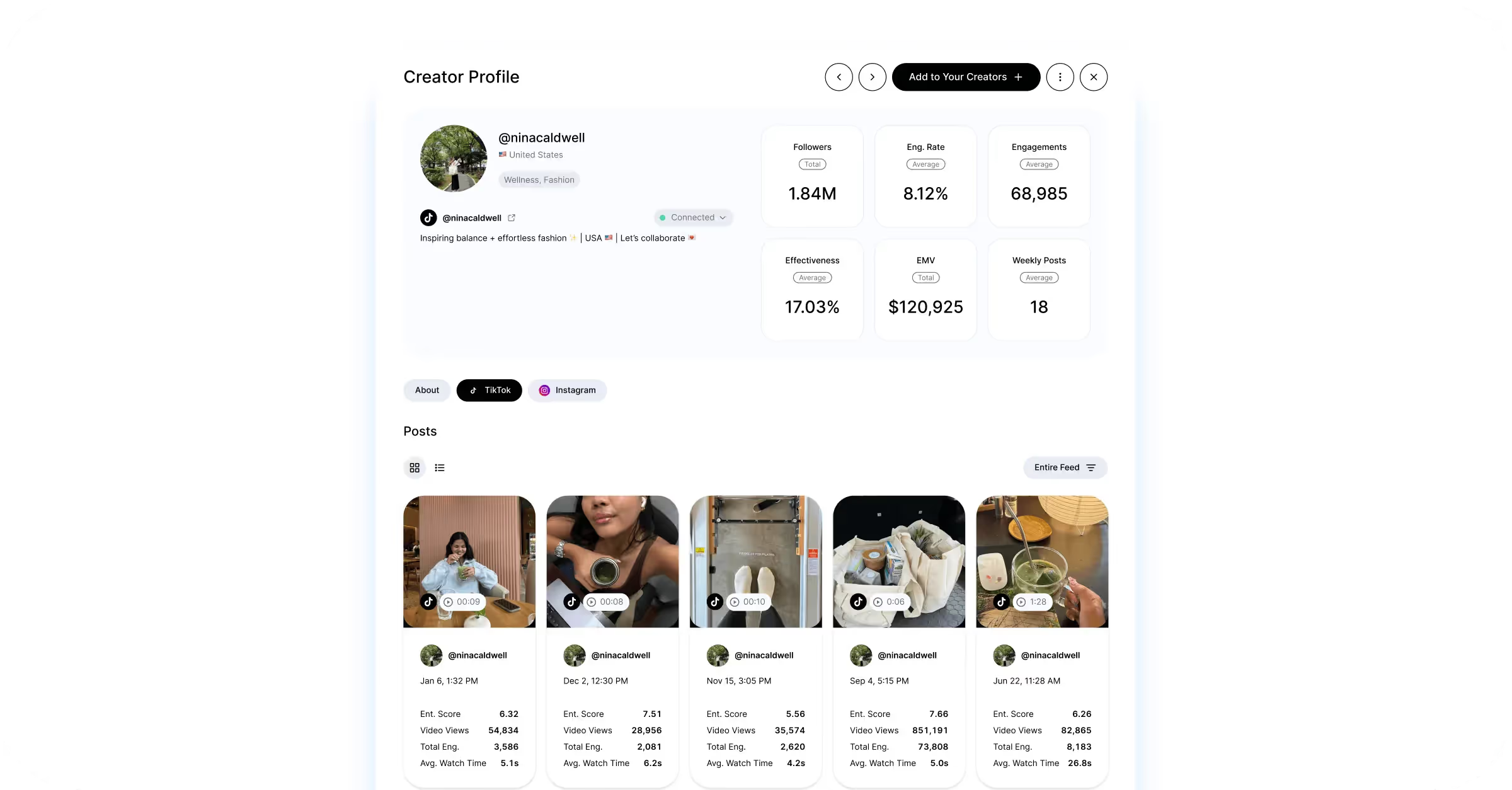
Users who are already tagging your brand in their content are a great jumping-off point for sourcing influencers and building relationships. If the influencer is already posting about your products, you can guarantee authenticity and a real partnership that can help build real reach and awareness.
Consider UGC a source of feedback
UGC is a fantastic way to monitor brand sentiment. While no one likes receiving negative reviews, tracking and sourcing UGC presents an opportunity to directly address and proactively improve any issues with your products or services that customers may be having.

CASE STUDY
How Talenti Identifies the Best UGC To Drive Awareness and Increased Reach by 654%

User-Generated Content FAQs
Do I need to get permission from users to share their content?

There’s a difference here between whether you should and whether you have to. Some brands believe an @mention or tag is sufficient credit; others prefer to make things more official by gathering permission. Your company’s legal team can usually speak to your brand policy for repurposing content. Keep in mind that getting approval is always great for building your community.
How do I know which piece of UGC is best to share for my brand?
Dash Social customers use Vision AI, a technology that analyzes a brand’s feed and predicts which content will perform with their audience. For brands that don’t use Dash Social, look at user generated content using a similar process to looking at in-house content. What content matches your brand aesthetic and values? How can you use UGC to show your brand in a creative way that still fits your feed?
Is user generated content earned media?
Yes, user-generated content is considered earned media. Earned media refers to publicity gained organically rather than through paid advertising. When users create and share content about your brand, such as reviews, testimonials, or social media posts, they are voluntarily promoting your brand without any payment or sponsorship.
This type of content is highly valuable because it’s seen as more authentic and trustworthy by consumers, making it a powerful form of social proof. UGC can significantly enhance brand visibility and engagement, much like other forms of earned media such as press mentions or word-of-mouth referrals.