9 Best UGC Platforms in 2026
Discover the best UGC platforms to boost engagement, build trust, and scale authentic brand content.


Brands pour their time, energy, and resources into sourcing, sharing, and employing user-generated content (UGC) to impact overall marketing goals. In fact, many e-commerce marketers in North America believe UGC has the greatest influence on purchase decisions and is the most effective tool for building customer trust.
But how do you help center your brand in the online narrative and make the most of your UGC? We’re reviewing the best UGC platforms so you can find the software that best fits your unique needs and niche.
Key Takeaways:
- Best for enterprise social teams: Dash Social
- Best for website embeds and social proof: EmbedSocial
- Best for review management: Synup
- Best for social commerce and e-commerce: Tagshop
- Best UGC Platform for Instagram: Dash Social and CrowdRiff
- Best UGC Platform for TikTok: Dash Social and Social Walls
What Are UGC Platforms?
A UGC platform is a tool designed to help brands collect, manage, and showcase content created by their customers or audience. UGC platforms make it easy for brands to access and leverage content made by genuine users of their products for marketing and e-commerce purposes.
UGC platforms are most valuable for brands that rely on trust, social proof, and authentic customer experience to influence buying decisions. Consumer and retail brands (think fashion, beauty, skincare), travel and hospitality, and health and wellness brands particularly benefit from UGC platforms because of their hyperactive customer bases and already steady stream of user-generated content.
9 Top UGC Platforms
Without a dedicated UGC platform, your team can miss opportunities to repost content or discover high-performing earned media, or even simply waste time manually sourcing this content from your social platforms.
The right UGC platform will help your team effortlessly find and vet UGC creators and content to ensure it aligns with your social media and business goals. With that, let’s take a look at nine popular UGC platforms, including their key features, pricing structure, which industries can benefit from them most, and more.
1. Dash Social
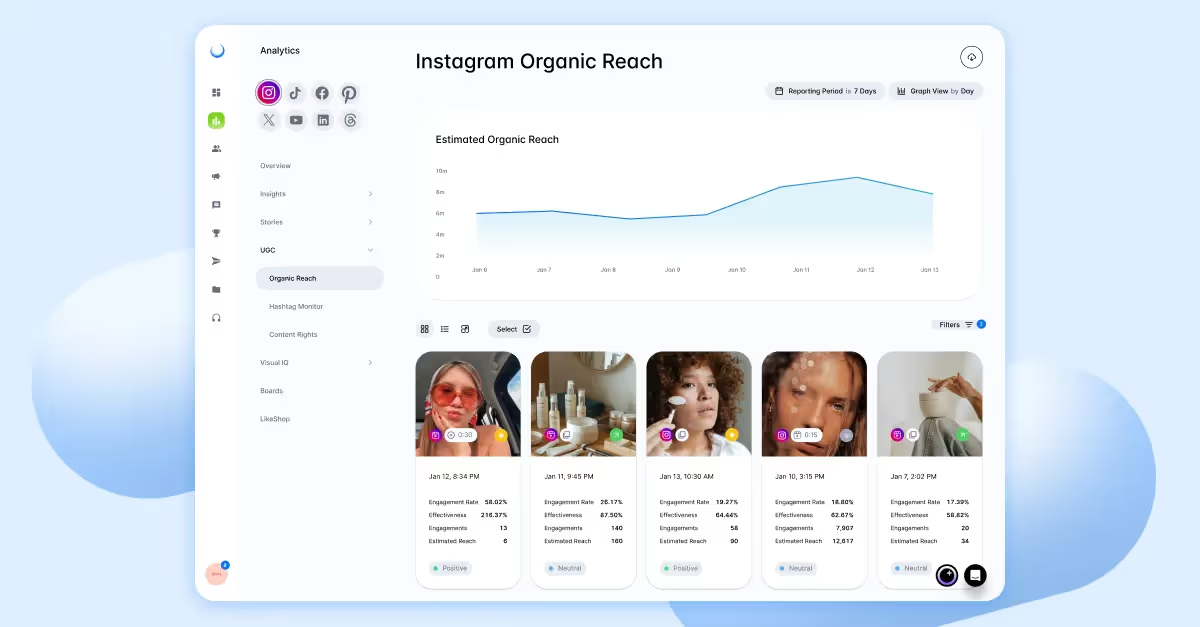
With Dash Social’s UGC platform, social teams can centralize their UGC strategy to discover, source, publish, and measure the impact of user-generated content. Social teams can also easily request posting rights, reducing time spent on outreach and managing approvals. Shoppable Galleries let social teams leverage their UGC even further, embedding content directly to their website, customer emails, within a carousel, or curated gallery, or on their LikeShop profile.
Key Features:
- UGC discovery and sourcing.
- Rights management and approval workflows.
- Vision AI-powered content predictions and visual search.
Channels supported: TikTok, Instagram
Best for: Fashion and Luxury, Beauty, Retail, CPG
Limitations: Pricing is geared toward enterprise customers, which may put it out of reach for some brands
Pricing: Plans starting at $999/month
2. Embedsocial
Embedsocial’s UGC feature, simply titled ‘Embedfeed’, helps brands embed social media feeds to their websites from Instagram, X, Facebook, Threads, YouTube, Google, and LinkedIn. This tool is excellent for businesses with a diverse tech stack seeking a simple tool to embed UGC in a range of styles and formats.
Key Features:
- Social feed aggregation.
- Website UGC widgets and embeds.
- Review collection and display.
Channels supported: TikTok, Instagram, LinkedIn, Facebook, YouTube, Threads, X, Google
Best for: Travel and Tourism, Agencies
Limitations: Limited customization options, feature limitations, lacks an analytics dashboard to measure performance
Pricing: Free and paid plans starting at $29/month

3. Synup
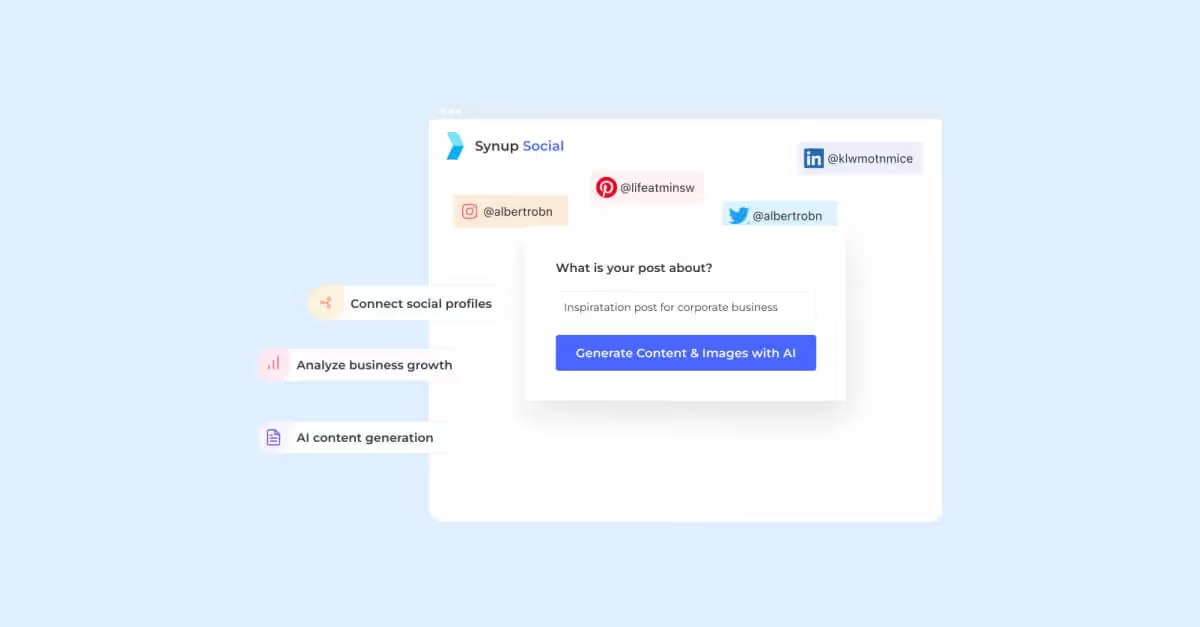
Synup is a UGC tool that specializes in helping brands list and optimize their business profiles. For brands managing multiple regional markets, this tool makes it easy to gather, organize, and display positive reviews on-site. They can also respond to queries directly from the platform, making this a great option for brands seeking the ability to pull in reviews from social media, Google Business, Yelp, and more.
Key Features:
- Review management.
- Multi-location reputation management.
- Local listing management across directories.
Channels supported: Instagram, LinkedIn, Facebook, X, Pinterest
Best for: Insurance, Consumer Electronics, and Technology
Limitations: Steep learning curve for some, difficult to navigate all features.
Pricing: Plans starting at $79/month billed annually, or $99 month-to-month
4. Tagshop
Tagshop offers UGC software that helps e-commerce brands source authentic customer content tailored to their niche. With Tagshop, brands can find UGC from social media and online reviews and ratings, streamlining the collecting, curating, and posting process for UGC marketing.
Key Features:
- UGC collection from social and reviews.
- Rights management and creator permissions.
- Shoppable UGC galleries for e-commerce.
Channels supported: Instagram, Facebook, YouTube, X, Pinterest
Best for: Consumer Electronics and Technology
Limitations: Limited integrations, technical issues
Pricing: Free and paid plans starting at $11/month billed annually

5. Walls.io
Walls.io is a dedicated platform that helps social teams embed stylized social media walls featuring UGC directly onto their websites. It can aggregate UGC from social networks, including Instagram, Twitter, Facebook, and LinkedIn. It also provides real-time updates and gives brands the ability to curate and moderate content before displaying it on websites, event screens, or other digital displays.
Key Features:
- Social media wall creation.
- Content moderation and curation.
- Real-time social feed aggregation.
Channels supported: Instagram, Facebook, LinkedIn, TikTok, YouTube, Pinterest, X, Bluesky, Mastodon, Vimeo, Reddit
Best for: Non-profits
Limitations: Lack of new visual options, fewer options for Facebook and LinkedIn
Pricing: Pricing varies based on event, website, or signage plans.

6. tagembed
The tool tagembed helps brands collect and curate UGC to embed on their websites. It offers a wide range of templates that include different styles, from horizontal carousels to list views and sliders. This tool is ideal for agencies, since there’s no limit to how many websites you can embed content on, and even includes Slack widgets for internal communication.
Key Features:
- UGC collection and embedding.
- Extensive widget customization.
- Multi-site and agency deployment capabilities.
Channels supported: Instagram, Facebook, Pinterest, X, LinkedIn, YouTube, TikTok, Amazon
Best for: Automotive, Agencies
Limitations: Complex for some users to learn
Pricing: Free and paid plans starting at $19/month

7. Loox
Loox is built specifically for Shopify. It lets brands collect and display customer-generated visual product reviews, including UGC videos. The platform incentivizes customers to leave visual testimonials by offering discounts or rewards, which can help build relationships and loyalty with customers.
Key Features:
- Visual product reviews.
- Automated review request collection.
- Customer incentives and rewards for review generation.
Channels supported: X, Facebook, Instagram
Best for: Fashion, CPG, Food and Beverage
Limitations: Lack of customization
Pricing: Free and paid plans starting at $50/month

8. Social Walls
Social Walls by Taggbox is a great UGC platform if you need to showcase embedded galleries on digital signs or screens for events. Their software lets you embed UGC on screens for private events like webinars, large digital screens at in-person events, digital billboards, and more. Social Walls includes moderation features and customization options to ensure displayed content aligns with brand messaging and drives conversions.
Key Features:
- Live social walls and event displays.
- Content moderation.
- Digital signage and event screen integrations.
Channels supported: Instagram, X, TikTok, LinkedIn, YouTube
Best for: Beauty, Education
Limitations: Some users report technical issues, limited customization options
Pricing: Not public

9. CrowdRiff
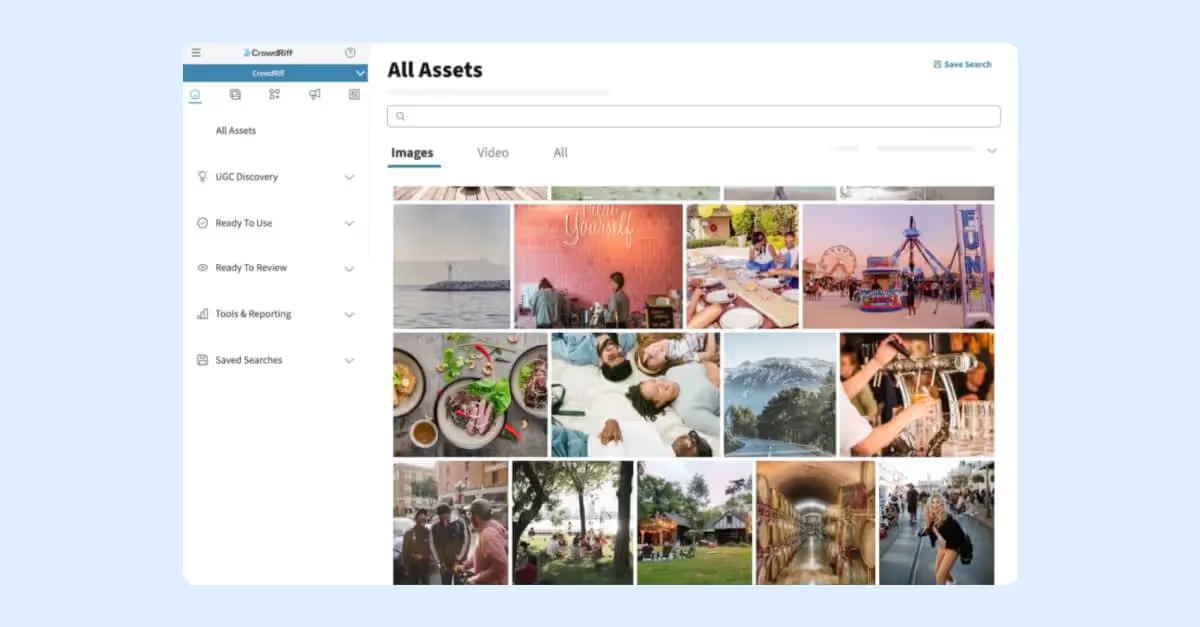
CrowdRiff is built specifically for travel industry marketing, using AI search tools to recommend brands the best UGC to showcase a variety of destinations. From there, you can request licensing, track your requests on the platform, and finally, post them on your website or social media accounts. It also has auto-tagging to tag content with relevant keywords and integrations with Google, so you can include Google location information to encourage users to visit a location.
Key Features:
- AI-powered visual content discovery.
- UGC rights and licensing management.
- Destination-focused content galleries.
Channels supported: Instagram, Facebook
Best for: Travel industries, PR, and Communications
Limitations: Has fewer analytics and customization options than some tools.
Pricing: Plans starting at 1,875/month billed annually. Project pricing available.
How We Evaluated These UGC Tools
To identify the best UGC platforms, we evaluated each tool based on the features that matter most to social media and marketing teams, including content discovery and sourcing, rights management, channel availability, integrations, pricing, and overall ease of use.
We also considered each platform's ideal use cases, limitations, and customer reviews to understand how well they support different industries, team sizes, and marketing objectives. Our goal was to compare a mix of social-first, e-commerce-focused, review management, and website embedding tools to help brands find their best fit.

Turn UGC Into Your Most Powerful Marketing Asset
Stop wasting hours searching for content and start discovering, managing, and publishing high-performing UGC from one centralized platform.
Explore Dash Social’s UGC PlatformWhy You Need a UGC Platform
UGC tools are literally built to make social media managers' lives easier, but that isn’t the only advantage. Here are just a handful of benefits you’ll notice when you invest in the right platform:
Saves Time and Resources
If a UGC platform’s purpose is to make your life easier, it starts by saving you time and resources. With the help of a reliable platform, you will save hours that would normally be spent manually searching through various social channels to find user-generated content. This massive save on time also reflects in the amount of resources you need to allocate for sourcing UGC. What was once someone's entire day or week can now be refocused on other parts of your strategy, like content creation or performance reporting.
Diversifies Content
UGC platforms also help diversify your content mix in more ways than one. Not only will it help break the mold of your current content schedule, but it will also help you find different types of content you may not have considered before, or even content from creators that are underrepresented on your feed currently. Plus, many platforms pull in content from social channels you may not typically monitor, giving you access to a wider range of UGC. This is often where you’ll uncover a goldmine of untapped, high-impact content.
Increases Engagement
User-generated content is one of the most powerful ways to boost engagement on any social media platform. When your brand consistently shares UGC, whether in your feed or Stories, it signals authenticity and creates a more interactive experience for your audience. This not only encourages users to engage with your content but also motivates them to participate in the hopes of being featured themselves.
Reaches New Audiences
One of the most underrated perks of user-generated content is the new audience it helps you reach. By making an effort to repost or share user-generated content, you are then opening your account up to all of the followers of the accounts you’re sharing and beyond. Your brand inevitably reaches people who may have never seen or heard of you before, just because you simply shared a post that promotes your brand. It doesn’t get any easier than that.
What To Consider When Choosing the Right UGC Platform
Selecting the best UGC platform for your brand’s needs requires an in-depth understanding of your marketing strategy and precisely what you need your tool to do.
For example, suppose you’re primarily concerned with social media UGC. In that case, you’ll want to look for a tool with more social features, while a strategy focused on user reviews will want a platform that pulls in reviews and ratings from your Google Business Profile and other platforms.
Here are some additional factors to consider when sourcing a UGC platform:
Audience
It might go without saying, but we must stress that knowing your audience makes a significant difference in nailing your UGC strategy and choosing the right platform. The UGC creators you choose should either relate to your target demographic or resonate with their interests. This might be UGC from a creator that matches your demographic’s criteria, or an influencer they overwhelmingly follow or engage with.
Integrations
Having the right integrations in your UGC platform is key. For example, if your brand is more focused on brand reputation management, you might look for integrations specific to online reviews, while brands seeking creator UGC require social media integrations for the platforms they’re most active on. Having integrations with key platforms like Instagram and TikTok is also very important.
Performance Tracking and Analytics
Social media analytics tools are another crucial component of UGC platforms. Without these, how can you truly determine whether your content is performing well? Social media analytics and monitoring features allow you to measure engagement, conversion rates, ROI, and more to determine which UGC performs best.
E-commerce
If your brand sells products online, strong e-commerce capabilities can help turn UGC from a brand asset to a revenue driver. Look for a platform that integrates with your e-commerce stack and allows you to showcase authentic customer content across product pages, shopping experiences, and marketing campaigns to help increase trust, engagement, and conversions.
Key Features To Look For in a UGC Platform
As we’ve already seen, not all UGC platforms are created equal. The best solutions help social media teams streamline creator partnerships, organize content at scale, and turn authentic customer content into measurable business results. To do this, there are some features that are non-negotiable.
How To Manage UGC and Owned Content in One Platform
To manage user-generated content and owned content in one platform, brands typically use social media management or creator marketing tools that centralize content sourcing, rights management, publishing, and performance analytics. These platforms allow teams to collect UGC from creators or customers, organize it alongside brand-created content, and distribute both across social channels from a single dashboard.
Tools like Dash Social help streamline this process by enabling brands to request usage rights for UGC, store approved assets in a content library, and schedule or publish posts alongside owned content. Many platforms also provide analytics that measure how both content types perform, helping marketers understand whether UGC, creator content, or brand-produced assets resonate most with their audience.
By managing UGC and owned content in the same platform, brands can maintain a consistent publishing workflow, ensure proper permissions for shared content, and make data-driven decisions about future campaigns.
FAQs about UGC Platforms
How do UGC platforms find content?
Depending on the tool you’re using and the channels it has access to, how UGC platforms source content is actually quite simple. The tool works in the background, regularly scanning the available channels for mentions or tags of your brand name, and then creates a folder to track and share everything it finds. Some UGC tools even allow you to have certain keywords that are being scanned for as well, so you never miss a single post.
How can you encourage user-generated content?
One simple way brands can encourage UGC is to share UGC. By sharing this type of content, users and fans of your brand might be excited by the prospect of being featured on your social accounts. Another common way brands can encourage UGC is to create branded content, like hashtags, and engage with creators who use them on social. Some brands tap into contests or giveaways to source UGC; however, while this is a great way to give back to fans and customers, it might not seem as authentic as other forms of UGC.
How to choose a social media marketing tool that supports UGC integration?
UGC has become one of the pillars of any successful social media strategy, meaning many platforms, even aside from UGC platforms, offer UGC capabilities. To ensure you’re choosing a tool that offers UGC integration, check product pages and pricing pages to see what they have available. If you’re still unsure, set up some time to get a demo from the platform's team so they can run you through the exact capabilities. When it comes to making the right choice, choose the tool that integrates well into your current tech stack and checks most (if not all) of your boxes.
Can UGC and owned content be managed in the same platform?
Yes, but not always. Not every UGC platform is built to support owned content, and vice versa, but some social media management platforms like Dash Social house everything brands need to track performance of not only UGC and owned content, but also paid and creator content too.
Which industries benefit most from UGC platforms?
The industries that benefit the most from a UGC platform are the ones that see the most UGC activity on social media. Beauty, fashion, food and beverage, and home brands are some of the industries that see the most organic UGC because their product offerings are built to be shared, tested, and reviewed by and for the masses.