Complete Guide to Creating Effective Social Media Campaigns
Learn how to plan, publish, and execute social media campaigns that keep your audience hooked.


Social media campaigns are integral to any social media marketing strategy. The right approach to campaigns anchors your broader marketing strategy, keeps your team aligned, and creates a direct path to measure how social content drives results across your wider efforts.
Creating a social media campaign requires thorough planning before, during, and even after your campaign goes live. Measuring the impact of paid and organic content from your campaigns after you wrap up is just as important as running your campaign. Ready to learn how to create a social media campaign and tips to ensure it performs its best? Read on to dive into everything you need to know about social media campaigns.
Key Takeaways:
- Social media campaigns are strategic, goal-driven initiatives that differ from everyday posting by focusing on measurable objectives like awareness, traffic, or conversions.
- Building an effective social media campaign requires thorough planning such as defining goals and identifying the right target audience.
- Campaign success is dependent on continuous measurement and optimization. Use your results to assess performance, refine tactics, and adjust creative.
- Strong campaigns maintain consistent messaging, leverage creative storytelling, tap into trends, utilize hashtags, and use tools like Vision AI to optimize top-performing content.
What Is a Social Media Campaign?
A social media campaign is a coordinated series of marketing efforts across one or more social platforms designed to achieve a specific goal within a defined period. Unlike your everyday posts that focus on maintaining engagement and visibility, campaigns are strategic, measurable, and built around a clear objective.
Common goals for social media campaigns include:
- Increasing product or brand awareness.
- Promoting a new launch, offer, or seasonal initiative.
- Driving traffic to a website or app.
- Encouraging event, newsletter, or webinar sign-ups.
Successful campaigns often blend organic and paid tactics to effectively reach their target audiences. These can include:
- Paid social advertising.
- Creator or influencer partnerships.
- User-generated content.
- Contests and giveaways.
- Branded hashtags.
- Social takeovers or collaborative content.
Whether your campaign focuses on paid promotion or creative organic initiatives, the key is consistency in messaging, strategic planning, and tracking performance against your goals.
How To Create a Social Media Campaign
Social media campaigns require more than just posting content. Research, planning, and preparation are essential to ensure your social media campaign runs smoothly and supports your goals.
These nine steps will help you create a social media campaign that achieves your goals and drives business growth.
1. Define Specific Campaign Goals
The first step in creating a social media campaign is to define your campaign goals and align them with your brand’s needs. Your campaign goals should align with your organization’s broader objectives. Consider increasing sales, improving brand awareness, reaching new audiences, or boosting website traffic; whatever ladders up to larger business goals. For instance, if your main objective is to connect with a specific demographic, such as 18 to 24-year-olds, start by building awareness within that group before shifting your focus to conversions.
Use the SMART method to clearly define your campaign goals. This helps your team understand exactly what’s needed for the campaign to be successful. The SMART method is helpful for both your organic and paid goals, and will help you pinpoint opportunities to pivot in your strategy when things don’t work well, as well as what to continue when you reach your goals.

2. Identify Your Target Audience
The next step to creating a campaign is establishing your target audience. First, review your social media analytics and consider your audience’s age, gender, location, income, and interests to understand who you want to target.
Understanding what your audience likes, what influences their actions, and what interests them will help inform your visual marketing strategy. When it comes to paid efforts, such as boosting Instagram posts, identifying your target audience is especially useful, as you can target your ads to specific demographics, including age, interests, or industry.
3. Conduct a Competitive Analysis
Next, conduct a competitive analysis to determine your competitors' strengths and weaknesses. The template you create will depend on the metrics and content factors that matter most to your brand and strategy. Still, it's a helpful way to analyze competitors' social profiles, video content, feed posts, and other relevant factors for your social campaign. Competitive analysis also ensures you don't miss any content opportunities once your campaign is underway.
4. Choose the Right Platforms for Your Campaign
Now that you know your audience, you should have determined which social media channels they use most frequently. It’s essential to meet your audience where they are, especially if they are using the channel to find solutions to a problem your campaign can address. According to the New York Times, Gen Z prefers TikTok as a search engine over Google. If Gen Z is your target audience, you may want to prioritize TikTok over other channels.
Each channel serves a specific purpose, and you can’t always repurpose content across all of them. To run an effective campaign, consider character limits, content formats, and even the channel's culture. Run a social media channel analysis with tools like Dash Social to help you deliver content that truly resonates with your audience by channel.
5. Create Engaging Content
Engaging content is the core of any successful social media campaign. Create posts that reflect your brand’s personality while speaking to your audience’s interests. Mix formats like videos, Reels, and carousels to keep your content fresh, and use captions to add context or drive action. Consistent visuals through color, tone, and branding help your campaign stand out while still remaining cohesive.
Keep a close eye on performance and adjust as you go. Track what resonates, refine your creative, and use insights to guide future posts. The strongest campaigns evolve through testing, learning, and responding to audience feedback.
6. Set a Timeline
The point of a social media campaign is that it doesn’t run forever, so setting a timeline to run your campaign and measure its success is important to managing your workflow. Timelines help create a sense of urgency for your customers and keeps your internal team on track.
7. Launch and Promote
Once your campaign strategy is finalized, it’s time to go live. Roll out your content according to your planned schedule, making sure visuals, copy, and timing align across platforms. Consistency is key to reinforcing your message and maintaining visibility throughout the campaign.
Utilize a combination of paid and organic tactics to increase reach. Paid ads help amplify visibility among targeted audiences, while organic posts foster authentic engagement. Promote your campaign through email, influencer collaborations, or cross-platform teasers to generate momentum from day one.
8. Engage With Your Audience
Launching your campaign is only the beginning. Active engagement keeps your audience invested and encourages participation. Respond to comments, share user-generated content, and thank followers who engage with your posts. A timely and authentic response helps build community and strengthens brand trust.
Consider creating opportunities for conversation, such as polls, Q&As, or challenges. These touchpoints not only increase engagement but also give valuable insight into how your campaign is being received, helping you identify what resonates most with your audience.
9. Measure and Analyze Campaign Results
Finally, it's essential to report on the success of your social media campaigns. Refer to those goals you set up in step one throughout your campaign, and most importantly, when your campaign is over, it doesn't mean there aren't valuable learnings for social and marketing teams.
In your report, you’ll likely want to share relevant engagement metrics, social media ROI, ROAS (return on ad spend), and any relevant website traffic metrics, like sessions to a particular product page from social or even overall traffic. The measurement phase is also a great time to share what went well, what didn't, and what lessons you can leverage in future social campaigns.
10. Make Adjustments
Monitoring campaign performance is essential for long-term success. Use analytics to track social media KPIs such as engagement rates, click-throughs, and conversions. Reviewing data regularly allows you to identify what’s performing well and what needs improvement.
If certain tactics or channels underperform, don’t hesitate to pivot. Adjust targeting, tweak creative elements, or reallocate social budget toward higher-performing content. Making small, informed changes throughout your campaign helps maximize results and ensures your strategy stays effective.

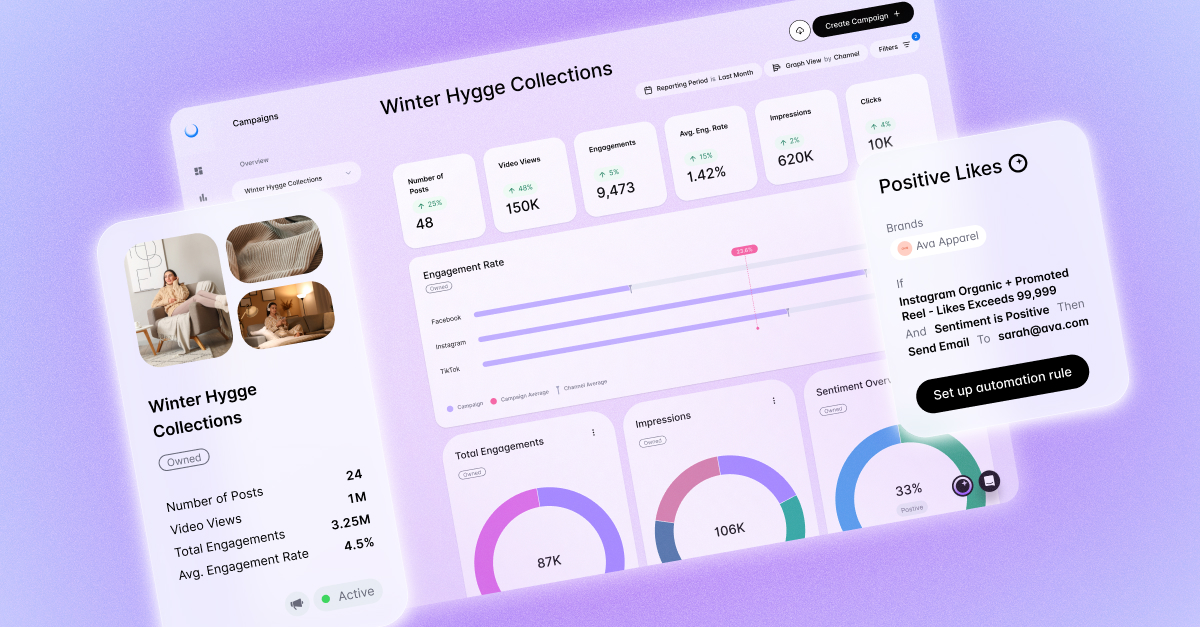
Custom analytics and reporting made simple.
Uncover at-a-glance stats, your top performing creative and more.
Discover Analytics and Custom ReportingSocial Media Campaign Examples
Barbie Movie
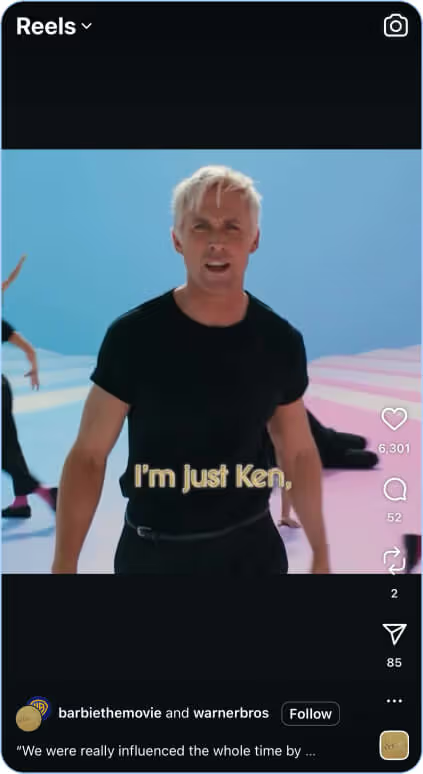
When you think of the box office or even the popular culture zeitgeist in 2023, you probably think of two movies: Oppenheimer and Barbie. While both films took the internet by storm, Barbie was undoubtedly a standout for online branding and awareness. Warner Brothers started the @barbiemovie account, sharing popular and relevant clips from the movie, behind-the-scenes glimpses at the movie-making process and press events for the movie. In addition, the very popular ‘Barbie Selfie Generator’ allowed people to create their own version of the promotional ‘This Barbie is…’ images, which were widely shared across social media, resulting in a ton of earned media for the brand.
Spotify Wrapped
Spotify Wrapped is a standout example of how to turn a simple product update into a global social media trend. Each year, artists, fans, and brands eagerly anticipate their personalized roundups of top songs, artists, genres, podcasts, and listening habits, sparking connection and conversation across platforms.
Beyond promoting Spotify’s platform, Wrapped creates a sense of community and inspires user participation. It also gives brands a chance to join the conversation in creative ways, from sharing humorous memes to creating their own versions of ‘Wrapped’ recaps. A fitness studio, for instance, could highlight the tracks that power its workouts, while a record label might spotlight its most-streamed or breakout artists of the year.

Duolingo
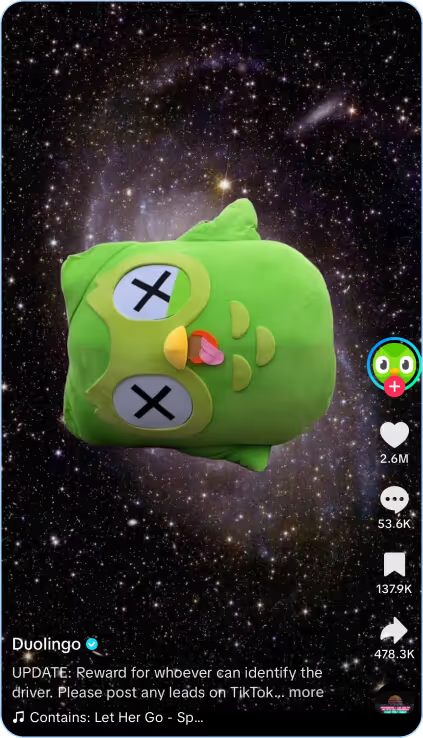
Duolingo knows how to make social media weird, funny, and genuinely entertaining. The brand leans into internet humor and treats its mascot, Duo the owl, like a full-blown character. That personality drives most of its content, which helps Duolingo stand out while feeling authentic to its brand. The result is a social presence that feels authentic to the platforms, not like a brand awkwardly jumping in.
The ‘Duo is Dead’ campaign is a prime example. To promote season two of its TikTok series, Duolingo posted a fake announcement claiming Duo had died, complete with dramatic tributes and a somber tone. Fans were confused, amused, and completely intrigued. The campaign sparked thousands of comments and reactions, showcasing Duolingo's understanding of platform culture and its ability to keep people coming back for more.
10 Social Media Campaign Tips and Benefits
1. Keep Message Consistent
A consistent message keeps your campaign cohesive and recognizable across all touchpoints. Whether it’s your visuals, captions, or influencer collaborations, every element should reinforce the same idea. This repetition strengthens brand recall and helps audiences immediately connect your content to your brand.
Key takeaway → Identify one clear message before launching and ensure every post, caption, and creative asset supports it.
2. Engage With Your Audience
Engagement turns a campaign from a broadcast into a conversation. Actively responding to comments, resharing user content, and joining relevant discussions help your audience feel seen and valued. Tools like Dash Social’s Social Listening and your Community Manager play key roles in spotting opportunities to connect authentically and nurture ongoing relationships.
Key takeaway → Use social listening insights to respond in real time and shape future campaign messaging based on audience sentiment.
3. Create a Unique Hashtag for Your Campaign
A branded hashtag ties your campaign together, encourages participation, and makes content easy to find. It also allows you to track engagement, monitor user-generated content, and measure reach.
Key takeaway → Choose a short, memorable hashtag that aligns with your campaign message and encourage followers to use it in their own posts.
4. Schedule Your Campaign Releases
Timing can make or break a campaign. A clear posting schedule helps maintain momentum, ensures consistency, and keeps your audience engaged from start to finish. Use scheduling tools to plan ahead and align releases across all platforms.
Key takeaway → Build a content calendar to map out each post, ensuring your campaign flows logically and keeps audiences anticipating what’s next.
5. Flex Your Creativity
Creative storytelling sets your campaign apart in crowded feeds. Experiment with new formats like short-form video, interactive stories, or unexpected visuals that align with your brand voice. Fresh, bold ideas attract attention and drive higher engagement.
Key takeaway → Push creative boundaries while staying true to your brand identity to capture attention and spark authentic engagement.
6. Try Seasonal Campaigns
Seasonal campaigns tap into cultural moments, holidays, or trends your audience already cares about. They feel timely and relevant, which increases shareability and engagement. The skincare brand eos leaned into seasonal campaigns for the launch of its holiday-scented lotions, using Community Manager to engage with its audience and align with what their fans love most. Its seasonal campaign saw a 374% increase in LikeShop clicks, a 426% increase in outbound Pinterest clicks, and a 950% increase in YouTube video views.
Key takeaway → Read eos’ full case study to learn how to plan ahead for key moments throughout the year and align campaign messaging with what your audience is already celebrating or discussing.
7. Share Mission-Led Content
Consumers connect deeply with brands that stand for something meaningful and genuine to them. Sharing content that reflects your values, like sustainability, inclusion, or community impact, can strengthen loyalty and attract like-minded audiences.
Key takeaway → Highlight how your brand acts on its values, not just what it believes in, to build credibility and emotional connection.
8. Build Out A Thorough Campaign Report
Tracking performance helps you understand what worked and what didn’t. A detailed campaign report should cover engagement metrics, conversions, and audience feedback to inform future strategies.
Key takeaway → Use your findings to refine future campaigns, double down on top-performing tactics, and identify opportunities for optimization.
9. Partner With Creators
Collaborating with creators helps extend your reach and adds credibility to your campaign. Select partners whose audience and style align with your brand to create authentic storytelling that resonates.
Key takeaway → Invest in creator management and build long-term relationships with creators who genuinely connect with your brand values and can evolve alongside your campaigns.
10. Source Top Performers With Vision AI
Vision AI helps identify which visual assets resonate most with your audience by analyzing performance patterns across images and videos. This data-driven insight eliminates the guesswork from creative decisions.
Key takeaway → Use Vision AI to pinpoint your highest-performing visuals and apply those learnings to improve future campaign content and engagement.
Social Media Campaign FAQs
What are examples of social media campaigns?
The most common social media campaigns for brands typically revolve around launching a new product or a major promotion, such as Black Friday. But campaigns can also highlight a brand’s values, like promoting a sustainability initiative or participating in an awareness campaign for a specific cause.
What are the best social media campaigns?
Some examples of the best social media campaigns include Calvin Klein’s #mycalvins campaign that celebrated inclusivity and self-expression. Another good example is e.l.f. Cosmetics’ #eyeslipsface campaign that helped launch their TikTok virality.
Why is it important to have a social media campaign?
Your social media campaign should convey a clear message and provide a compelling call to action to your target audience. By clearly defining goals, types of content to create, target audience, and ways to track performance, a social media campaign can provide the direction your team can work towards to succeed.
How do you successfully run a social media campaign?
How to create a successful social media campaign is one of the most common questions marketers ask. The most effective campaigns on social media begin with a clear understanding of purpose and goals. Then make sure you have access to all the insights you need for measuring results and ultimately understanding if the goals are being met. Lastly, report on the results, celebrate successes and identify opportunities for improvement.


.jpg)