Black Friday Marketing Strategies To Drive Sales
Craft a social commerce-focused Black Friday strategy with these tips.
Download the 2026 Social Media Calendar and stay on top of important dates


U.S. consumers spent a record-breaking $11.8 billion online during Black Friday in 2025, marking a 9% increase year over year. More than 87.3 million people shopped online, up 7% from last year, signaling continued momentum in digital purchasing behavior. Globally, online spending surged to $79 billion within just 24 hours (Black Friday Statistics, 2025), underscoring Black Friday’s growing international impact.
These numbers reinforce one clear takeaway: ecommerce is not slowing down, it’s accelerating. As online participation climbs and global spending hits new highs, brands face more opportunity and more competition than ever before.
While Black Friday began as a U.S. retail event, it has evolved into a worldwide shopping phenomenon. With billions of dollars flowing through digital channels in a single day, marketers must think strategically about how to stand out in increasingly crowded feeds, inboxes, and search results. A strong Black Friday strategy now requires more than discounts. Your approach needs smart targeting, compelling creative, and seamless digital experiences that convert high-intent shoppers at scale.
Key Takeaways:
- Start early and build hype. Tease offers, test creative, and grow your subscriber list before Black Friday to capture demand ahead of competitors.
- Lead with strong creative, especially short-form video. High-quality, entertaining content drives sales lift and cuts through crowded feeds.
- Make social content instantly shoppable. Reduce friction with product tags, link-in-bio tools, and seamless mobile experiences.
- Leverage creators and UGC to expand reach. Creator partnerships build trust, drive discovery, and boost conversions during peak shopping periods.
- Optimize beyond Black Friday. Engage your community, reward loyal customers, retarget for Cyber Monday, and analyze performance to inform future campaigns.
Why Is Black Friday Marketing Important?
Black Friday is one of the highest-intent shopping periods of the year. Consumers actively plan their purchases around it, often delaying big-ticket buys in anticipation of discounts. That means brands are in the unique position to capturing existing, ready-to-convert demand.
It’s also a major revenue driver. A significant portion of annual retail and ecommerce sales happens during Black Friday and Cyber Week, making it a critical moment for brands to hit Q4 goals. Beyond immediate sales, it’s a powerful customer acquisition opportunity. Many shoppers discover new brands during Black Friday promotions, and with the right post-purchase experience, those one-time buyers can turn into long-term loyal customers.
At the same time, competition is at its peak. Brands that plan ahead, show up creatively across channels, and deliver seamless shopping experiences are the ones that stand out. Strong Black Friday marketing is more than driving short-term revenue, it builds momentum that can carry through the rest of the holiday season and beyond.

Black Friday Marketing Ideas for Running a Successful Sale
Despite Black Friday marketing sales projected to increase this year, this also means marketers need an ironclad, streamlined campaign to ensure they’re reaching their audiences and driving conversions while standing apart from competitors. Here are our tips to ensure you make the most of all stages of your Black Friday marketing campaigns.
Start Early
Take action now. It is essential to add a degree of flexibility to your marketing campaign to meet your audience's needs. Nevertheless, planning ahead is equally important, so finding a balance between agility and preparation will be the key to success. Brands can tease their campaigns in the weeks leading up to Black Friday at a significant advantage over their competitors by building hype as consumers begin to plan their shopping lists and giving them a taste of what they can expect.
By starting early, you can also plan and test campaign visuals and ultimately use what resonates with your audiences. Dash Social's predictive AI tools help identify which photo or video will generate the highest engagement, allowing you to choose the best. It analyzes visual cues, such as tone, features, and elements of existing posts, and provides insights into which content to use and when to publish across social media channels to maximize ROI.
Once you have selected the best visuals for your Black Friday campaign, you can curate your feed and schedule content using Dash Social's Scheduler. With the multi-channel content calendar, you have a holistic visual overview of all posts that have been published or are scheduled to go live across all social channels, making it easier to plan ahead without getting overwhelmed by administrative tasks. It can also be used to pre-populate campaign reports to reduce the amount of time required to create reports manually later. Black Friday can be hectic and jam-packed for several days, so proactively scheduling in advance is a good way of relieving some of the work.
In addition, keep in mind that an enormous number of brands compete for audiences' attention on Black Friday, which results in them becoming fatigued after being bombarded with repetitive marketing messages. Consider using Scheduler to also adjust your timing so your messages don't get lost.
Lastly, many brands use Black Friday email marketing campaigns to raise awareness of upcoming offers and pique subscribers' interest. Consider ways to build your subscriber list more rapidly ahead of Black Friday, such as offering a small discount or free shipping to entice consumers to sign up. The best way to do this is by using pop-ups which you can test between now and November, as putting extra effort into capture now will pay off come Black Friday.
Entertain With Short-Form Video
Since the beginning of social media, brands have primarily focused on creating active social communities, measuring success by vanity metrics such as likes and followers. Nonetheless, brands’ priorities are changing as consumers' dynamic use of social becomes increasingly clear. Social media is no longer used to connect with others but to provide entertainment. Video, especially short-form content, now dominates how users spend their time across platforms, with entertainment-driven feeds shaping what gets discovered.
What does this mean for your Black Friday marketing strategy? Creative quality matters more than ever. In a crowded marketplace, the brands that stand out are the ones that invest in compelling, scroll-stopping content. Reach is no longer determined by follower count alone. Content is surfaced based on relevance and interest, meaning the strongest creative rises to the top.
For Black Friday, keep social entertainment at the core of your strategy. Focus on producing engaging, platform-native short-form video that captures attention quickly and encourages action.
Build Creator Partnerships
As we have established by now, planning ahead is essential to a successful Black Friday marketing campaign, as is partnering with creators who align with your brand’s values and can also resonate with your target audience. Instagram and TikTok offer Creator Marketplaces, which can be used to find and reach out to creators for partnerships. In addition to helping promote your offers on Black Friday, creators are a great way to build the hype prior to the day, encourage interest from new audiences and increase your online sales.
As soon as you select the creators you will work with for your Black Friday marketing campaign, Dash Social's Creator Management feature allows you to track their activity, pulling in analytics to compare and contrast the ROI of different influencers who mention your brand in their content. You might also want to consider testing new creator partnerships ahead of Black Friday and use this comprehensive feature to see if they live up to your expectations.
Make Your Social Content Shoppable
You don't want to lose potential customers because you didn't make your products easy to shop on social media. Consumers can make quick and impulsive purchase decisions based on what they see on social media, but they can change their minds just as quickly if the process isn't fast and efficient.
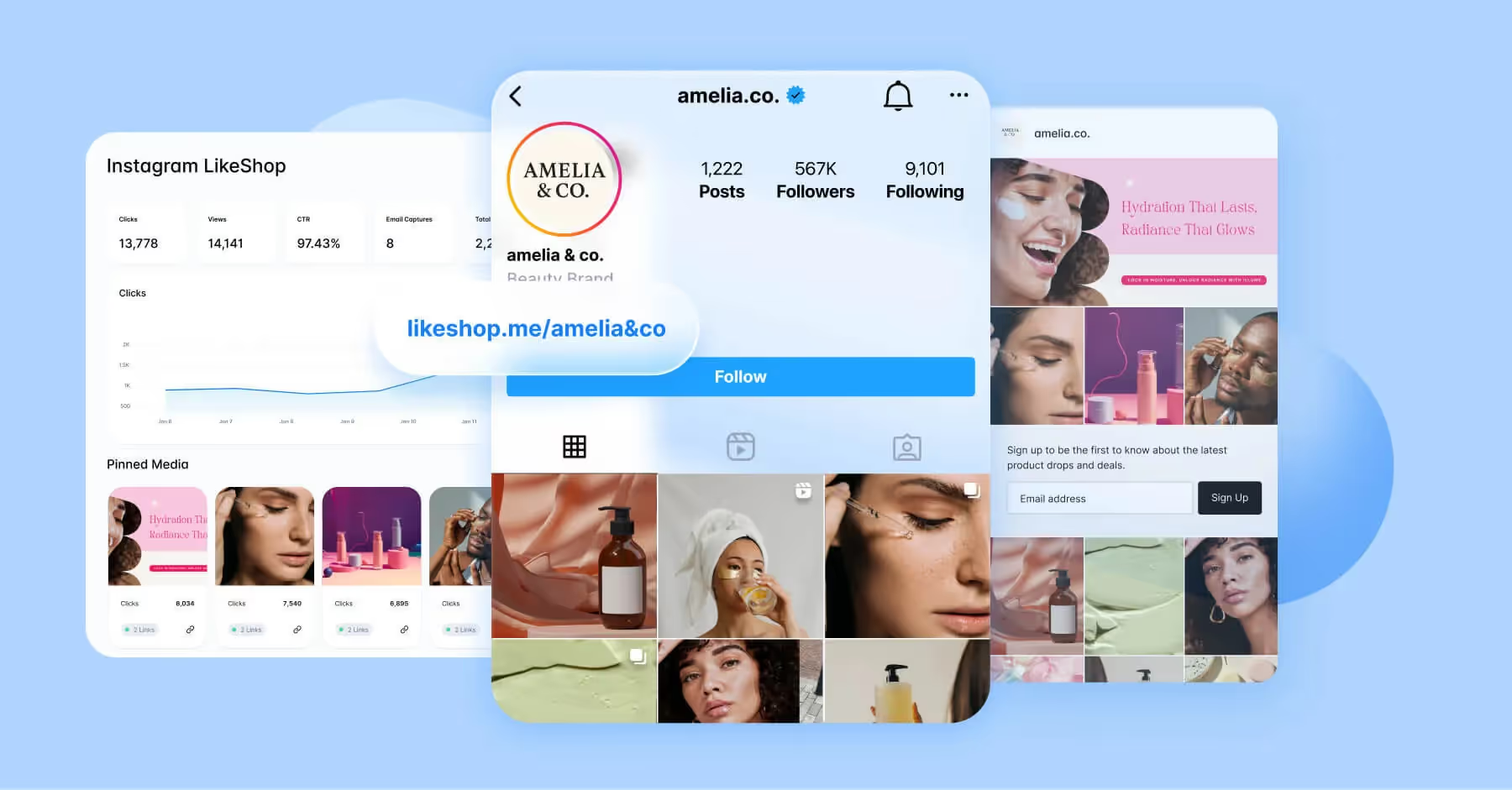
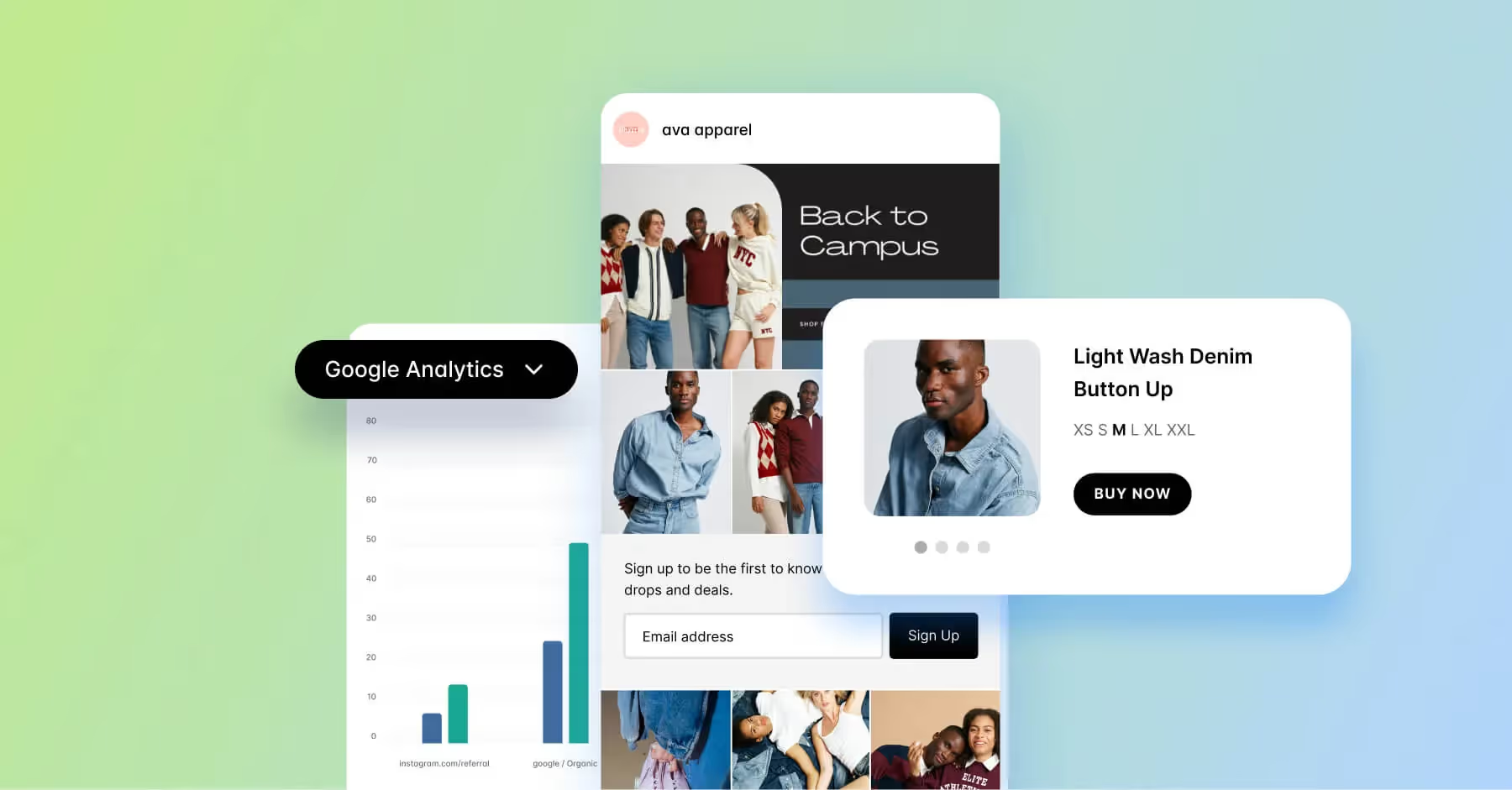
Meta recently reported that 92% of Instagram users who see a post immediately take action, such as clicking through to a website or making a purchase. With Dash Social's Product Tags feature, content becomes shoppable immediately, maximizing your post's conversion potential. Furthermore, our link-in-bio solution, LikeShop, allows you to leverage your Instagram and TikTok content and drive traffic to your website for a more effortless shopping experience. To measure attribution post-campaign, you can also use this feature to tailor your LikeShop with custom UTM codes and align your entire digital strategy.
Don’t Forget To Reward Loyalty
Remember your existing customers if you're offering a subscription-based product or service. In many cases, Black Friday is an excellent opportunity for businesses to attract new customers and build relationships with audiences who are making purchases from them for the first time. Thus, most deals and offers are aimed at prospects.
However, this can come at a price. If you forget about existing customers and do not offer them equally appetizing offers, you will likely experience frustration and disappointment, and eventually lose their loyalty. Take the time to think about ways to reward loyalty and retain customers. You could offer more generous referral schemes, provide early access to Black Friday offers, or give something for free with every additional purchase/upgrade.
Engage With Your Community
The management of social communities is an integral part of social media marketing, but it is especially important when running big campaigns like Black Friday. Marketers often monitor their social platforms to answer questions, monitor segments, and understand what customers are responding to. As a result of these insights, it is possible to pivot and change strategies in case the original plan is not successful.
Dash Social's Community Manager lets you interact with your followers in real-time, reply to direct messages, mentions, and post comments in one convenient inbox. The process may seem time-consuming, especially around Black Friday, but it's a great way to connect with your customers and form more meaningful relationships that will ultimately lead to brand loyalty and conversions.
Don’t Forget Cyber Monday
Cyber Monday has become a natural extension of Black Friday, giving brands another high-intent opportunity to capture holiday demand. Shoppers actively look for strong offers and expect brands to show up with compelling promotions, which makes it essential to align your Cyber Monday strategy with your broader Black Friday plans rather than treating it as an afterthought.
It’s also a prime moment to re-engage consumers who browsed but didn’t convert during Black Friday. Many brands use this window to run cart abandonment campaigns and retarget interested shoppers, encouraging them to return and complete their purchases. Timely reminders, exclusive offers, or limited-time incentives can help move hesitant buyers across the finish line.
To make the most of Cyber Monday, plan ahead. Think strategically about how you’ll extend the conversation, re-capture attention, and differentiate your offers in a crowded landscape.
Report Results Instantly
Congratulations, your Black Friday marketing strategy has now been successfully planned and executed. Having invested a lot of time, effort, and thought into this, it's now important to assess whether or not the results met your expectations. Keep in mind that these insights will be useful for future campaigns as well, so don't just view them as a way to measure success.
Dash Social's Campaign Reporting solution is intended to help you analyze the ROI of your cross-channel initiatives and optimize your future campaigns accordingly. Discover the full picture of your campaign performance across owned, earned, and creator media to effectively share across your organization and team. While this gives you a good idea of how your Black Friday campaign performed this year, it also provides you with insights into future campaigns that will be more profitable, and even shows you where you could be over investing.
Black Friday Marketing Examples
Want to jump start your social strategy with inspiration? Here are examples from popular brands to spark creativity.
Best Buy
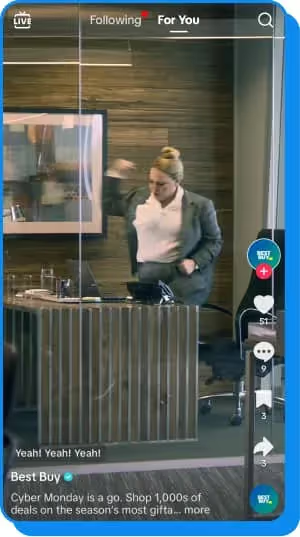
Best Buy promotes its Black Friday and Cyber Monday sales with a clever series of TikToks that highlight different products that appeal to different audiences. In the lead up to Black Friday, they tap into influencer marketing with a variety of influencers sharing their holiday gift ideas. This is the perfect method for reaching different audiences. Both fans of the influencers, and people seeking gift ideas and inspiration.
Therabody
Therabody, like many other brands, promotes their Black Friday sale on Instagram. They cleverly use video to share quick snippets of different products, highlighting different products in one, quick Reel rather than sharing a variety of posts. This is a great way to make sure products are seen and consumers are aware of their purchasing options.

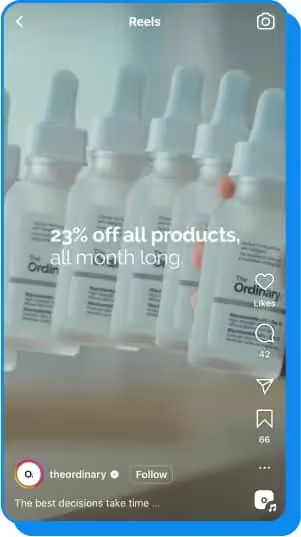
The Ordinary
The Ordinary approaches Black Friday in an entirely different way that rings true to its brand identity. Rather than pushing for sales during the week of Black Friday or the day itself, they encourage their followers to make slow, considered purchases, providing a discount all month long. This aligns with their brand ethos of integrity and accessibility.
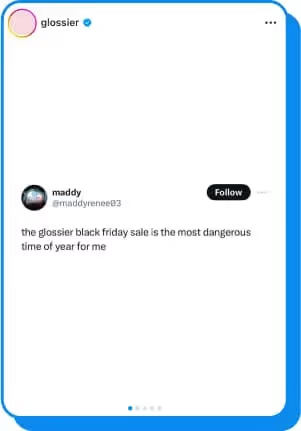
Glossier
Glossier doesn’t typically run sales, but they approach Black Friday but reminding their followers that it’s their biggest sale of the year. In addition to this, they share behind the scenes product recommendations from salespeople and other shots from their stores to encourage brick-and-mortar sales and online shopping.
FAQs
What is Black Friday marketing?
Black Friday marketing is a process in which brands attract consumers during the Black Friday weekend, enticing them to purchase their goods and services with big deals and offers. In many cases, these manifest themselves in the form of advertising, email marketing, and social media promotions.
How do you advertise Black Friday deals?
Brands usually advertise their Black Friday deals through multi-media advertising, email marketing, and social media campaigns. Planning ahead is crucial so you can understand your audience enough to find out where they are and to provide content that resonates with them, eventually driving them to make purchases during Black Friday.
How do you attract customers on Black Friday?
Understanding what resonates with consumers is key to attracting them on Black Friday. Using these insights, you can build up hype and ultimately attract more through various channels. Engaging customers through social entertainment, particularly through short-form video, is proving to be the most effective tactic these days, so do your best to authentically entertain your social media audiences and turn them into customers.