The Ultimate Guide to Health and Wellness Marketing Ideas
Explore marketing tips for the health and wellness industry.
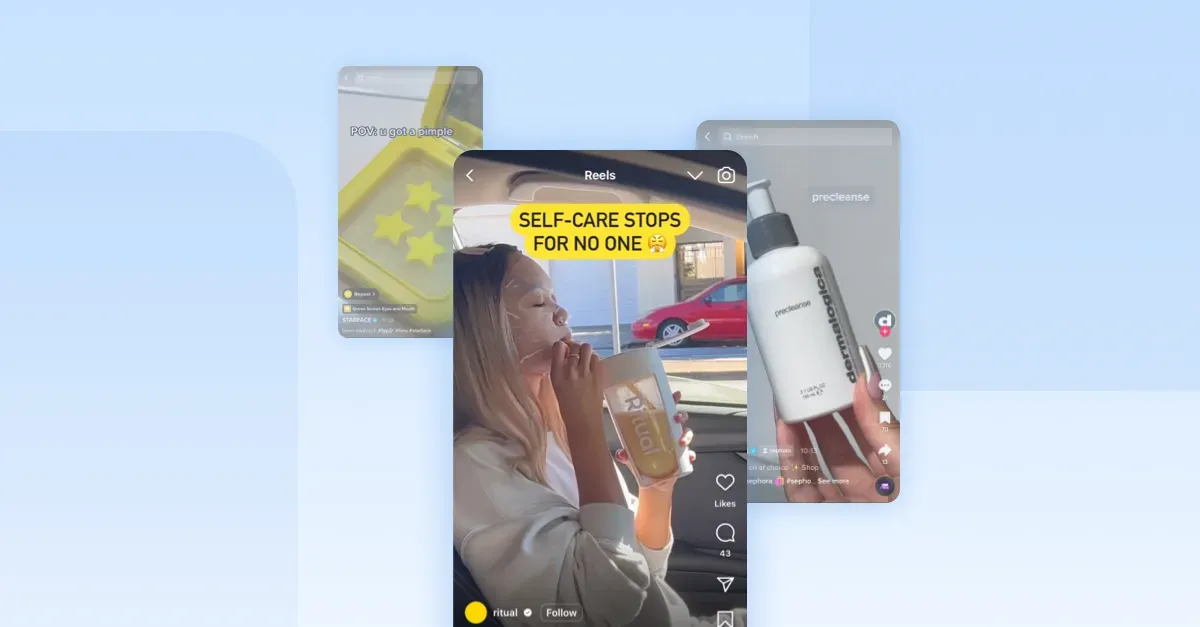

Consumer interest in health and wellness industry has exploded over the past couple of years, and this uplift has allowed brands to reach a much wider audience than ever before. An enormous audience is looking for solutions like yours, and your challenge is reaching them.
Creating a solid health and wellness marketing strategy is essential. Even brands not deeply involved in the health and wellness industry can consider incorporating these types of products into their mix (as many beauty brands have) since many consumers have become more focused on purchasing wellness products. In fact, the global market for wellness products and services will hit 7 trillion dollars by 2025, and a large piece of that market could be yours.
Key Takeaways
- Successful wellness marketing starts with research and education. Competitive insights and informative content help brands connect with audiences who are actively searching for credible solutions.
- Trust is everything in wellness. Building community, emphasizing science-backed benefits, and partnering with authentic creators can strengthen loyalty in a crowded space.
- Growth comes from diversification and personalization. Omnichannel strategies, social media SEO, trend participation, and tailored wellness experiences help brands reach wider audiences and drive long-term engagement.
Health and Wellness Marketing Strategies
Marketing for health and wellness as a concept is not limited by demographic, and anyone could be your potential customer. Strategies in this industry should be as accessible and far-reaching as possible, just as your products are accessible to everyone.
Here are some best practices to help you create a successful health and wellness marketing strategy:
Determine Your Competitors
Start by identifying your top competitors and observing what they're doing on social media. Dash Social's Competitive Benchmarking tool automates this process, so you don't have to prepare a spreadsheet.
Once you understand what they're doing well, you can refine your marketing strategy for health and wellness by incorporating their strengths and avoiding their missteps. To generate marketing ideas for health and wellness and identify competitors, we've written about the top wellness brands on Instagram and the best athleisure brands on Instagram.

Conduct Competitive Research
What do your competitors do successfully? While your strategy shouldn’t copy theirs, conducting competitive analysis helps you identify:
- Content that resonates with users
- Performance benchmarks for your campaigns
- Untapped opportunities in wellness marketing
This can guide your efforts in creating unique, engaging content for your audience.
Educate Your Audience
In the health and wellness industry, education is important. Consumers use social media, and social entertainment platforms in particular, as search engines to learn more about products and share information with friends. Educational content performs well, especially with health and wellness, as many of your potential customers may not even know they need your product until they see your content. Consider using these formats to educate and engage:
- Informational videos
- Blogs
- Podcasts
- Interactive quizzes or resources
By leveraging these tools, you can give your audience credible, digestible information in an engaging way.
Build a Community
Building a social media community around your brand creates a connection between you and your audience, ultimately leading to trust and loyalty. It can be as easy as replying to your followers’ comments, actively replying to DMs, or liking comments. Community based marketing involves a lot of small gestures that ultimately make a huge difference. And Dash Social has capabilities to help you with that, take a look at our Community Manager tool.
Emphasize Science-Backed Solutions
Consumers want more than quick fixes, they seek products and services grounded in scientific evidence. Efficacy and scientific credibility are two of the most important factors to consumers when selecting wellness products. Brands that provide clinically proven solutions can build greater trust and meet the sophisticated demands of modern consumers. Here are some ideas of educational content to produce:
- Share clinical study results.
- Use testimonials from experts in your field.
- Emphasize the unique benefits of your product.
Highlighting the efficacy and scientific validation of your offerings can set you apart in a crowded marketplace.
Personalize Wellness Experiences
Consumers increasingly expect health and wellness products tailored to their needs. Personalization can include customizable products, curated recommendations, or data-driven insights.
Benefits of personalization in marketing for health and wellness:
- Increased engagement.
- Higher satisfaction.
- Stronger brand loyalty.
Diversify Marketing Channels
An omnichannel marketing approach ensures you reach a wider audience. Creating platform-specific content can enhance user experiences and drive conversions.
Key considerations:
- Be consistent across platforms.
- Use social media SEO to boost discoverability.
- Engage with audiences authentically.

Health and Wellness Marketing Ideas
The health and wellness industry is wide-reaching. That means that what idea works for one niche in the health and wellness industry might not work for others. However, there are a few health and wellness ideas brands can incorporate into their content strategy.
So, what are some health and wellness digital marketing ideas brands can try to include in their content strategy?
Use Pinterest
Pinterest is the ultimate product discovery platform. Its users have high buying intent, and the only thing brands need to do is ensure that their pins, aka products, are visible enough to be found with the Pinterest algorithm. Content surrounding building healthy habits does well on the platform, and using the right Pinterest Insights will allow you to hone in on what’s resonating with users and identify where to optimize.
A great opportunity to easily and quickly create content is to use Pinterest Shuffles. An app that lets you create your own collages with Pinterest pins. This can be a great way to create moodboards that reflect your brand and spotlight products, and maximize what you can do with your Pinterest content.
Tips for success on Pinterest:
- Use Pinterest Shuffles to create mood boards and spotlight products.
- Leverage Pinterest Insights to optimize your content.
- Post regularly to stay visible in search results.
Collaborate With Micro-Influencers
Micro-influencers have smaller followings, but Dash Social determined that they earn brands much higher engagement rates than macro-influencers. While partnering with macro-influencers has its place, particularly when the goal is to earn as much reach as possible, micro-influencers are better positioned to advocate for your products with authenticity. They benefit from a high level of trust from their niche audience, and in this space, many health and wellness influencers have emerged who specialize in certain aspects of healthy lifestyles, and brands are taking note by including them in their organic influencer marketing strategies. Dash Social's Creator Management tool can help you to measure influencer and creator ROI to understand how powerful brand ambassadors and UGC can be for your bottom line.
Practice Social Media SEO
Practicing social media SEO is a great way to increase your chances of being found not only on search, but on social. Social media SEO is easy to incorporate if you’re not already doing so. Essentially, SEO for social media involves optimizing your profile and content to increase your chances of being found, but also, to increase your chances of being suggested to relevant users. Many social media algorithms, like the YouTube algorithm, are more likely to show optimized content. This can differ from platform to platform, but generally, optimizing your profiles and posts involves:
- Including your website or a link-in-bio on your profile.
- Adding a high-quality profile image.
- Ensuring your photos are sized properly for their respective platform.
- Adding alt text to images when relevant and available.
- Using minimal hashtags to avoid appearing spammy.
- Using a business profile when available and appropriate.
Stay On Top of Social Trends
While not every social media trend will apply to your brand, many will. Especially if your team is able to think outside the box. For example, let’s look at the ‘Get Ready With Me Trend’. On its face you might not think a trend will work, but think again. For example, you could partner with a wellness or healthcare influencer to film a ‘GWRM’ video using your product or to take a fitness class. Think of creative, authentic ways your brand can partake in new industry trends.
Health and Wellness Brands Getting Social Right
Health and wellness brands have a unique challenge on social. They need to build trust, stand out in a crowded category, and make their content feel approachable, all at once.
The brands doing this well are not relying on polished product shots or constant promotion. They are building content around what their audience actually wants to engage with, whether that is community, education, entertainment, or creator-led relevance.
Here’s a look at four brands doing it well, and what marketers can learn from their approach.
Bloom Nutrition turns creator partnerships into product momentum
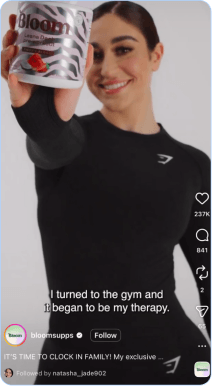
Bloom Nutrition stands out for the way it uses creator and influencer collaborations to drive attention around limited-edition flavor drops. These partnerships give the brand a repeatable content engine that feels social-first and highly shareable.
Instead of treating creators as a one-off awareness play, Bloom ties them directly to the product story. Limited-edition flavors give audiences something timely and specific to engage with, while creator partnerships help those launches feel more credible, more culturally relevant, and more likely to travel across feeds.
That combination matters. The product gives the collaboration a hook, and the creator gives it reach and personality.
What marketers can take away
Bloom shows how to make influencer marketing feel more strategic. When creator collaborations are tied to a clear product moment, they can do more than generate awareness. They can build urgency, spark conversation, and give the audience a reason to act now.
SoulCycle builds community into the content
SoulCycle’s social presence works because it feels bigger than fitness. The brand consistently creates content that reflects identity, belonging, and shared values, which makes its channels feel more like an extension of the community than a marketing feed.
A strong example is its “Love Lives Here” Instagram Reels series for Pride Month, which spotlighted LGBTQIA+ instructors. Instead of leading with a seasonal promotion, SoulCycle focused on real people within its community. That choice made the campaign feel personal, inclusive, and true to the brand.
Its broader Reels strategy supports that same feeling, with a mix of instructor spotlights, class promotion, and product and studio highlights across locations.

What marketers can take away
SoulCycle shows that community is not a supporting message. It can be the strategy. When people see themselves reflected in your content, the brand becomes more memorable, more trusted, and more emotionally relevant.
Love Wellness makes education feel easy to engage with
Love Wellness stands out by helping its audience understand the category. Rather than assuming consumers will research ingredients or product benefits on their own, the brand creates content that explains complex topics in a simple, useful way.
Content that breaks down the difference between prebiotics, probiotics, and postbiotics is a good example. It gives the audience practical value while also making the product ecosystem easier to understand.
On TikTok, that educational content sits alongside trend-driven videos, product campaigns, and behind-the-scenes moments. The mix matters. It keeps the brand informative without becoming overly clinical or one-note.

What marketers can take away
Education works when it reduces friction. Love Wellness builds trust by making the category easier to navigate, and that trust helps move people closer to purchase.
Goli Nutrition uses creators to make the message more engaging
Goli Nutrition takes a lighter, more entertainment-led approach. In one creator partnership, the brand used a street-interview format that asked people what they would nickname their gut. The concept was playful and easy to watch, but it still connected back to the brand’s gut health positioning.
What makes the content effective is its restraint. The product is not pushed too hard, and the message is built into the idea rather than layered on afterward. That gives the content a better chance of feeling native to the platform and credible to the audience.

What marketers can take away
Not every brand message needs to be delivered directly. Goli shows that when the creative is strong, the connection to the product can be subtle and still land.
The bigger takeaway for wellness brands
These brands are taking different routes, but the pattern is consistent. High-performing wellness content tends to start with something inherently engaging, then connect that attention back to the brand.
For SoulCycle, that starts with community. For Love Wellness, it starts with education. For Goli, it starts with entertainment. For Bloom Nutrition, it starts with creator-led product moments people want to be part of.
The strongest brands in the category understand the same thing. People do not engage with wellness content because it is branded. They engage because it feels relevant, useful, interesting, or timely. The brand earns attention by giving them a reason to care first.
Build a Health and Wellness Marketing Strategy With Dash Social
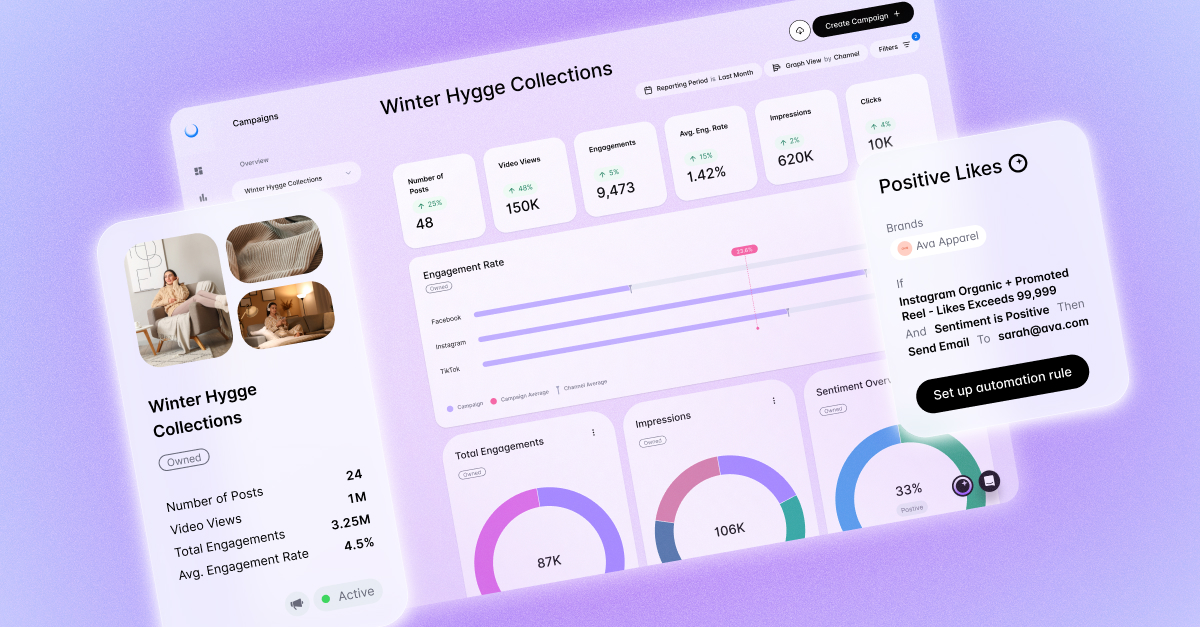
Dash Social has the competitive insights you need to outplay your competition and build a robust social commerce strategy. Your social campaigns will stretch across multiple platforms, and our campaign reporting tools allow you to manage everything from one place, including TikTok and Instagram Reels. Managing your scheduling and social analytics needs in Dash Social will save you time, help you surface meaningful insights to elevate your brand, and help you grow your market share in this competitive space.
Health and Wellness Marketing FAQs
aHow do you market wellness?
Wellness marketing comes down to educating audiences about how to uplift their quality of life. The easy part is that audiences are actively searching for the solutions you provide, and the hard part is that wellness is a highly competitive space.
How big is the wellness market?
The colossal wellness market will become a 7 trillion dollar industry worldwide by 2025.
Is the wellness industry growing?
The wellness industry is growing significantly as an increasing number of people seek products and services to improve their lives.
How much do health and wellness brands spend on marketing?
The health and wellness brand sector is enormous, and it only grows in size and ad spend as it becomes more competitive.
.avif)

.jpg)