10 Best Campaign Management Tools for Social Teams in 2026
The top tools for social campaign planning, collaboration, measurement, and scale.
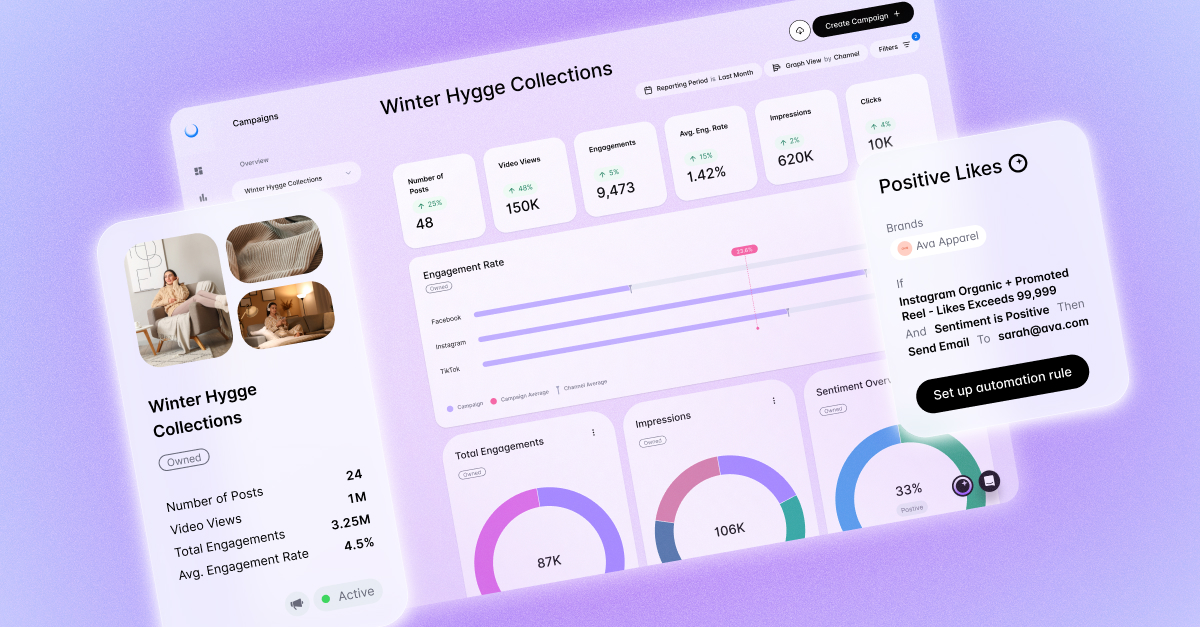

Social campaigns are harder to manage than they used to be. As a result, social teams need campaign management tools that help improve visibility, collaboration, and performance insights across the entire campaign lifecycle.
In this guide, we compare 10 of the best campaign management tools for brand teams in 2026, including where each tool fits best and where teams may run into limitations.
Key Takeaways:
- The best campaign management tool depends on your team's structure, workflow complexity, reporting needs, and growth goals.
- Enterprise platforms prioritize governance, approvals, integrations, and cross-channel visibility, while leaner tools focus on ease of use and efficient execution.
- Unified reporting across owned, paid, earned, and creator content helps teams better understand campaign performance and ROI.
- AI-powered insights are most valuable when they are built on accurate, platform-backed data that reflects your brand, audience, and campaign history, not generic benchmarks.
The Best Campaign Management Tools at a Glance
Before choosing a campaign management tool, it helps to get clear on what your team actually needs to manage. For social teams, that usually means more than a shared calendar or a place to schedule posts. The right platform should help you plan campaigns, keep approvals moving, publish across channels, manage creator and community workflows, and prove what worked once the campaign is live.
Here’s how the top campaign management tools compare at a glance.

What Social Teams Need From a Campaign Management Tool
Modern social teams need a connected system that supports planning, execution, and measurement. The best campaign management tools help teams move from idea to launch to performance reporting without losing context along the way.
Shared calendars, approvals, and collaboration
Campaigns often involve social managers, creative teams, brand leads, legal reviewers, influencers, paid media teams, and executives. Without a shared workspace, approvals slow down, and campaign context gets scattered across emails, spreadsheets, and chat threads.
Platforms like Dash Social, Sprout Social, and Sprinklr support more structured workflows for larger teams. Loomly and Agorapulse are often a better fit for smaller teams that need simpler planning and approval processes.
Campaign tagging, scheduling, and publishing
Good campaign reporting starts before a post goes live. Teams need a consistent way to tag content by campaign, objective, product, channel, creator, region, or audience.
Tools like Dash Social, Hootsuite, and Sprout Social support scaled publishing workflows across multiple social channels. Later and Sendible are often better for teams that need visual planning, straightforward scheduling, or agency-style content operations.
Social listening, community, and creator workflows
As social becomes more community and creator-driven, teams increasingly rely on listening, engagement, and influencer workflows to inform campaign strategy.
Enterprise platforms like Sprinklr and Sprout Social offer strong listening and engagement capabilities. Dash Social brings listening, community management, creator workflows, and campaign performance into a more social-first reporting landscape.
Cross-channel reporting and ROI visibility
Post-level metrics are useful, but they rarely tell the whole story. A campaign might perform well because of a creator partnership, a paid boost, a UGC moment, or a high-performing organic post that shared the creative direction.
The strongest tools help teams connect those pieces. They make it easier to see what drove awareness, engagement, traffic, conversions, and content efficiency across the campaign.
10 Best Campaign Management Tools for Social Teams
There is no single best campaign management tool for every team. A global retail brand managing approvals across regions does not need the same setup as an agency scheduling client content. A B2B software company focused on pipeline attribution will evaluate tools differently than a beauty brand running creator-led TikTok campaigns.
The tools below all support campaign management in some way, but they are built for different operating models.
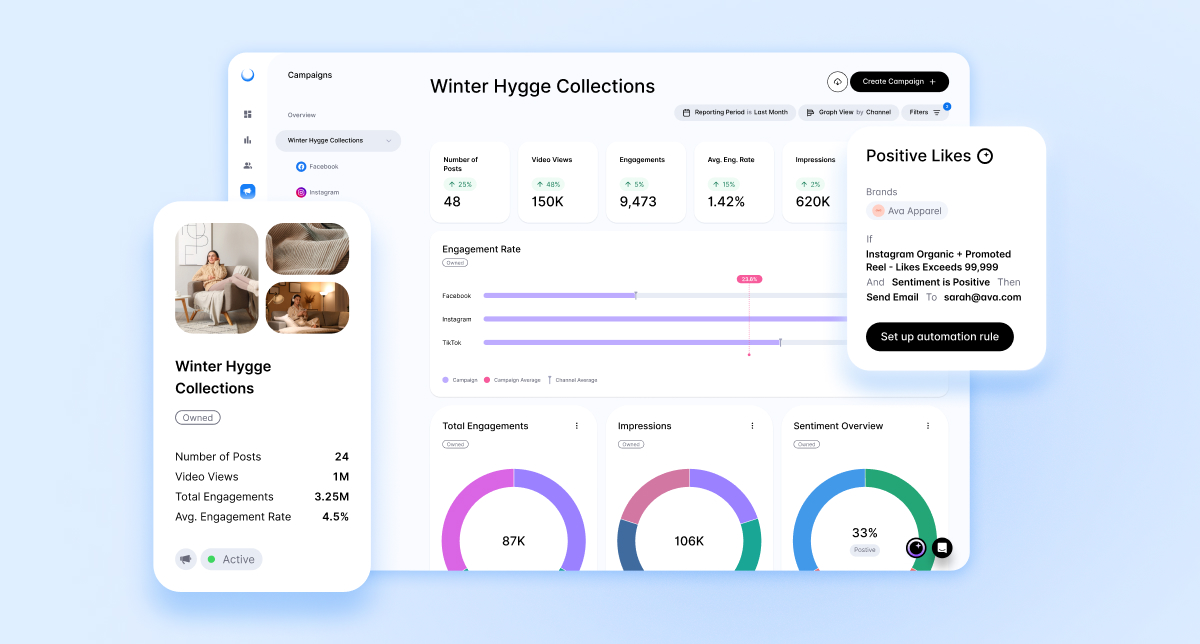
1. Dash Social
Dash Social is a social media management platform that brings owned, paid, earned, and creator content into one connected view. Powered by brand-specific AI, Dash helps teams understand what’s working, predict what will perform, and prove impact across every channel.
Best for: Social-first brands managing owned, earned, paid, creator, and UGC campaigns in one connected platform.
Strengths: Unified campaign reporting, API-backed performance data, creator and UGC insights, paid and organic visibility, brand-specific AI, predictive creative intelligence, and cross-channel performance insights.
Limitations: Teams that need a customer experience platform for phone, email, and chat may still need a dedicated CX tool.
Pricing: Custom plans based on team needs, channels, and workflows.
Ideal brand size: Mid-sized, enterprise, and global consumer brands with in-house social teams.
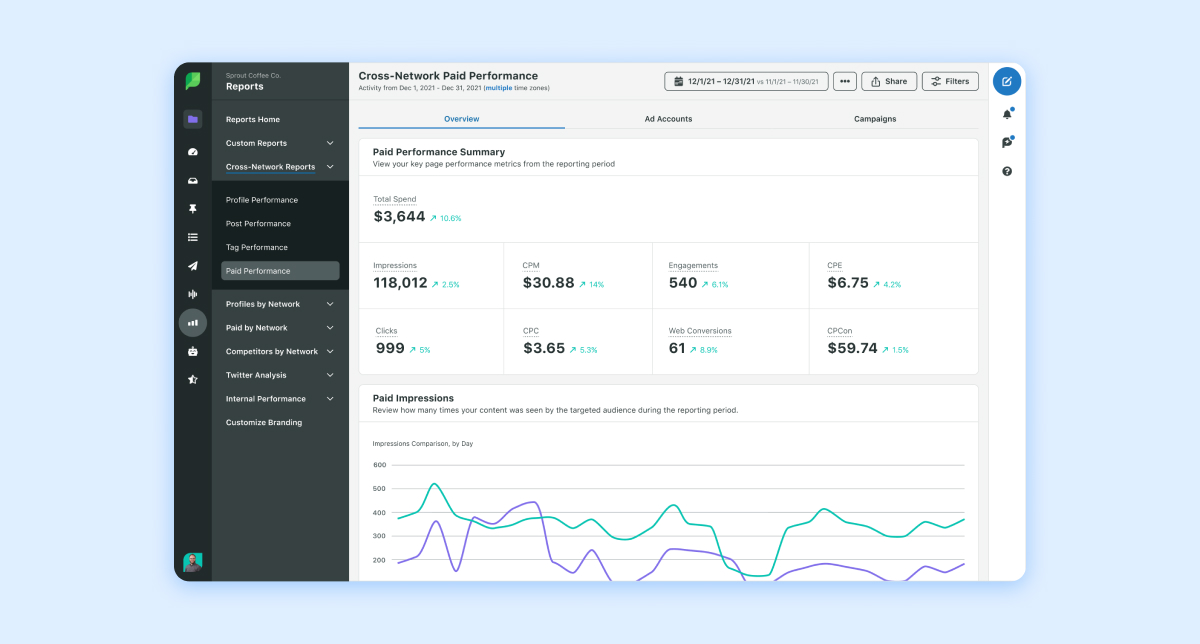
2. Sprout Social
Sprout Social is a social media management platform for teams that need publishing, engagement, listening, and social media analytics in one system.
It’s a practical choice for brands managing multiple social profiles and large volumes of engagement. Sprout is especially useful when community management and cross-network reporting are central to the team’s daily work.
Best for: Brands and marketing teams that need comprehensive social media management, engagement, and collaboration across multiple networks.
Strengths: Social publishing, community management, engagement workflows, approval processes, social listening, and performance reporting.
Limitations: Creator marketing, influencer relationship management, and end-to-end campaign visibility may require additional tools or manual workflow coordination.
Pricing: Mid-to-high-tier pricing with plans that scale based on users, features, and reporting needs.
Ideal brand size: Mid-sized to enterprise organizations managing multiple social profiles, large engagement volumes, and cross-functional social teams.
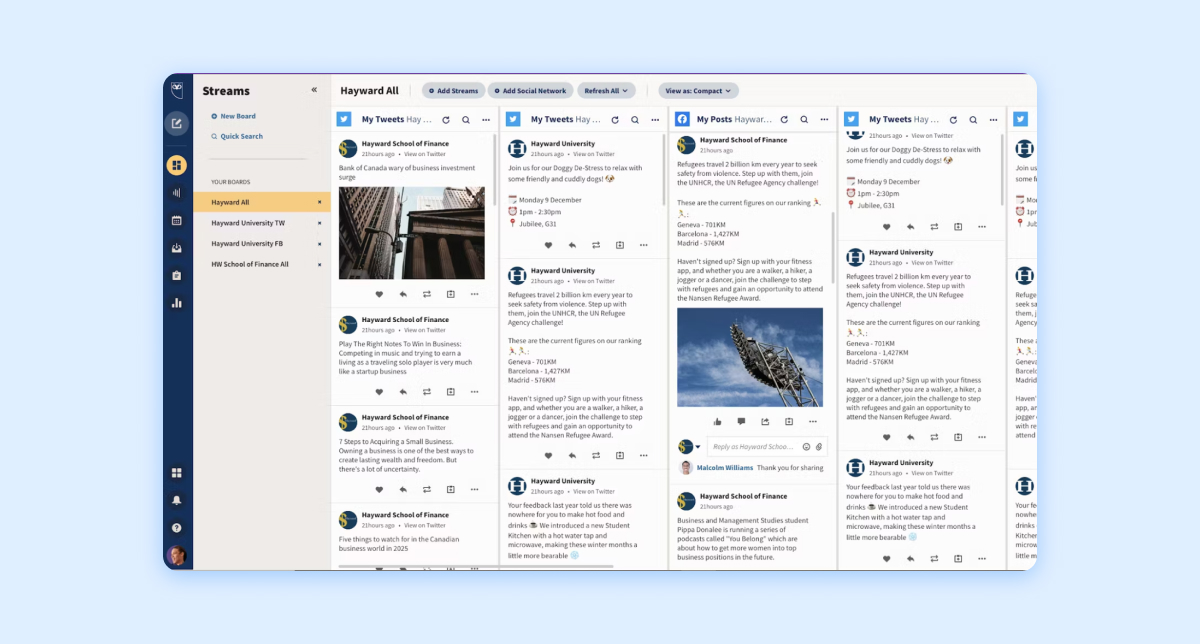
3. Hootsuite
Hootsuite is built for teams that need to schedule, publish, monitor, and coordinate a lot of social content across multiple channels.
Its biggest strength is operational scale. For teams managing many accounts, regions, or brands, Hootsuite can help centralize publishing and monitoring. The tradeoff is that it is less specialized for creator-led campaigns or creative performance analysis.
Best for: Marketing and social media teams managing high volumes of content across multiple social networks from a centralized platform.
Strengths: Content scheduling and publishing, social media monitoring, team collaboration, approval workflows, inbox management, social listening, and cross-channel performance reporting.
Limitations: Creator marketing, influencer relationship management, and creative campaign workflows aren’t as central to the platform and may require additional specialized tools.
Pricing: Plans scale based on users, social accounts, and advanced capabilities such as analytics, listening, and employee advocacy.
Ideal brand size: Mid-sized businesses, agencies, and enterprise organizations managing multiple brands, regions, or social channels.
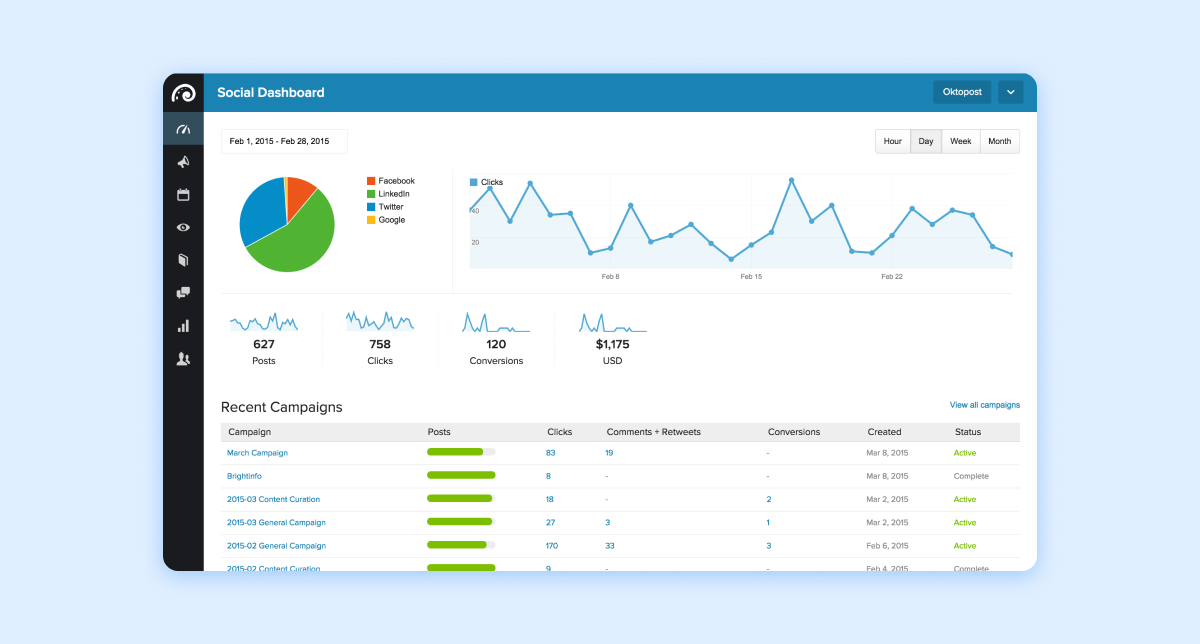
4. Oktopost
Oktopost is designed for B2B social media teams that need to connect social activity to pipeline, lead generation, and revenue.
This isn’t the best fit for every social team. But for B2B brands that rely heavily on LinkedIn, employee advocacy, CRM integrations, and attribution reporting, Oktopost is a great fit.
Best for: B2B marketing teams that need to connect social media reporting to lead generation, pipeline growth, and revenue outcomes.
Strengths: B2B-focused social publishing, employee advocacy, CRM and marketing automation integrations, LinkedIn campaign management, and attribution reporting.
Limitations: The platform is designed primarily for B2B organizations and may be less suited for consumer brands that prioritize visual storytelling, creator partnerships, influencer marketing, or trend-driven social campaigns.
Pricing: Custom pricing based on business requirements, team size, and selected products.
Ideal brand size: Mid-sized to enterprise B2B organizations with mature marketing operations, sales alignment, and a focus on revenue attribution.
5. Sprinklr
Sprinklr is an enterprise customer experience platform that brings together social media, listening, customer care, analytics, workflows, and governance.
It can do a lot, but that depth comes with complexity. Sprinklr is best for large organizations that need control across regions, brands, business units, and digital channels. For a smaller social team that mainly wants to move faster on campaigns, it may feel heavier than necessary.
Best for: Global enterprise organizations that need unified management of social media, customer experience, and digital channels at scale with strict governance requirements.
Strengths: Enterprise-grade social publishing and governance, multi-level approval workflows, advanced social listening, cross-channel customer care, workflow automation, and extensive integrations across marketing, service, and analytics systems.
Limitations: The platform’s breadth and depth can introduce operational complexity, making it less suitable for teams that prioritize speed, simplicity, or social-first campaign execution over enterprise-wide orchestration.
Pricing: Custom enterprise pricing based on modules, users, and scale of deployment across teams and regions.
Ideal brand size: Large global enterprises, regulated industries, and organizations managing multiple business units, regions, and customer experience functions across digital channels.
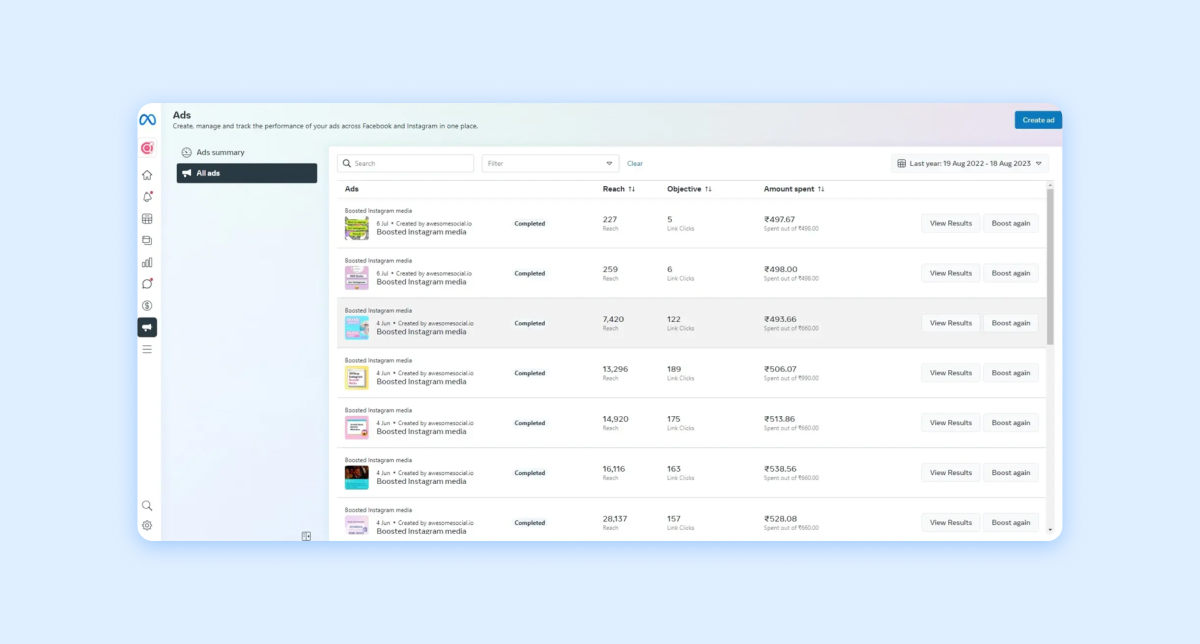
6. Agorapulse
Agorapulse is a streamlined social media management tool for teams that need efficient publishing, inbox management, reporting, and collaboration without a cumbersome enterprise setup.
Where Agorapulse is strongest is in day-to-day execution. It gives smaller teams and agencies the basics they use most often: scheduling, approvals, social inbox management, and clean reporting.
Best for: Small to mid-sized social media teams and agencies that need a simple way to manage publishing, engagement, and reporting.
Strengths: Content publishing and scheduling, unified social inbox, approval workflows, and straightforward performance reporting.
Limitations: Less depth for enterprise-level campaign attribution, advanced analytics, and creator or influencer marketing workflows compared to more specialized or enterprise-focused platforms.
Pricing: Tiered subscription pricing based on users, profiles, and feature set.
Ideal brand size: Small businesses, lean marketing teams, and agencies managing multiple client accounts or social profiles.
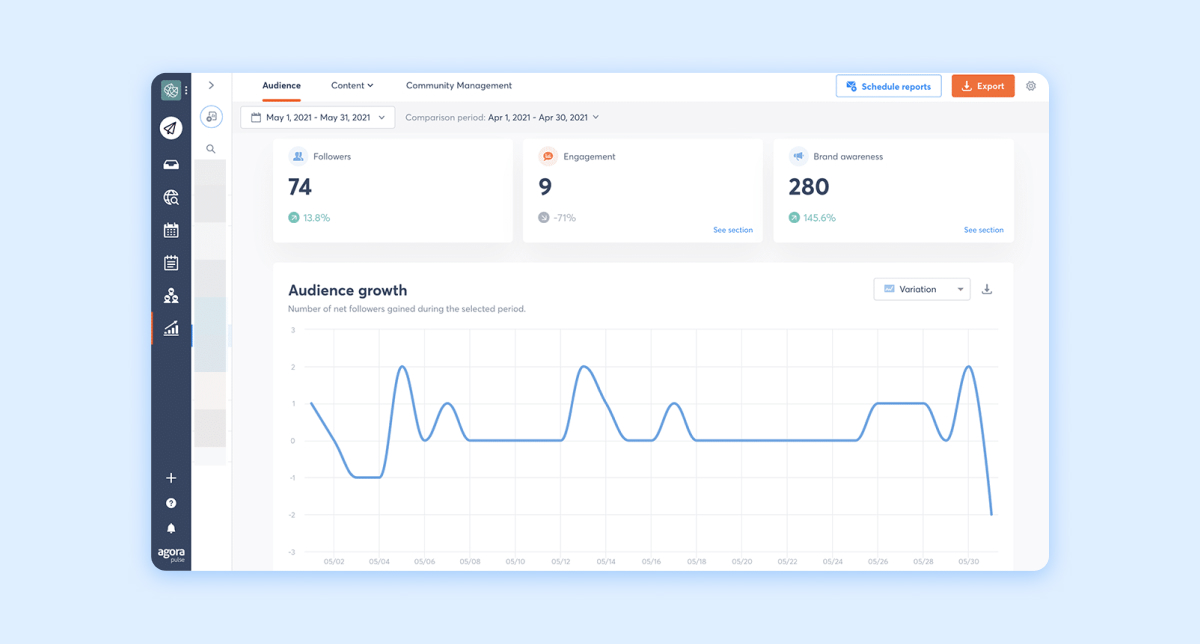
7. Later
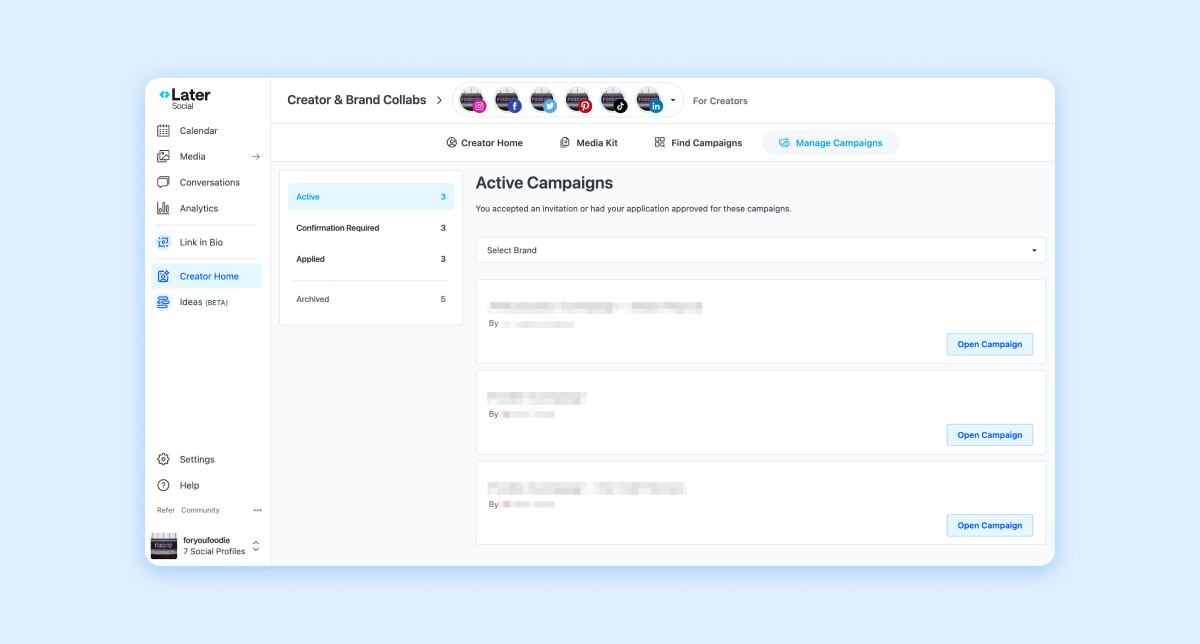
Later is a visual-first social platform built for teams that care a lot about content planning, creator workflows, and social storytelling. It is a natural fit for brands targeting Instagram, TikTok, and creator-led content. Teams can plan feeds, schedule content, manage link-in-bio experiences, and track content performance. It’s less ideal for complex approval structures or advanced campaign attribution.
Best for: Visual-first marketing teams, creator-led brands, and social media managers focused on Instagram, TikTok, and other visually driven channels.
Strengths: Visual content planning and scheduling, link-in-bio management, influencer marketing workflows, content calendar organization, and post-level performance insights.
Limitations: Less suited for complex enterprise governance, advanced cross-channel reporting, or large-scale multi-team workflow management.
Pricing: Tiered subscription plans based on users, social profiles, and feature sets.
Ideal brand size: Small to mid-sized brands, creator-focused teams, and visual-first marketing organizations.
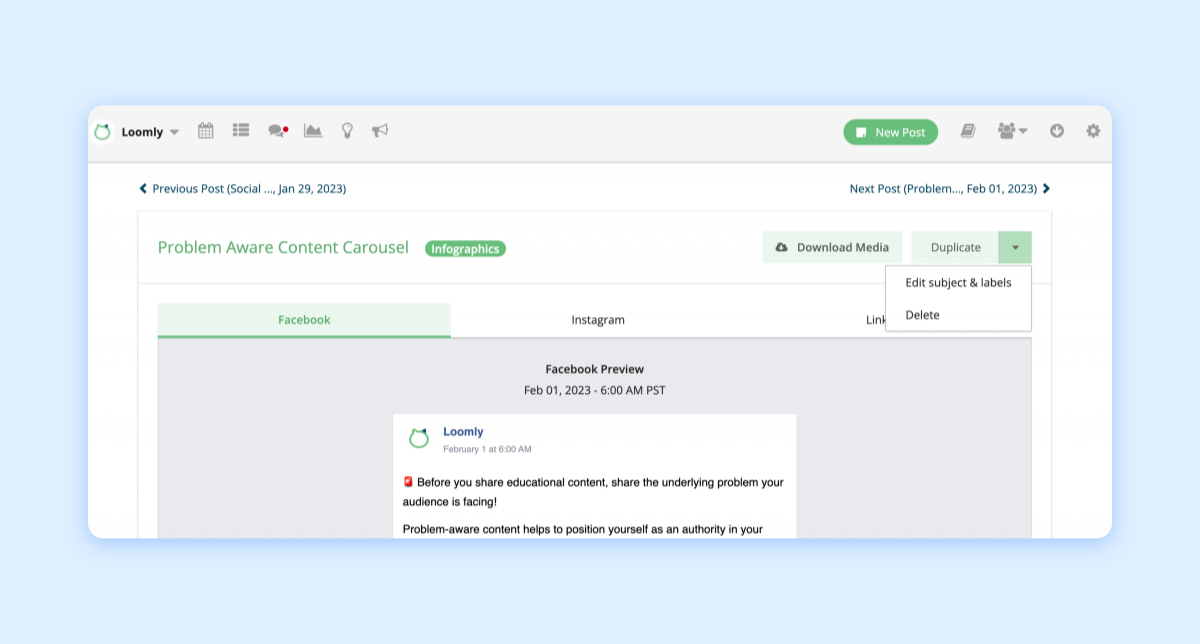
8. Loomly
Loomly is a simple social planning and collaboration tool for teams that need help organizing content calendars, approvals, and publishing.
It’s a good fit when the main challenge is keeping content organized and stakeholders aligned. Teams that need deep analytics, listening, creator management, or ROI reporting may eventually outgrow it.
Best for: Small to mid-sized marketing teams that need a straightforward way to plan, collaborate on, and publish social content.
Strengths: Content calendar management, post ideation and planning, team collaboration, approval workflows, and publishing across major social platforms.
Limitations: Limited capabilities in social listening, creator or influencer management, and advanced ROI or cross-channel campaign attribution.
Pricing: Tiered subscription plans based on number of users and social accounts.
Ideal brand size: Small to mid-sized businesses, content marketing teams, and agencies prioritizing structured planning and approvals.
9. Sendible
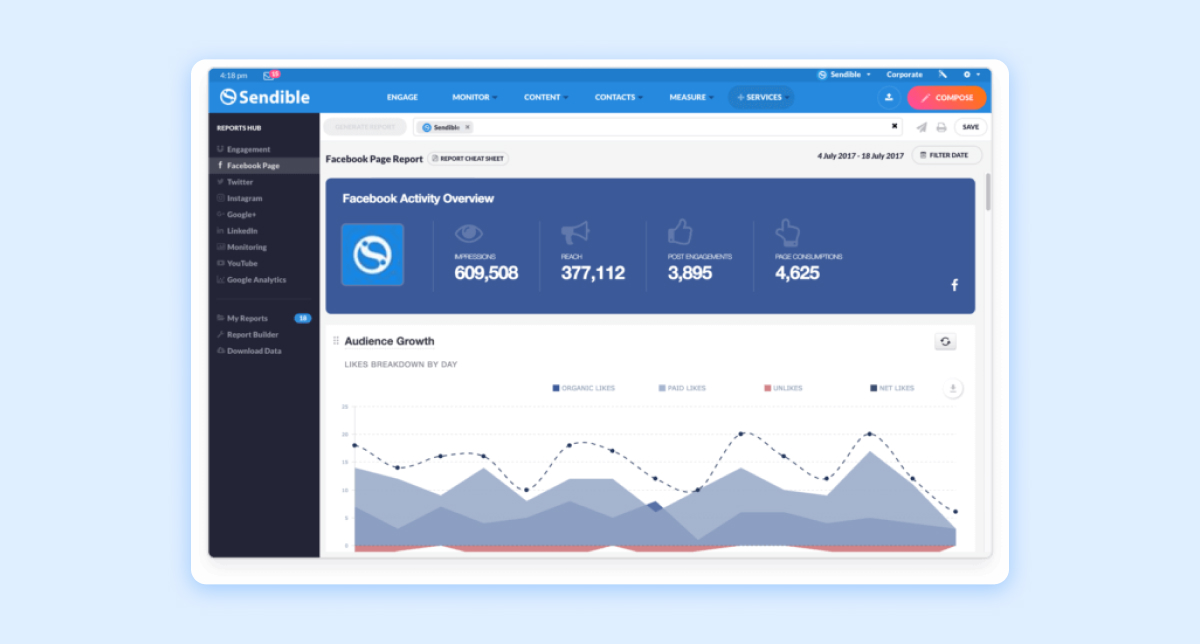
Sendible is an agency-focused social media management platform built for teams managing multiple clients, accounts, and reporting needs.
Its value is clearest for agencies that need to keep content moving through approvals, manage inbox workflows, and send polished reports to clients. It’s less specialized for in-house enterprise teams running creator-heavy or performance-driven social campaigns.
Best for: Social media agencies and consultancies managing multiple clients, brands, and accounts.
Strengths: Content scheduling and publishing, approval workflows, unified inbox, and white-label reporting.
Limitations: Less suited for in-house enterprise social teams or brands focused on creator-led campaigns, advanced attribution, and integrated cross-channel marketing strategies.
Pricing: Tiered subscription plans based on number of users, social profiles, and client management needs.
Ideal brand size: Small to mid-sized agencies, social media consultants, and marketing firms managing multiple external clients and campaigns.
10. Airtable
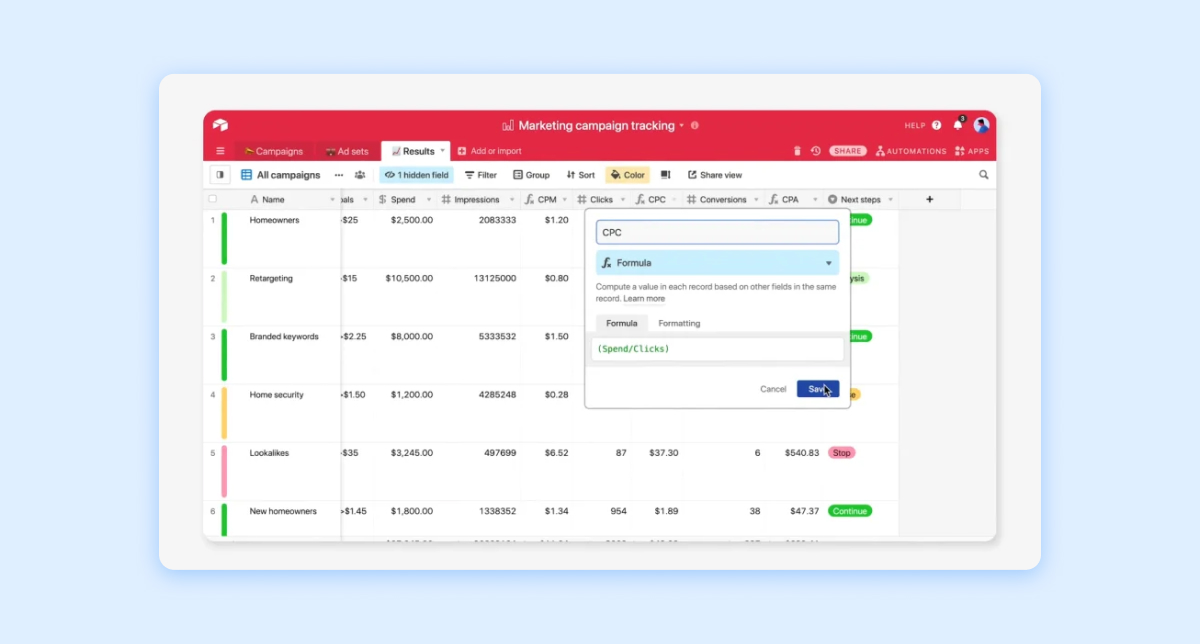
Airtable is not a social media management platform, but many marketing teams use it to build custom campaign planning systems.
It works well for cross-functional planning, asset tracking, creative production, and stakeholder visibility. The main caveat is that social publishing, listening, and native reporting usually require integrations or separate tools.
Best for: Cross-functional marketing and operations teams that need a flexible system to plan, track, and manage campaign work across departments.
Strengths: Customizable workflows, content calendars, asset tracking, approval management, and stakeholder visibility.
Limitations: Not a dedicated social media management platform. Publishing, social listening, and native social reporting typically require additional tools.
Pricing: Tiered subscription plans based on users and feature needs, with additional costs for advanced automation, integrations, and enterprise governance.
Ideal brand size: Small to enterprise teams across industries that need customizable campaign operations rather than a purpose-built social media management solution.
Best Tools by Team Type
Choosing the right campaign management tool usually comes down to how your team is structured and what outcomes you’re optimizing for.
Best for enterprise social teams
Sprinklr and Dash Social are strong options for enterprise and high-growth social teams, but they solve different problems.
Sprinklr is designed for broad enterprise customer experience, governance, and global workflows. Dash Social is more focused on social-first campaign execution, creator visibility, creative performance, and unified reporting across owned, paid, earned, and creator content.
Best for B2B social and revenue attribution
Oktopost is best for B2B teams that need to connect social activity to pipeline and revenue. It’s purpose-built for LinkedIn-heavy programs, employee advocacy, CRM integrations, and attribution reporting, making it perfect for B2B brands looking for a campaign management solution.
Best for lean social teams and agencies
Agorapulse and Sendible are practical choices for teams with limited time and resources that need to publish content, manage inboxes, handle approvals, and report on performance without enterprise complexity.
Agorapulse is a good fit for in-house teams that want simplicity, while Sendible is especially useful for agencies managing multiple clients.
Best for cross-functional campaign planning
Airtable is best for teams that need flexible planning systems across marketing, creative, product, and operations. It can help teams organize campaign work, but it’s not a replacement for a dedicated social publishing or analytics platform.
How To Choose the Right Campaign Management Tool
The right campaign management tool depends on your team's size, goals, channels, and reporting needs.
Enterprise organizations may prioritize governance, approvals, and cross-functional collaboration, while lean teams often value simplicity and speed. It's also important to look at how well a platform integrates with your existing tech stack, whether it can support the level of attribution needed to measure campaign ROI, and how effectively it connects performance across channels.
It is also worth looking closely at how each platform handles data. As AI becomes a bigger part of social marketing, teams should prioritize tools that use accurate, platform-backed data from their own brand, audience, content, and campaign history.
Generic benchmarks can be useful for context, but they should not be the foundation for campaign decisions. The best insights come from understanding what works for your audience.
Why Dash Social Belongs on the Shortlist
Owned, earned, paid, and creator reporting
One of Dash's biggest advantages is that it brings campaign performance from owned, paid, UGC, and creator activities into one place.
That matters because most campaigns don’t succeed through one channel alone. A creator post might spark interest, organic content might keep the conversation going, paid media might extend reach, and UGC might reveal what people are actually responding to.
Rather than teams having to piece together results from multiple platforms, Dash allows marketers to evaluate campaign performance across content types and channels in a single view. Combined with API-backed performance data and brand-specific AI insights, Dash helps social teams move beyond segmented reporting and gain a more complete view of campaign impact.

Campaign visibility across creative, channels, and teams
Effective campaign management requires visibility into how campaigns are progressing across teams, channels, and creative assets. Dash gives teams one place to organize campaigns, monitor performance, track creator activity, and connect engagement signals back to campaign goals. By bringing together content, creators, community insights, and reporting in one place, teams can stay aligned and understand what’s driving results at every stage of a campaign.
Campaign Management Tools FAQs
What’s the difference between a social media management tool and a campaign management tool?
A social media management tool is primarily focused on day-to-day execution across social channels, such as scheduling posts, managing inboxes, engaging with audiences, and tracking social performance. A campaign management tool goes a step further by connecting those activities into structured campaigns, allowing teams to plan, execute, and measure performance across owned, paid, earned, and creator content in a more unified and strategic way.
Which tools are best for enterprise approval workflows?
Enterprise approval workflows are best supported by platforms designed for governance, scale, and structured collaboration across large teams. Tools like Sprinklr, Sprout Social, Hootsuite, and Dash Social all support approval workflows at scale, with varying levels of complexity and depth. Among these, Sprinklr and Sprout are typically used for broader enterprise governance and cross-functional oversight, Hootsuite focuses on high-volume publishing workflows, while Dash Social is positioned more specifically around social-first campaign execution with unified approvals across owned, paid, earned, and creator content.
Do social teams need separate tools for listening and reporting?
In many cases, social teams do not need separate tools for listening and reporting if they are using a more comprehensive social or campaign management platform. Enterprise and advanced platforms like Sprinklr, Sprout Social, Hootsuite, and Dash Social already combine analytics, reporting, and social listening tools within a single system, which helps teams connect insights directly to campaign performance.
What features matter most for campaign ROI?
Campaign ROI depends less on individual post performance and more on how effectively a platform connects strategy, execution, and measurement across channels. The most important features include unified campaign reporting, cross-channel attribution, audience and content performance insights, and the ability to connect organic, paid, earned, and creator activity in one view.


.jpg)