Brand vs. Creator Campaigns: Who Actually Wins on Social?
A data-driven look at how brand and creator campaigns perform by platform.

For years, marketers have debated whether brand campaigns or creator-led campaigns drive stronger engagement. As creator budgets grow and UGC becomes mainstream, the assumption has increasingly leaned toward one answer: creators win.
But the reality is more complex.
We analyzed campaign engagement across TikTok and Instagram to compare brand-only and creator-led performance using average, median, and upper-quartile engagement rates. The results reveal a clear pattern, but only if you look at the data by platform.
On TikTok, creator campaigns consistently outperform.
On Instagram, the story is more nuanced. And that nuance matters.
Key Takeaways:
- Creator campaigns consistently outperform on TikTok, delivering higher average, median, and upper-quartile engagement rates compared to brand-only campaigns.
- On Instagram, creator campaigns lift the overall average, but when you look at typical performance, results are similar between creators and brands. And at the top-performing tier, brand campaigns actually come out ahead.
- Averages don’t tell the whole story. Measuring typical performance and top-performing content shows whether engagement gains are consistent or driven by a few standout posts.
- The platform matters. Creator content performs especially well on TikTok, while Instagram rewards high-quality execution from both brands and creators.
- The smartest strategy is platform-specific. Lean creator-heavy on TikTok and blend creator and high-impact brand creative on Instagram.
Brand vs. Creator Campaigns: What’s the Difference?
Before comparing performance, it’s important to define what we mean by brand and creator campaigns.
Brand campaigns are developed, produced, and published directly by the brand. They typically feature controlled messaging, polished visuals, and tightly aligned storytelling. These campaigns often live on owned channels and are designed to reinforce brand positioning, highlight product launches, or support larger marketing initiatives. Creative direction, tone, and distribution are fully managed in-house or through agency partners.
Creator campaigns, on the other hand, involve influencers or UGC creators producing content on behalf of a brand. While the brand may provide guidelines or campaign objectives, the creator brings their own voice, format, and platform-native style. This content may be published on the creator’s channel, the brand’s channel, or both. The key distinction is that the storytelling feels more personal, organic, and embedded within platform culture.
At a high level, brand campaigns are about maintaining control and a cohesive story, while creator or influencer campaigns are about feeling real, relatable, and native to the platform.
But does format alone determine performance?
How Engagement Data Actually Compares
To move beyond assumptions, we analyzed real campaign performance data across TikTok and Instagram.
The dataset includes campaign content posted between 2024 and 2025 on TikTok (n=132) and Instagram (n=116). Instagram content spans multiple formats, including static posts, carousel posts, and Reels.
For each brand, we compared one creator-led campaign post with one non-creator campaign post. Social media campaigns span product launches, collaborations, brand awareness campaigns, community initiatives, and corporate social responsibility (CSR) efforts. This ensured we were evaluating comparable campaign moments across both platforms and content formats.
Engagement was measured using platform-specific formulas:
- TikTok Engagement Rate = (Likes + Comments + Shares) ÷ Video Views.
- Instagram Engagement Rate = (Likes + Comments) ÷ Followers.
Rather than relying solely on averages, we evaluated performance across three layers:
- Average engagement rate to understand the overall lift.
- Median engagement rate to assess consistent performance.
- 75th percentile performance to measure top-tier breakout potential.
This approach helps us understand whether performance differences are consistent across campaigns or mainly driven by a few standout posts. It’s also worth noting that engagement rates were calculated slightly differently for each platform. With that in mind, the following analysis compares creator vs. brand content within each platform, not platform performance against one another.
Here’s what the data reveals.
TikTok: Creator Campaigns Consistently Outperform
On TikTok, creator-led campaigns outperformed brand-only campaigns across every performance layer we measured.
- Average engagement lift: +23%.
- Median engagement lift: +36%.
- 75th percentile lift: +49%.
At the average level, TikTok campaigns featuring creators delivered a 23% higher engagement rate by video views. That lift becomes even more compelling when we look at the median, where creator campaigns drove 36% stronger engagement. This tells us the difference is not driven by a few viral outliers. In most cases, a creator-led campaign will deliver stronger engagement than a brand-only post.
At the 75th percentile, the gap widens further. Creator campaigns delivered 49% higher engagement among top-performing posts. This indicates that creator content does not just provide consistent lift. It also increases the likelihood of breakout performance.
Taken together, these results suggest that TikTok favors creator-native content. The platform’s algorithm prioritizes personality-driven storytelling and content that feels embedded in creator culture. But this pattern may also reflect audience expectations. TikTok users are conditioned to engage with individual content creators, making brand content feel more disruptive when it does not mirror that native style.
While we can’t fully separate what the TikTok algorithm favors from what users genuinely prefer, the steady performance lift suggests that creator content naturally fits with how people engage on TikTok.
For brands, that alignment with both the platform and its users makes creator partnerships a powerful engine for engagement growth.
Instagram: Strong Averages, Mixed Upper-Tier Performance
Instagram tells a mixed story. Creator campaigns can lift overall engagement, but the advantage doesn’t show up consistently across every level of performance.
- Average engagement lift: +67%.
- Median engagement: No difference.
- 75th percentile: -25% (brand-only posts outperform at the top tier).
On average, campaigns featuring creators drove 67% higher engagement on Instagram by followers. That’s a meaningful lift and shows that creator partnerships can generate real upside.
But when you zoom in on the typical post, the difference levels out. Median performance is essentially the same between creator and brand-only campaigns, suggesting that day-to-day results are comparable across both approaches.
The story shifts again at the top end. At the 75th percentile, brand-only campaigns outperform creator-led content by 25%. In other words, while creators can raise the overall average, brand campaigns are more likely to show up among the highest-performing posts.
What these results show is that Instagram doesn’t clearly reward one strategy over the other. Creators can help boost overall engagement, but strong brand creative still plays a critical role, especially when it comes to top-tier performance.
For marketers, that points to a balance. Use creators to unlock engagement upside, but continue investing in high-impact brand creative to compete at the top of the curve.

Stay on top of creator and influencer performance
Seamlessly measure the ROI of your ambassador, influencer and creator programs.
Discover Creator Measurement ToolsWhy Platform Dynamics Matter More Than Format
The data suggests that performance has less to do with who creates the content and more to do with how each platform works and what audiences expect to see there. It’s also important to keep in mind the comparison isn’t TikTok vs. Instagram; it’s about how creator content performs within each platform.
TikTok: Creator-First Architecture
TikTok was built around people, not brands. Its algorithm prioritizes personality-driven storytelling, individual voices, and content that feels spontaneous rather than produced.
Lo-fi, authentic content tends to outperform highly polished creative because it blends into the feed. Users scroll expecting to see creators speaking directly to them, sharing experiences, reacting to trends, or telling stories. When campaign content mirrors that style, it feels natural. When it does not, it can feel interruptive.
That likely explains why creator-led campaigns outperform across average, typical, and top-performing posts on TikTok. They fit the way the platform works and the way people prefer to consume content.
On TikTok, creator partnerships give brands a structural advantage.
Instagram: Execution Still Wins
Creator content on Instagram delivers strong engagement, particularly on average. But Instagram does not consistently favor one format over another. Visual polish, creative direction, and overall campaign strength still play a major role in post-performance.
Instagram users are used to seeing highly produced brand content in their feeds. High-quality photography, strong art direction, cohesive storytelling, and premium campaign moments can still capture attention. That shows up clearly in the upper-tier data, where top-performing brand campaigns outpaced creator-led content at the 75th percentile.
The broader takeaway here is that platform dynamics shape performance. Brands that tailor their campaign approach to how each platform works and what audiences expect are far more likely to see consistent engagement growth.
When Brand Campaigns Win
While creator-led campaigns tend to drive higher average engagement on Instagram, some of the highest-performing posts we analyzed actually came from brands themselves. At the 75th percentile, brand-only campaigns outperformed creator marketing campaigns. In other words, when Instagram campaigns really break through, it’s often because the brand has a strong message and a clear understanding of what its audience wants to see.
So, when exactly does brand-led content have the edge?
Launching Major or Limited-Edition Products
High-impact product moments often benefit from clear, centralized messaging.
Limited-edition drops, seasonal collections, or headline product releases require cohesive messaging and strong visual direction. These campaigns build anticipation, control the narrative, and establish brand authority.
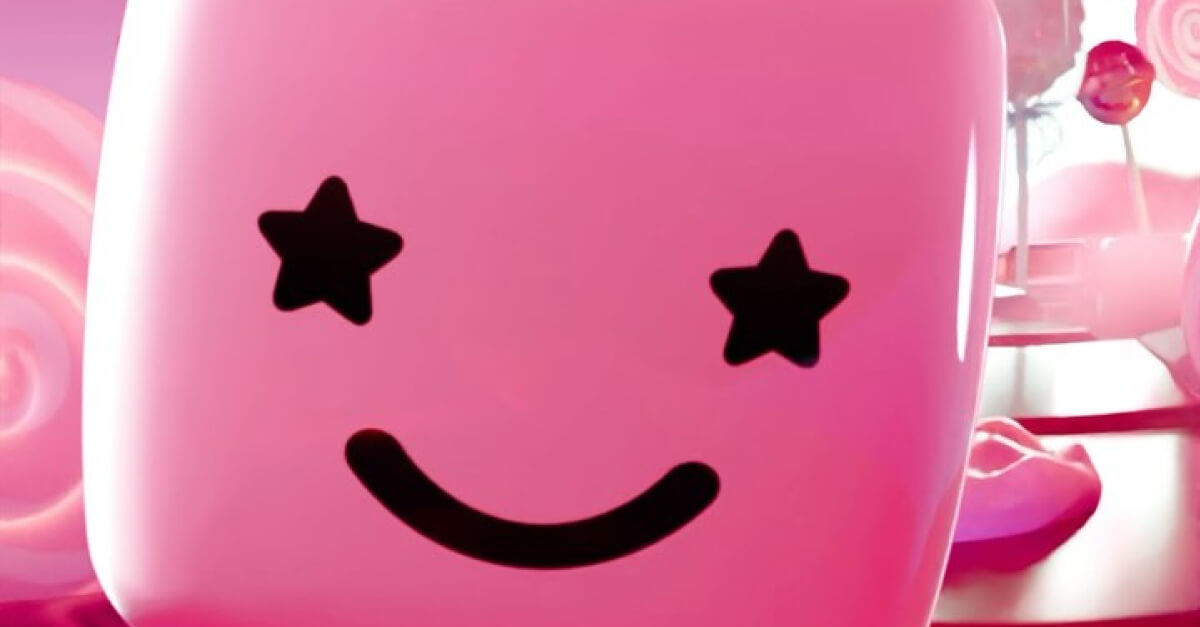
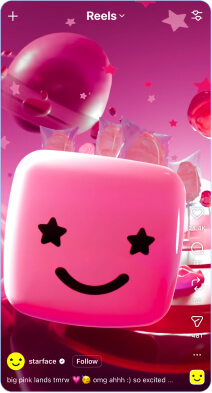
For example, Starface announcing the launch of its Big Pink compact and new pink star patch shades demonstrates how a brand can own the moment. The creative is intentional, visually distinct, and unmistakably branded. In launch scenarios like this, clarity and creative cohesion can drive top-tier engagement.
Announcing Events, Pop-Ups, and Activations
Brand accounts are uniquely positioned to act as the primary source of truth.
When announcing store openings, pop-ups, limited-time activations, or brand events, audiences often expect direct communication from the brand itself. Specific dates, locations, and invitations carry more weight when coming from the official account.
Saie Beauty’s mobile beauty capsule, traveling with the Café Saie Airstream, is a strong example. The announcement is experiential, informative, and unexpected all at once. Brand-led posts in these moments function as invitations, building anticipation and excitement.

Communicating Directly With the Customer Base
When brands respond to feedback, transparency matters.
Posts framed around “You asked, we answered” or “Driven by your feedback” signal responsiveness and community awareness. These are moments where the brand voice itself builds trust.
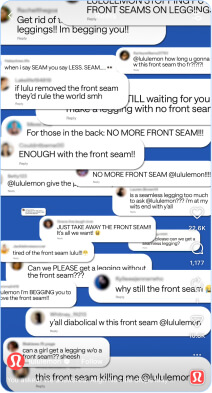
Lululemon removing the front seam from its leggings after identifying recurring community feedback is a prime example. When brands clearly demonstrate they are listening and evolving, engagement can spike. These posts reinforce loyalty and validate customer input.
Showcasing Brand Personality in Cultural Moments
Brand posts don’t always have to push product or be overly corporate.
When brands lean into humor, cultural references, or viral conversations in a way that feels authentic to their identity, they can drive significant engagement. Instagram audiences are receptive to brands that show personality. Especially luxury brands, where we don’t often see this played out on social.
Take Loewe’s tomato hot air balloon post, inspired by a viral X post describing a tomato as “so Loewe,” as a perfect example. The brand took an organic cultural moment and elevated it in a way that felt playful yet distinctly on-brand. When executed well, these moments can compete with, and sometimes surpass, creator-led content.
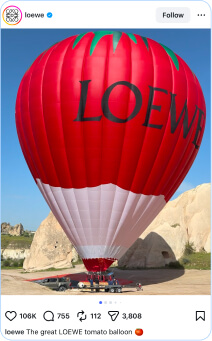
On Instagram, strong creative execution can absolutely compete with, and sometimes outperform, creator-led campaigns at the highest levels. The brands that win are the ones that know when to lean into creators for relatability and when to lead with their own storytelling to make a bigger impact.
What This Means for Campaign Strategy
The real takeaway here is not that brands should pick branded content over creators or vice versa; it's about choosing the right balance. It’s the campaign strategy that needs to reflect how each content type actually works for each platform.
Lean Into Creators on TikTok
On TikTok, the data is clear. Creator-led campaigns performed better at every level we measured. They outperformed on average, they outperformed in typical performance, and they outperformed among top-performing posts.
That kind of consistency is hard to ignore.
TikTok runs on personality. It rewards content that feels natural, relatable, and embedded in creator culture. When campaigns look and sound like the content users are already engaging with, performance improves.
For brands investing in TikTok, creator partnerships should not feel experimental. They should not sit on the sidelines as a “nice to have.” They are a core driver of engagement on the platform.
On Instagram, Think in Terms of Balance
Yes, creator campaigns tend to lift overall engagement. But when we zoom in on the biggest breakout posts, brand-led campaigns often come out ahead. That suggests Instagram success isn’t driven by format alone. It comes down to what a brand is trying to communicate and how well that message is executed.
Instead of choosing one over the other, brands should think about a mix.
Creators can drive relatability and high engagement. Brand-led campaigns can anchor major launches, storytelling moments, and cultural relevance.
The brands seeing the strongest results are not replacing one format with the other. They are building systems where both play a role.
How Dash Social Helps Compare Brand vs. Creator Performance
Understanding whether brand or creator campaigns perform better requires more than a glance at average engagement rates. It requires structured comparison, consistent tracking, and visibility into deeper performance layers.
Dash Social enables marketers to evaluate both formats with clarity.
Creator Management centralizes influencer and UGC partnerships, making it easy to track performance across creators, campaigns, and content types. Instead of relying on screenshots or manual reporting, teams can see which partnerships are consistently driving engagement and which are delivering exceptional results.
Campaign Reporting allows brands to compare performance across owned and creator-led content in one view. Whether analyzing a product launch or a cross-channel initiative, marketers can measure how different formats contribute to overall engagement and impact.
Predictive AI adds another layer of strategic insight. Rather than reacting to results after campaigns launch, teams can forecast which creative assets are most likely to resonate before publishing. This is especially valuable when balancing creator content with high-production brand creative.
Together, these features, among others, give marketers a clearer picture of what is truly driving engagement and why.
Try Dash Social Today
Less busywork, more growth. Find out how to save 10 hours each week with Dash Social.
Get a demoBrand vs. Creator Campaigns FAQs
Do creator campaigns get more engagement than brand posts?
On TikTok, yes. Creator-led campaigns consistently drive higher engagement by video views across average, median, and top-performing posts.
On Instagram, it depends. Creator campaigns lift overall engagement by followers on average, but top-performing brand posts can outperform at the upper tier.
Why do creators perform better on TikTok?
TikTok is designed around individual creators and personality-driven content. The algorithm rewards storytelling that feels native, relatable, and embedded in creator culture. Creator campaigns align naturally with how users experience the platform, which drives stronger engagement.
How should brands evaluate campaign performance?
Brands should look beyond surface-level engagement and measure performance holistically. Compare brand and creator content side by side, analyze which creative drives results, and assess performance across owned, earned, paid, and creator media.
Evaluate consistency, top-performing posts, and overall ROI to understand what truly moves the needle.


.jpg)