Why You’re Losing Followers on Instagram and How To Fix It
If your Instagram follower growth is slowing, you’re not alone. Here’s what it means and what to do next.
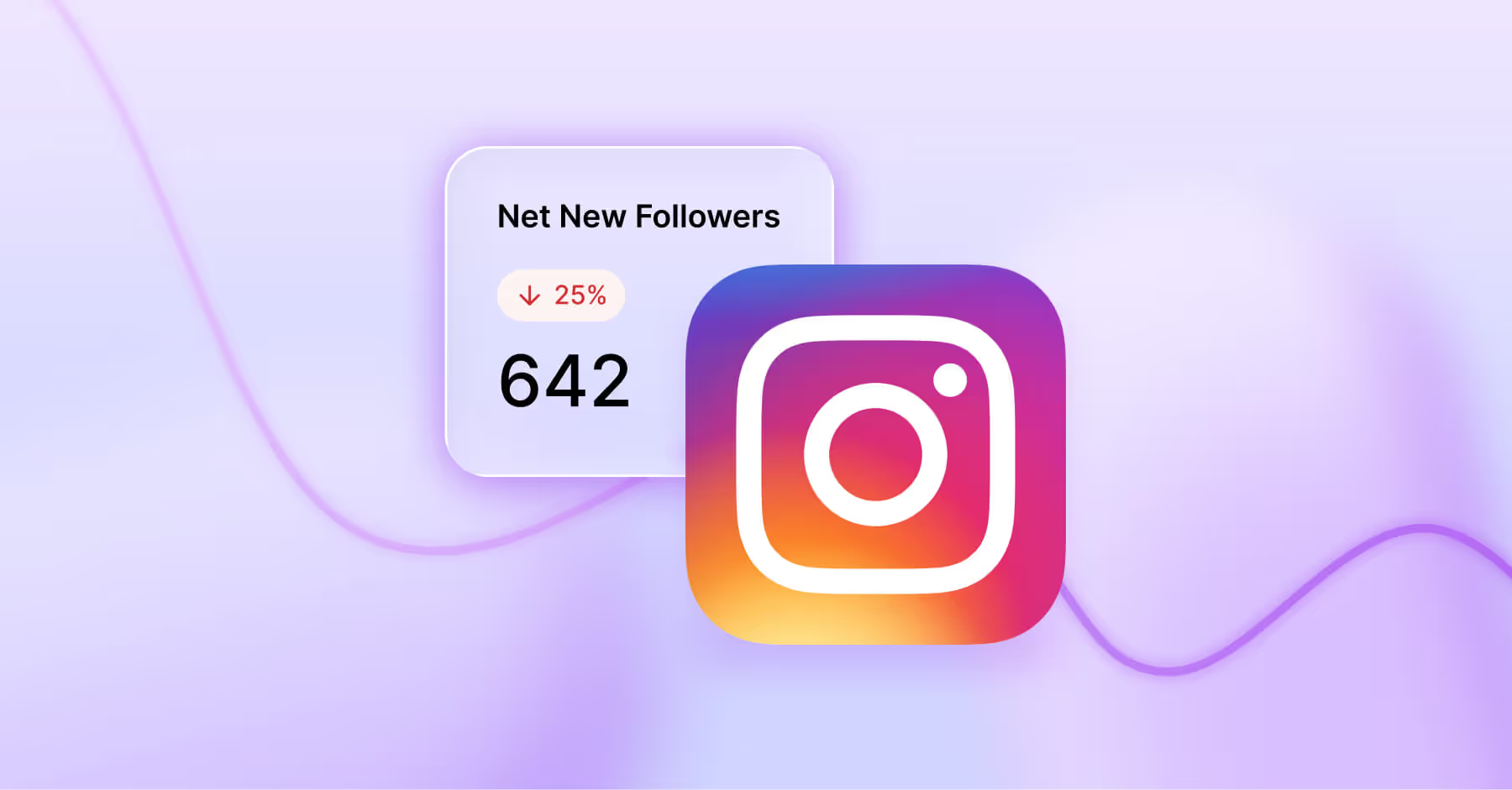

If you're seeing a slower-than-normal Instagram follower growth rate compared to last year, it's not necessarily a cause for alarm. And while it can be tempting to take shortcuts, such as buying Instagram followers, these tactics usually hurt engagement rate and stall long-term growth.
Instagram first launched in October 2010 making it far more mature than newer platforms. Many brands have already reached huge portions of their addressable audience, so plateaus are a normal part of the social media lifecycle. Put simply: a dip in follower growth often reflects how many people you’ve already reached.
As Instagram becomes increasingly algorithm-driven, people can discover and consume your content (especially Reels) without ever following you. Reels can build community, grow your brand awareness and even create new customers without adding to your follower count.
Instead of fixating on the number alone, it’s worth looking at what this shift signals and how it can guide a smarter, more nuanced approach to content and engagement.
TL;DR:
- Losing Instagram followers is common and usually reflects platform maturity and shifting user interests, not failure.
- People can watch (especially Reels) and engage without hitting Follow, so reach can stay strong even as followers dip.
- Instagram is moving from a social graph to a content graph, prioritizing what’s engaging over who you follow.
- Follower growth rates are down overall (~14% Jan–Nov 2024 compared to Jan–Nov 2025) so expectations should adjust.
- Focus on metrics beyond followers (views, likes, saves, reach, video views / “effectiveness”) to judge performance.
- To reduce follower loss: analyze competitors, engage consistently, refine buyer personas, and post reliably with a calendar.
Why Am I Losing Followers on Instagram?
A decline in Instagram followers is a common experience for many brands. You're not alone. Shifts in user interests, the Instagram algorithm’s preference for trend-driven content, and the natural ebb and flow of social media engagement all play a role. Users may unfollow accounts that no longer align with their interests, or don't adapt newer formats like Reels or Stories. On top of that, Instagram's ongoing algorithm updates continuously reshape content visibility, influencing follower growth over time.
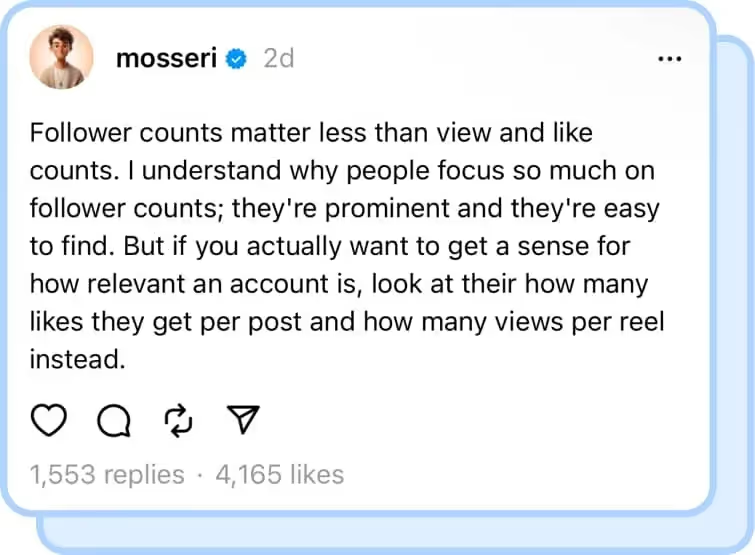
Instagram CEO Adam Mosseri has emphasized that follower count matters less than metrics like views and likes. Traditional metrics like follower growth may not fully capture a brand's performance or how strongly the content resonances with its audience. The same goes for engagement rate, which calculates engagement based on total followers. As more people watch and interact with content without following, follower-based ratios can understate impact. That's why alternative metrics, like Effectiveness Rate, which factors in saves, reach and video views, can offer a more complete picture of performance.
This shift reflects Instagram’s evolution from a social graph (who you follow) to a content graph (what the algorithm serves you). As a result, success increasingly depends on creating compelling, shareable content. Not just accumulating followers.
Even with slower follower growth, Instagram engagement rates can still rise. This is beacuse people are interacting with brands more than ever, and strong content can drive meaningful reach and results without requiring a follow.

Why Follower Growth Is Slowing
Across most industries, Instagram follower growth is trending downward from 0.73% (Jan–Nov 2024) to 0.63% (Jan–Nov 2025). That’s a 0.10 percentage-point drop, or roughly a 13.7% year-over-year decrease. This shift doesn’t mean audiences are losing interest. It reflects how Instagram itself has evolved.
With discovery happening more through Reels and recommendations, users can watch, save, and engage with content without ever hitting follow. A few key factors are driving this change:
- Platform maturity: Instagram launched in 2010, and many brands have already reached much of their core audience.
- Algorithm changes: Instagram now prioritizes content discovery over social connections, making it easier to engage without following.
- The shift from a “social graph” to a “content graph”: Success depends more on compelling content than follower accumulation.
It’s a helpful reminder that follower count isn’t the end goal. It’s more of a signal that awareness is building. The bigger win is deeper engagement: creating content that speaks to your target audience, leaning into newer formats, and showing up consistently in the comments and DMs. Those are the moves that build community, strengthen KPIs, and drive conversions even when follower growth slows.
To understand how follower growth is shifting year over year, we analyzed Dash Social platform data comparing Instagram follower growth from January–November 2024 to January–November 2025. For each industry, we calculated the monthly follower growth rate, averaged those monthly rates across Jan–Nov to get a year-to-date growth rate, and then compared the 2025 average to the 2024 average to determine the year-over-year increase or decrease.
Average Follower Growth Rate by Industry
Even with overall follower growth slowing, it’s not a one-size-fits-all story. Some industries are holding steady, others are seeing sharper drops, and a few are still finding ways to grow. The breakdown below takes a closer look at each industry’s year-over-year shift. Highlighting where momentum is building, where it’s easing, and what brands can do next to stay ahead.
Automotive
The automotive industry is seeing a modest slowdown in follower growth year over year. Average follower growth declined from 0.53% YTD in 2024 to 0.45% YTD in 2025, representing a 0.08 percentage-point decrease, or roughly a 15.1% drop year over year. As growth cools, brands have an opportunity to lean into authentic, user-generated content to drive stronger engagement and maintain momentum.
- YTD 2024: 0.53%
- YTD 2025: 0.45%
- YoY Change: –15.1%
Beauty
The beauty industry saw a noticeable shift in follower growth year over year. The average growth rate moved from 0.74% (Jan–Nov 2024) to 0.47% (Jan–Nov 2025). A 0.27 percentage-point drop, or about a 36.5% decrease. That doesn’t necessarily mean beauty content is resonating less. It’s more likely a reflection of how the category and Instagram itself is changing.
Beauty is one of the most saturated spaces on the platform, and with Instagram leaning harder into recommendation-based discovery, people can watch, save, and engage with beauty content without ever hitting follow. On top of that, audiences are often more inclined to follow creators than brands, even when brands are driving the conversation through partnerships.
Going forward, beauty brands can rebuild follower momentum by leaning into community-first content, showing up more authentically, and using creator collaborations that encourage viewers to stick around beyond a single post.
- YTD 2024: 0.74%
- YTD 2025: 0.47%
- YoY Change: –36.5%
Consumer Electronics
Consumer electronics is staying relatively steady, with a slight dip in follower growth year over year. The average growth rate shifted from 0.72% (Jan–Nov 2024) to 0.59% (Jan–Nov 2025). A 0.13 percentage-point drop, or about an 18.1% decrease. To keep interest high and turn that interest into follows, brands can spotlight buzz-worthy product innovation, new launches, and clear what’s new / why it matters tech advancements that give audiences a reason to stay tuned.
- YTD 2024: 0.72%
- YTD 2025: 0.59%
- YoY Change: –18.1%
Cosmetics
Cosmetics continues to see slower follower growth, which isn’t too surprising. Much like beauty, this category is also saturated. Many of the biggest brands already have millions of followers, so some leveling off is expected. Year over year, the average growth rate dipped from 0.35% (Jan–Nov 2024) to 0.28% (Jan–Nov 2025). A 0.07 percentage-point decrease, or a 20% decline. To keep growth moving, brands have an opportunity to bring new audiences into the fold, especially by resonating with younger generations through fresh formats, emerging platforms, and culturally relevant content.
- YTD 2024: 0.35%
- YTD 2025: 0.28%
- YoY Change: –20%
CPG
CPG saw a slight dip in follower growth year over year. The average growth rate moved from 0.85% (Jan–Nov 2024) to 0.74% (Jan–Nov 2025). A –0.11 percentage-point change, or about a 12.9% decrease. With discovery happening more through recommendations than follows, CPG brands can keep momentum up by leaning into repeatable series content, creator partnerships, and community-forward formats (think polls, comments prompts, and UGC) that give people a reason to hit follow.
- YTD 2024: 0.85%
- YTD 2025: 0.74%
- YoY Change: –12.9%
Fashion
Brand in the Fashion industry saw a notable shift in follower growth year over year. The average growth rate moved from 0.61% (Jan–Nov 2024) to 0.48% (Jan–Nov 2025). A 0.13 percentage-point drop, or about a 21.3% decrease. This dip likely reflects a broader change in what audiences respond to on Instagram. Highly polished, editorial content doesn’t convert to follows the way it used to, and discovery through Reels/Explore doesn’t always translate into long-term follower growth.
To re-energize audiences, fashion brands can focus on content quality that feels more real. Prioritizing authenticity, community, and engagement over stilted visuals. It’s the kind of shift Urban Outfitters has leaned into, using more natural, personality-driven content that gives people a reason to stick around.
- YTD 2024: 0.61%
- YTD 2025: 0.48%
- YoY Change: –21.3%
Financial Services
Financial services is still one of the faster-growing segments on Instagram, and it actually gained momentum year over year. The average follower growth rate climbed from 0.86% (Jan–Nov 2024) to 1.10% (Jan–Nov 2025). The first on our list to show a positive growth improvement year over year with a +0.24 percentage-point increase, or about a 27.9% lift.
That jump likely reflects growing appetite for practical, educational content as more people look for help navigating budgeting, saving, and investing. Brands that consistently deliver what audiences come for, clear financial tips, simple explainers, and relatable success stories, give users a real reason to hit follow.
- YTD 2024: 0.86%
- YTD 2025: 1.10%
- YoY Change: +27.9%
Food and Beverage
Food and beverage brands saw follower growth shift year over year. The average growth rate moved from 0.83% (Jan–Nov 2024) to 0.63% (Jan–Nov 2025). A –0.20 percentage-point change, or about a 24.1% decrease.
That dip doesn’t necessarily mean people are less interested in food content. It’s more about how they consume it on Instagram now. Recipes, hacks, and restaurant content are everywhere, from creators, local spots, and food media. Instagram’s recommendation engine makes it easy to discover and save posts without hitting follow. So brands may still be getting views and engagement, but fewer viewers are converting into new followers.
To pull follower growth back up, food and beverage brands can lean into entertaining formats, repeatable recipe series, and unique dining experiences. The kind of content people want to follow so they don’t miss the next one.
- YTD 2024: 0.83%
- YTD 2025: 0.63%
- YoY Change: –24.1%
Fragrance
Fragrance brands saw follower growth ease year over year. The average growth rate moved from 1.16% (Jan–Nov 2024) to 0.89% (Jan–Nov 2025). A 0.27 percentage-point drop, or about a 23.3% decrease. While fragrance content continues to perform well visually, discovery-led formats often drive views without converting to follows. Brands can sustain growth by leaning into sensory storytelling, creator POVs, and repeatable content series that give audiences a reason to follow beyond a single moment.
- YTD 2024: 1.16%
- YTD 2025: 0.89%
- YoY Change: –23.3%
Haircare
Haircare saw a sharp slowdown in follower growth year over year. The average growth rate fell from 0.64% (Jan–Nov 2024) to 0.39% (Jan–Nov 2025). A 0.25 percentage-point decrease, or roughly a 39.1% drop. As audiences increasingly follow stylists and experts over brands, haircare brands can respond by focusing on education-led content, real routines, and long-term creator partnerships that build trust and loyalty.
- YTD 2024: 0.64%
- YTD 2025: 0.39%
- YoY Change: –39.1%
Home
Home industry follower growth declined from 0.60% (Jan–Nov 2024) to 0.49% (Jan–Nov 2025). A 0.11 percentage-point drop, or about an 18.3% decrease. While inspiration remains strong, overly polished content doesn’t always meet audiences’ expectations for entertainment. Brands can re-energize growth by leaning into video-first formats, trend participation, and more approachable, in-progress content that feels native to Reels.
- YTD 2024: 0.60%
- YTD 2025: 0.49%
- YoY Change: –18.3%
Children, Baby, Kids
Follower growth in the children, baby and kid industry declined year over year, moving from 0.62% (Jan–Nov 2024) to 0.46% (Jan–Nov 2025). A 0.16 percentage-point decrease, or about a 25.8% drop. Parents increasingly look for content that’s practical and helpful, not just aspirational. Brands can attract new followers by consistently sharing educational content, parenting tips, and relatable, real-life moments.
- YTD 2024: 0.62%
- YTD 2025: 0.46%
- YoY Change: –25.8%
Luxury
Luxury brands saw follower growth dip from 0.68% (Jan–Nov 2024) to 0.53% (Jan–Nov 2025). A 0.15 percentage-point decline, or roughly a 22.1% decrease. While exclusivity still matters, audiences now expect greater access and transparency. Brands can maintain interest by balancing polish with behind-the-scenes content, craft storytelling, and exclusive previews that feel personal, not distant.
- YTD 2024: 0.68%
- YTD 2025: 0.53%
- YoY Change: –22.1%
Media
Media brands saw follower growth increase year over year. The average growth rate rose from 1.06% (Jan–Nov 2024) to 1.15% (Jan–Nov 2025). A 0.09 percentage-point lift, or about an 8.5% increase. As more brands adopt entertainment-driven strategies, media brands that prioritize original reporting, exclusive formats, and distinct points of view continue to give audiences a clear reason to follow.
- YTD 2024: 1.06%
- YTD 2025: 1.15%
- YoY Change: +8.5%
Publishing
On average, brands in the publishing industry saw follower growth increasing from 0.66% (Jan–Nov 2024) to 0.78% (Jan–Nov 2025). A 0.12 percentage-point gain, or about an 18.2% increase. Publishers leaning into short-form video, trend-aware storytelling, and creator-style formats are benefiting from discovery while still converting viewers into long-term followers.
- YTD 2024: 0.66%
- YTD 2025: 0.78%
- YoY Change: +18.2%
Retail
Retail follower growth declined from 0.60% (Jan–Nov 2024) to 0.49% (Jan–Nov 2025). A 0.11 percentage-point drop, or roughly an 18.3% decrease. With many brands already commanding large followings, growth plateaus are expected. Instead of chasing follower count, retailers can focus on new audience discovery, creator amplification, and conversion-focused engagement.
- YTD 2024: 0.60%
- YTD 2025: 0.49%
- YoY Change: –18.3%
Skincare
Skincare experienced one of the steepest declines, with follower growth dropping from 0.72% (Jan–Nov 2024) to 0.40% (Jan–Nov 2025). A 0.32 percentage-point decrease, or about a 44.4% drop. Trust is critical in this category, and audiences increasingly look to experts and creators for guidance. Brands can stabilize growth by focusing on education, ingredient transparency, and credible creator partnerships.
- YTD 2024: 0.72%
- YTD 2025: 0.40%
- YoY Change: –44.4%
Travel
Travel industry follower growth ticked up slightly year over year, moving from 1.10% (Jan–Nov 2024) to 1.13% (Jan–Nov 2025). A 0.03 percentage-point increase, or about a 2.7% lift. To sustain this momentum, travel brands should lean into content that serves high-intent planners: destination inspiration, saveable itineraries and tips, timely deal highlights, and practical recommendations that help people make decisions. The more your social content consistently delivers repeat value, the more likely audiences are to follow for the next trip.
- YTD 2024: 1.10%
- YTD 2025: 1.13%
- YoY Change: +2.7%
Wedding
Wedding industry follower growth remained stable year over year, shifting from 0.40% (Jan–Nov 2024) to 0.39% (Jan–Nov 2025). A minimal 0.01 percentage-point decrease (–2.5%). With a built-in lifecycle audience, consistency matters most. Brands can continue attracting engaged couples by showcasing real weddings, planning tips, and authentic stories.
- YTD 2024: 0.40%
- YTD 2025: 0.39%
- YoY Change: –2.5%
Wellness
Wellness brand follower growth declined from 0.86% (Jan–Nov 2024) to 0.76% (Jan–Nov 2025). A 0.10 percentage-point drop, or about an 11.6% decrease. This dip likely reflects a more mature, saturated wellness space and a shift toward algorithm-driven discovery, where audiences watch (and engage with) Reels without necessarily following. Brands that prioritize meaningful education, mental health resources, and community-driven conversations are well positioned to maintain trust and long-term growth.
- YTD 2024: 0.86%
- YTD 2025: 0.76%
- YoY Change: –11.6%
While most industries experienced some level of slowdown, performance varied meaningfully by category. Skincare, Haircare, Beauty, and Fashion saw the steepest declines, driven by saturation, faster trend cycles, and growing reliance on creator-led discovery. In contrast, Financial Services, Publishing, Media, and Travel bucked the trend, posting year-over-year gains as audiences actively seek educational, utility-driven, or aspirational content they want to return to regularly.
The takeaway for brands is clear. Follower growth alone is no longer the primary indicator of social success. Brands that focus on engagement, value-driven content, community interaction, and creator amplification are better positioned to maintain relevance and drive meaningful outcomes. Even as follower growth plateaus across much of the platform.
5 Tips to Reduce Follower Loss
It can feel like the end of the world when you see your follower count dip, but it isn't. As we’ve explored, some of this is simply the reality of social media saturation and shifting Instagram behavior, not a sign that your brand is failing. The more meaningful focus is building engagement and community.
That said, you’re not powerless against the trend. There are plenty of smart tactics brands can use to slow follower loss and in some cases, even reverse it.
1. Conduct a competitive analysis
Understanding the competitive landscape helps you both spot opportunities and risks. For example, cosmetic brands will likely see that their competitors are also experiencing slower or declining follower growth, which puts their own performance into context. A competitive analysis can also uncover what’s working within your niche, enabling you to refine your content marketing strategy and gain an edge over the competition.

2. Develop buyer personas
Knowing your audience is essential for creating content that resonates. By building detailed buyer personas, you can tailor your content strategy to specific interests, needs and behaviors. The more relevant your content feels, the more likely followers are to stay engaged and stick around.
3. Actively engage with your community
Community is the foundation of a strong Instagram marketing strategy. Respond to comments, ask questions, and encourage conversation. Engagement signals relevance to the algorithm and regular interaction helps build a community, making people less likely to unfollow.
4. Be consistent but not repetitive
Consistency keeps your brand top-of-mind, but repeating the same message or format can lead to fatigue. Rotate formats (Reels, carousels, Stories) and test new creative angles to keep content feeling fresh. A social media content calendar can help you maintain a steady posting schedule, while building anticipation and routine for your audience.

5. Create series content
Give followers a reason to stick around by creating repeatable formats and multi-part storylines. Think weekly themes, Part 1/2/3 guides, recurring segments, or ongoing challenges. When your content has a clear through line and consistent payoff (education, entertainment, or a solution), people are more likely to return, engage, and stay followed for the next drop.
The bottom line, focus on engagement, reach, saves, and video views rather than follower count alone. Strong content can drive meaningful results without requiring a follow.
Elevate Instagram Strategy With Dash Social
Utilizing Dash Social's suite of tools can transform your Instagram strategy. By monitoring key metrics like engagement, Effectiveness Rate and Total Social Impact, brands can gain valuable insights into their performance. Dash Social's social analytics and monitoring offer benchmarks and competitor comparisons, empowering brands to optimize their strategies and maintain a competitive edge in their industry. Additionally, Dashboards help brands understand the nuances of their own strategy over a period of time, including the key drivers of growth over the past year, so they can focus on the right initiatives.

Losing Followers on Instagram FAQs
Why am I suddenly losing followers on Instagram, and how do I know if it’s normal or a red flag?
Common drivers include content misalignment, inconsistent cadence, over-promotion, negative sentiment, seasonality, algorithm updates, and Instagram purges of inactive/bot accounts. Establish a baseline for your typical daily/weekly variance and compare drops by theme, format, and timing. Instagram tools like the ones found in the Dash Social platform, benchmarks your historical volatility, flags anomalous declines in real time, and helps distinguish likely quality-related drops from content, or campaign-driven churn using audience and engagement patterns.
How do I avoid losing followers on Instagram?
To avoid losing followers, focus on engaging with your audience, understanding their preferences and delivering consistent, high-quality content. Use analytics and social listening to understand your performance, stay updated on Instagram trends and adapt your strategy to ensure it aligns with your audience's interests as they are today.
How can I diagnose which posts or tactics triggered follower losses?
Correlate unfollow trends with post tags (topic, format, CTA), time-of-day, frequency shifts, and sentiment spikes within a defined lookback window. Review comments/DMs for recurring objections, and evaluate on-platform changes (e.g., link stickers, hashtag shifts). In Dash Social, campaign and content tagging plus time-series insights let you correlate follower deltas with specific themes and formats, while built-in sentiment and keyword analysis surfaces the issues most associated with churn.
Do giveaways and creator collaborations lead to follower drop-offs, and how can I prevent them?
Yes, giveaways can attract low-intent followers who churn post-campaign, and misaligned creator audiences often don’t stick. Use content-first mechanics (value > follow-to-win), vet creator audience fit and authenticity, and track retention KPIs (e.g., 14–30 day follow rate). Influencer marketing platforms can surface audience relevance and authenticity signals, and campaign measurement tracks post-campaign retention so you can optimize partners and mechanics for quality growth.