How To Create a Social Media Monitoring Strategy
Learn how to monitor brand mentions, measure sentiment, and build smarter social strategies.

Contents

Everyone knows that social conversations move fast, and brands that hesitate to keep up risk missing valuable opportunities, customer feedback, and emerging trends.
Social media monitoring is what makes the difference. It helps businesses track what audiences are saying, allowing teams to improve engagement and make smarter marketing decisions. In this complete guide, we break down what social media monitoring is, why it matters, and how to build an effective strategy that delivers the meaningful results you’re looking for.
Key Takeaways:
- Social media monitoring helps brands stay proactive online by enabling teams to track conversations, respond quickly, and identify engagement opportunities.
- Social media monitoring and social listening serve different purposes, with monitoring focusing more on tracking and responding, and listening skewing more towards trends and audience behavior.
- A truly successful strategy requires structure with defined goals, organized workflows, and continuous performance monitoring to really improve results.
- The right social monitoring tools turn conversations into actionable insights by centralizing monitoring, analyzing sentiment, and identifying trends.
What Is Social Media Monitoring?
Social media monitoring is the process of tracking and responding to mentions, comments, messages, tags, and conversations about your brand across social platforms to manage your engagement, enhance your customer service, and protect your brand’s reputation.
Social media analytics and monitoring are most commonly used by social media managers, community managers, customer support teams, PR professionals, brand managers, and marketing teams to track conversations and respond to audiences.
What social media monitoring tracks (and doesn’t)
Effective social media monitoring helps brands understand what’s happening across social platforms by tracking conversations, engagement, and more. That being said, there are still limitations to the type of data brands can access.
What social media monitoring tracks:
- Brand mentions and tags.
- Comments, replies, and direct engagement.
- Hashtags and campaign keywords.
- Audience sentiment and conversation trends.
- Customer feedback and complaints.
- Competitor mentions.
- Influencer and creator discussions.
- Campaign performance metrics.
What social media monitoring doesn’t track:
- Private conversations or encrypted messages.
- Deleted posts or restricted content.
- Data behind private or locked accounts.
- Offline conversations or WOM feedback.
- Full customer context without additional analytics.
- Intent or emotions with complete accuracy.

What Is the Difference Between Social Media Monitoring and Social Listening?
Social media monitoring and social listening serve different purposes. Monitoring answers the ‘what’ and listening answers the ‘why’.
Social media monitoring focuses on tracking and responding to direct mentions, comments, and conversations about your brand in real time.
While social listening tools go deeper by analyzing trends, sentiment, and broader audience conversations to understand insights and guide your strategy.
How Social Monitoring and Social Listening Work Together
Social monitoring and social listening work together to give brands both immediate visibility and long-term strategic intent. Monitoring helps social media managers track and respond to real-time mentions, comments, and customer interactions, while listening analyzes the broader trends, sentiment, and behavior to understand the bigger picture. Together, they help brands stay responsive in the moment.
Why Social Media Monitoring Matters For Your Brand
Social media monitoring matters for your brand because it helps you stay aware of what people are saying about your business. And if that alone isn’t enough, it also allows brands to respond quickly to customer questions and issues, improve customer relationships, track campaign performance, and identify opportunities to engage with audiences and trends. These are all things modern brands cannot afford to miss out on.
Benefits of Social Media Monitoring
With social media monitoring, social managers gain visibility into how audiences are talking about their brand online. Beyond simply tracking mentions, teams can manage reputation, improve customer engagement, measure campaign performance, and uncover valuable social media analytics that can shape smarter social strategies. Here are some of the other key benefits of social media monitoring:
- Faster customer response times: Quickly address customer questions, complaints, and support requests before they escalate.
- Stronger brand reputation management: Detect negative sentiment, misinformation, or potential PR issues early, so your team can respond proactively.
- Deeper audience understanding: Gain valuable insight into how audiences feel about your brand, products, campaigns, and messaging through conversation analysis.
- Campaign performance tracking: Monitor how campaigns are being discussed and shared to measure engagement, reach, and overall impact.
- Trend identification: Spot emerging trends, viral conversations, and relevant cultural moments your brand can participate in strategically.
- Influencer and advocate discovery: Find creators, loyal customers, and brand advocates already talking positively about your brand for potential partnerships.
- Data-driven decision making: Use monitoring insights to support marketing, customer experience, product, and communications strategies.
- Cross-functional business insights: Surface recurring customer pain points, feature requests, and market feedback that benefit sales, product, and leadership teams.
The Most Important Social Media Monitoring Metrics
With what can feel like hundreds of metrics available at our fingertips, it’s hard to know which will make the most impact for every individual strategy. For social media monitoring, the best metrics help brands move beyond surface-level engagement and understand what’s actually driving audience conversations and performance.
These key metrics provide insight into brand health, customer experience, campaign impact, and emerging opportunities across social platforms.
- Volume: Tracks how often your brand is being mentioned to measure visibility, reach, and spikes in attention.
- Sentiment and emotion: Helps brands understand how audiences feel about them, their products, their campaigns, and their messaging.
- Share of voice: Measures how much conversation your brand owns in comparison to competitors within your industry.
- Engagement by platform: Reveals which platforms and content types drive the most interaction so teams can prioritize effectively.
- Response time and resolution rate: Measures how quickly customer questions or issues are addressed to improve customer experience and brand trust.
- Trend spikes and anomalies: Identifies sudden increases in conversation volume or sentiment shifts that may signal trends, viral moments, or potential crises.
What you should be monitoring
To do social monitoring right, it has to start with knowing which conversations, keywords, and audience signals matter most to your brand. From customer feedback to competitor activity and emerging trends, keeping tabs on the right areas helps uncover insights for engagement and growth.
How To Build a Social Media Monitoring Strategy
An effective social media monitoring strategy helps brands stay informed, responsive, and proactive across social channels. By creating a structured approach to tracking conversations, audience engagement, and sentiment analysis, you can uncover insights and make more informed decisions. The following steps outline just how to do it.
1. Define your goals and choose the right platforms
Identify what exactly it is you want to achieve with social media monitoring. Is it improving customer service? Protecting your brand's reputation? Tracking campaign performance? Or identifying industry trends? It can be one of these, all of them, or something else entirely, as long as you know the purpose from the beginning.
When it comes to choosing the right platforms, focus on social media channels where your audience is most active first, and then once you’ve got your footing, branch out to more channels or forums.
2. Identify keywords and topics to monitor
To really get started, you need to track branded keywords such as your company name, product names, hashtags, campaign names, executive mentions, and even common misspellings. You should also include competitor names and industry-related topics to keep your finger on the pulse.
3. Set up monitoring tools and organize workflows
Use a social media monitoring platform to centralize mentions, comments, messages, hashtags, and sentiment tracking in one place for easier management and reporting.
Now is also the time to establish a clear communication plan that outlines who is responsible for responding to messages, escalating issues, approving responses, and handling crises to ensure timely and consistent communication.
4. Monitor conversations and engage strategically
Actively track audience conversations, engagement, and sentiment to quickly identify customers' questions, complaints, opportunities, or emerging trends. Here you can also begin to reply to customers, acknowledge feedback, join relevant conversations, and strengthen relationships with your audience while maintaining your brand voice and consistency.
5. Track competitors and industry trends
Remember when we started tracking competitor terms and industry trends? Monitor that activity, any audience reactions, and broader industry conversations to help you benchmark your own performance and identify any strategic opportunities or gaps.
6. Analyze data and optimize your strategy continuously
Analyzing your data is the most exciting part because you get to learn what’s actually making an impact. Review metrics like engagement, sentiment, response times, mention volume, and share of voice to understand what’s working and where improvements are needed.
Use these insights to refine your content strategy, improve your customers' experience, adjust campaigns, and strengthen social media performance over time.
Top Social Media Monitoring Tools Compared
Social media monitoring tools come in all forms, shapes, and sizes, but that doesn’t mean they’ll all work for you. Below are five of the most popular social media monitoring tools compared by who they work best for, key strengths, and what makes them stand out from the crowd.
For a more in-depth comparison of the above tools, a breakdown of our methodology, and more, check out our full list of the top social media monitoring tools.
Start Monitoring Your Brand With Dash Social
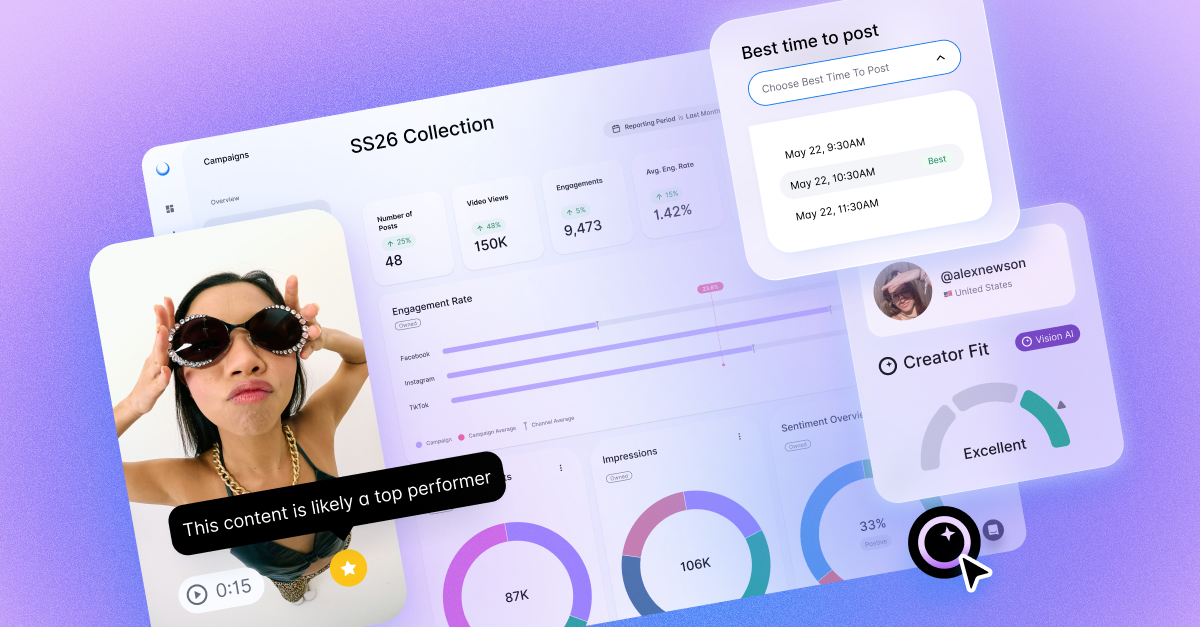
Dash Social helps social media managers monitor brand conversations, track audience sentiment, and manage engagement across multiple social platforms. With features like social listening trends and topics, competitor tracking, customizable dashboards, and AI-powered insights, the platform enables teams to quickly identify trends, measure campaign performance, and make more informed strategic decisions.

Social Media Monitoring FAQs
How does social media monitoring work?
Social media monitoring works by tracking brand-related conversations across social media platforms using keywords, hashtags, mentions, tags, and campaign names. Monitoring tools collect and organize this data into dashboards so social media managers can respond to customer interactions, measure sentiment, identify trends, and track campaign performance.
What are the advantages and disadvantages of social media monitoring?
Social media monitoring helps track audience conversations, respond quickly to customers, protect brand reputation, and gain valuable insights into content performance and sentiment.
However, monitoring can become overwhelming without the right tools or workflows, especially when managing large volumes of conversations across multiple platforms. It also requires ongoing analysis and strategy to turn raw data into action rather than just simply gathering metrics.
What data privacy rules apply to social media monitoring?
Anyone using social media monitoring tools must follow data privacy regulations such as GDPR, CCPA, and platform-specific policies that govern how user data is collected, stored, and used. Social media monitoring should focus on publicly available conversations while avoiding the collection or misuse of sensitive personal information without consent.
What social media platforms should I monitor?
Prioritize monitoring the platforms where your audience engages the most. Instagram, TikTok, LinkedIn, Facebook, YouTube, X, and Reddit are all great examples of platforms with active audiences, but the right mix really depends on your goals and your industry.
Don’t forget about review sites, forums, and other emerging platforms where brand conversations may be happening.