10 Tips for Increasing Social Media Engagement
Audience engagement is getting harder to earn. Here are 10 tips to help you build it.
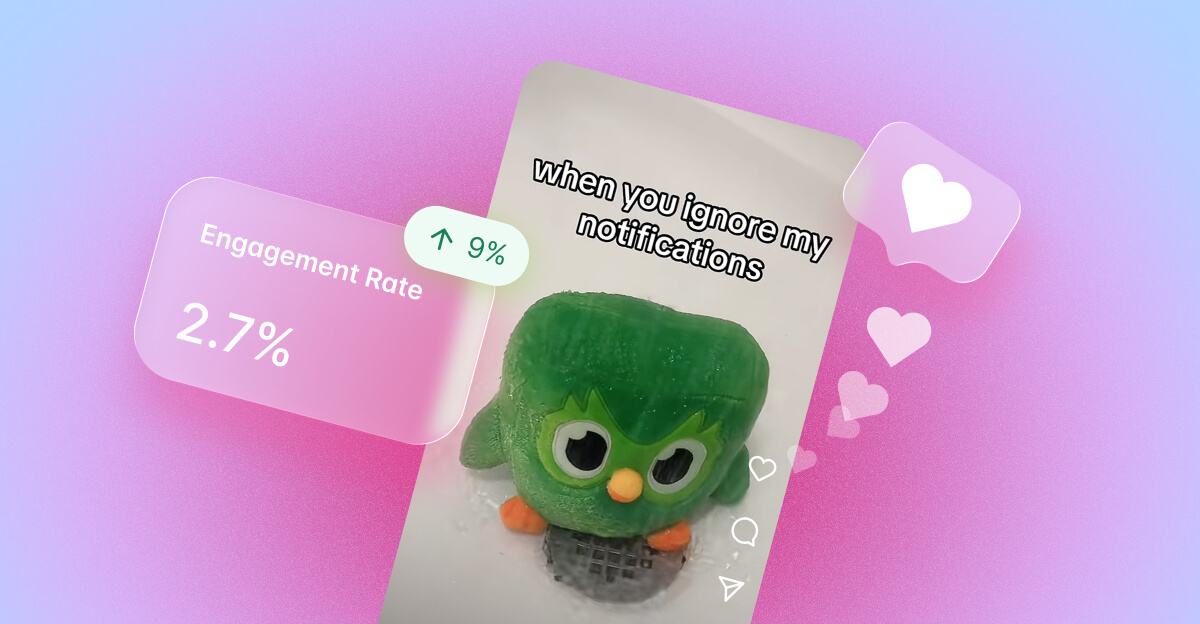

Getting people to stop scrolling and engage with your content is harder than ever. Likes, comments, shares, and saves show you what’s actually connecting, and what’s getting passed over. When you know how to measure engagement, you can make smarter decisions, sharpen your strategy, and create content that performs. Here’s how to do it.
Key Takeaways:
- Engagement directly reflects audience connection. Metrics such as likes, comments, shares, and saves indicate whether your content resonates or needs adjustment.
- Measure engagement with clear goals and KPIs. Define what success looks like, track the right metrics, and monitor engagement regularly to guide your social decisions.
- Strong content fundamentals drive performance. Use compelling hooks, clear messaging, relevant visuals, and calls to action to increase interaction.
- Adapt your strategy by platform. Engagement rates and top-performing formats vary, so tailor content to each platform’s behavior and strengths.
What Is Social Media Engagement?
Social media engagement is any interaction your customers have with your posts. This includes likes, comments, shares, saves, clicks, and even direct messages. It is basically a measure of how much an audience is connecting with the content you share versus just scrolling past it.
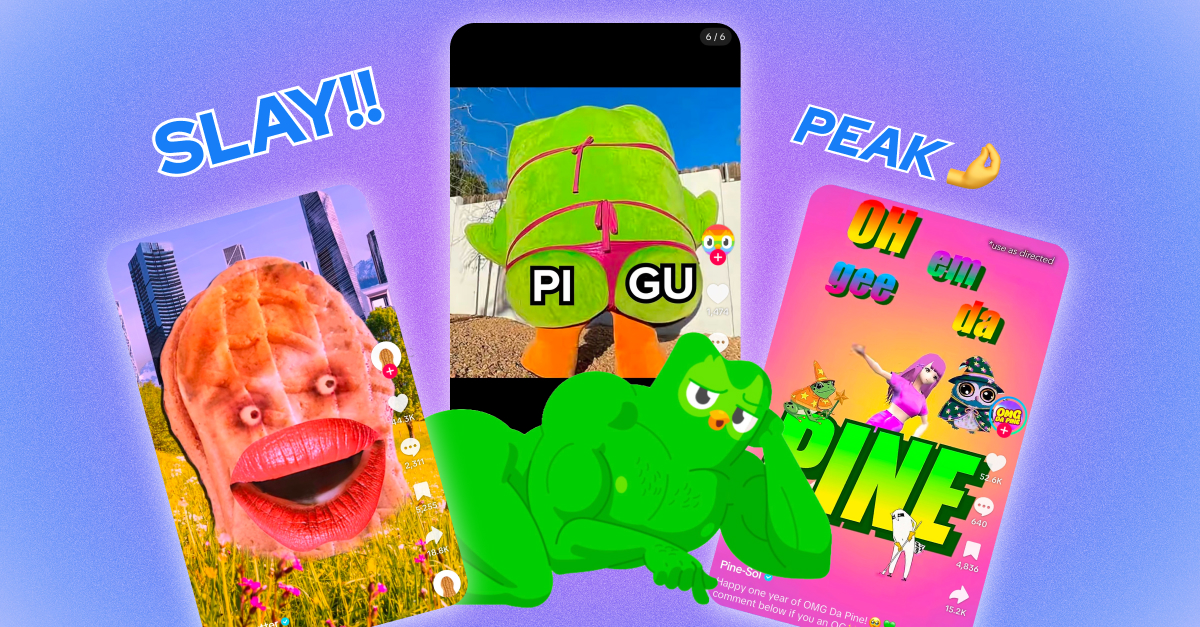
High engagement means content is hitting the mark. Low engagement is a sign that something needs to shift. Duolingo, for example, has built one of the most engaged followings on TikTok not by promoting its language-learning app directly, but by leaning into absurdist humor and trending sounds. The result: millions of comments, shares, and saves from an audience that genuinely looks forward to each post.

How To Measure Social Media Engagement
Engagement rate helps you understand if your content is actually connecting. It gives you a clearer view of how your audience responds, so you can move past surface-level performance and make smarter decisions about what to post next.
Dash Social calculates engagement rate like this: Engagement Rate = (Total Engagements / Total Followers)
Put simply, if a post gets 300 engagements and an account has 10,000 followers, that is a 3% engagement rate. What counts as an engagement varies by platform, but likes, comments, and shares are a safe baseline across the board. Here’s how to get clear on what you’re measuring, so your engagement rate actually tells you something useful.
Set Goals
Before diving into numbers, it helps to know what success looks like for you. Decide whether the focus is growing an audience, driving clicks, or boosting brand awareness. Clear goals make it easier to measure what social media engagement actually matters.
Determine Your KPIs
Your key performance indicators (KPIs) should map directly to those goals. If you’re focused on awareness, look at reach and impressions. If you want to understand engagement, focus on likes, comments, shares, and saves. Picking the right KPIs keeps reporting focused, useful, and most importantly, actionable.
Track Progress
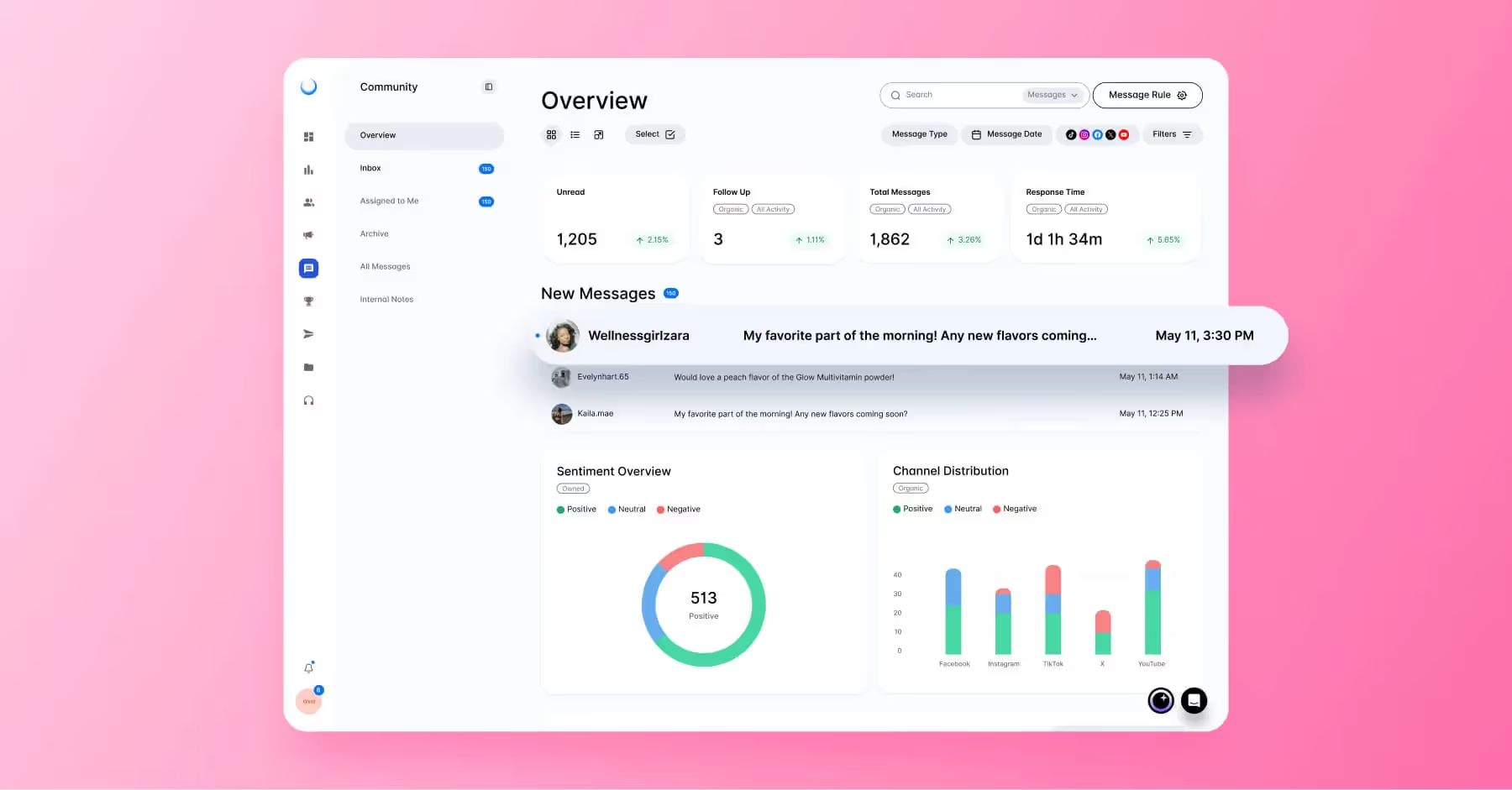
Once KPIs are set, it’s time to start tracking. Most platforms have built-in analytics, but social media engagement tools can make it easier to review everything in one place. The goal is to spot trends over time, not just check in on individual post performance.
Measure Regularly
Checking in once a month is not enough. Regular measurement, whether weekly or bi-weekly, helps catch what is working early and course-correct before too much time is lost. During its rapid growth phase, Spotify Wrapped used weekly social listening data to refine its campaign messaging in real time, adjusting copy and visuals based on what was generating the most shares mid-rollout.
10 Tips for Creating Engaging Social Media Content
Measuring engagement is only half the equation. The other half is creating content that is actually worth engaging with. These 10 tips cover the fundamentals of building posts that grab attention, deliver value, and get people to act now.
1. Lead With a Strong Hook
Attention spans are shorter than ever, which means the first few seconds of a video or the opening line of a post carry a lot of weight. If the hook does not land quickly, most people will scroll right past. Leading with something surprising, relatable, or immediately useful pulls viewers in and keeps them watching longer. Higher watch time signals to platform algorithms that content is worth promoting, so nailing that opening is one of the most effective ways to boost overall reach and engagement.
MrBeast built an entire YouTube empire on this principle. Nearly every video opens with an immediate, high-stakes premise, such as "I Spent 50 Hours Buried Alive," making it hard not to keep watching.
The same applies to captions. A financial advice account that opens with “The savings rule your bank never tells you” is far more likely to grab attention than one that starts with “Here are some money tips.”
2. Keep Visuals Intentional
Every image or video should have a reason to be there. Strong visuals do not just decorate a post; they add value to the storytelling. Whether it is a graphic that simplifies a complex idea or a video that puts a face to a brand, the best visuals move the message forward. Thoughtful visual choices also make content more memorable, helping audiences connect with a brand on a deeper level.
Apple's social content is a clear example. Rather than product specifications, its posts lead with striking photography taken on iPhones, letting the visual make the product argument without a single word. When visuals and messaging work together, the result is content that feels cohesive, credible, and worth engaging with.
3. Focus on One Takeaway
Trying to say too much in one post usually means nothing lands. Pick one idea, one tip, or one message and build around it. Content that is clear and focused is also more relatable, and relatable content gets shared. Whether it is a caption that feels like it was written for a specific person or a meme a friend would immediately tag someone in, single-takeaway posts are the ones that travel.
4. Understand Your Audience
Content that resonates is content that feels relevant. Use platform analytics and social media competitive analysis to understand what an audience responds to, what questions they are asking, and what formats they prefer. Pay close attention to what is already performing well. High-performing posts are a direct signal of what an audience wants more of, and that data should shape what gets created next.
Hulu does this exceptionally well. Rather than generic entertainment promotions, its social accounts tailor content to the specific fandoms around each show, using the language, inside jokes, and references that resonate most with each community. Understanding the audience is not a one-time exercise. It ties directly into tracking progress and refining your strategy over time.
5. Optimize for Silent Viewers
A significant portion of social media users watch videos without sound. Captions, on-screen text, and descriptive visuals make content accessible to everyone, regardless of whether the audio is on. It is a small adjustment that can make a big difference in how long someone sticks around.
BuzzFeed's Tasty became one of the most shared food brands on Facebook almost entirely because its recipe videos were watchable with zero sound. Bold on-screen text replaced narration, and every visual step was self-explanatory. Adding social media alt text to images also improves accessibility and can support discoverability across platforms.
6. Use Data To Shape Your Narrative
Data-driven storytelling is one of the most underused tools when it comes to creating an impactful content marketing strategy. Rather than presenting opinions alone, anchoring posts in real numbers builds credibility and gives audiences something concrete to share. Even without proprietary data, publicly available research, industry reports, and platform analytics can inform a narrative that feels grounded and authoritative. A post that opens with a surprising statistic gives audiences a reason to stop, read, and pass it along.
Spotify's annual Wrapped campaign is the clearest proof of concept. By turning user listening data into personalized, shareable stories, it generated hundreds of millions of organic social posts year after year.
7. Maintain Consistent Branding
Recognizable content builds trust. Consistent colors, fonts, and tone across posts make an account feel intentional and professional. Coca-Cola always sticks to its signature red across every platform and campaign. Nike's messaging consistently ties back to motivation and athleticism, whether the post is a product launch, an athlete feature, or a response to a trending moment. Over time, audiences start to recognize content before they even see the handle, and that kind of familiarity goes a long way. Consistent branding also makes a feed feel cohesive, which gives new visitors a reason to stick around and follow.
8. Add a Clear Next Step
Every post should point somewhere. A clear call to action removes the guesswork and gives audiences an easy way to engage. Whether it is asking someone to drop a question in the comments, share the post with a friend, or save it for later, a simple nudge can make a real difference in engagement.
Sephora routinely ends product posts with direct prompts like "Tag a friend who needs this" or "Save this for your next shopping trip," turning passive viewers into active participants. Without a call to action, even great content can fall flat. People are more likely to act when they know exactly what to do next.
9. Refresh Formats Regularly
Sticking to the same format week after week leads to diminishing returns. Audiences tune out repetition, even when the content itself is strong. Mixing in carousels, short-form videos, polls, and static images keeps things fresh and gives different types of viewers something to connect with.
The Washington Post's TikTok account became a widely cited case study for doing this really well. Rather than repurposing print content, it built an entirely separate identity on the platform using humor, trending formats, and behind-the-scenes newsroom clips. The format refresh opened the door to a much younger audience. Testing something new is one of the easiest ways to find out what an audience responds to most, and those insights can shape the entire content strategy going forward.
10. Build Content for Saves and Shares
Saves and shares are among the highest-value engagement signals on most platforms. They also extend the life of content well beyond the initial post. Informational content, like a checklist, a how-to, or save for later, gives people a reason to come back to it and a reason to pass it along.
Average Social Media Engagement Rate by Platform
Not all platforms measure engagement the same way, and what counts as a "good" rate varies depending on where content is posted. Industry benchmarks are a useful starting point for understanding how content is performing relative to the wider landscape. Here is a breakdown of average engagement rates by platform.
TikTok
Average engagement rate on TikTok: 2.7%
TikTok consistently delivers strong engagement, driven largely by its algorithm's ability to surface content to new audiences. Even accounts with smaller followings can see high engagement if the content resonates, making it one of the more level playing fields for organic reach.
Average engagement rate on Instagram: 1.9%
Instagram engagement has shifted as the platform has leaned further into video and Reels. While the average sits at 1.9%, Reels and carousel posts tend to outperform static images. Finding the best time to post on Instagram can also give content an early boost that carries through the algorithm.
Average engagement rate on Facebook: 1.0%
Facebook's organic reach has declined significantly over the years, making that 1.0% average a tough benchmark to hit without a solid strategy. Video content and community-driven posts tend to perform best. Local news organizations and community groups still see strong engagement on Facebook because the platform rewards content that sparks local conversation and comment threads. Timing also plays a role, so checking the best time to post on Facebook to maximize visibility is worthwhile.
X
Average engagement rate on X: 2.3%
X (formerly Twitter) rewards timely, conversational content. Replies, reposts, and likes all factor into X engagement, and posts that tap into trending topics or ongoing conversations tend to perform well above average. Wendy's built one of the most-followed brand accounts on the platform almost entirely through real-time wit and direct engagement with followers and competitors.
Average engagement rate on LinkedIn: 6.2%
LinkedIn's engagement rate stands out compared to other platforms, largely because its audience is more intentional. People come to learn, connect, and share professional insights, which means thoughtful, value-driven content tends to go a long way. Founders on LinkedIn who share candid posts about business failures or hard lessons consistently outperform polished corporate announcements because the format rewards authenticity over promotion.
Average engagement rate on Pinterest: 1.6%
Pinterest operates differently from most social platforms. Content has a much longer shelf life since posts can surface in search results months or even years after being published. A recipe pinned in January may still be generating saves and clicks the following holiday season. While the average engagement rate is 1.6%, the compounding nature of Pinterest's discovery model makes it a strong platform for evergreen content.
Social Media Engagement FAQs
How to calculate social media engagement rate?
The standard formula is simple: divide total engagements by total followers, then multiply by 100. So if a post receives 500 engagements and an account has 20,000 followers, the engagement rate is 2.5%.
How do you boost social media engagement?
Start with content that is relevant, easy to digest, and worth sharing. Use strong hooks, clear calls to action, and consistent branding. Posting at the right time, engaging with comments, and refreshing formats regularly all help. Social media engagement tools can also make it easier to track what is working and adjust accordingly.
How does video content boost social media engagement?
Video tends to outperform static content across most platforms because it holds attention longer. Higher watch time signals to algorithms that content is worth promoting, which increases reach. Short-form video, in particular, (think TikTok, Reels, and YouTube Shorts), has become one of the most effective formats for driving engagement quickly.


.jpg)