Why Non-Followers Are Your Most Important Instagram Audience in 2026
Still counting follower growth as your main measure of success? Explore the Instagram metrics that matter most.
Contents

For years, follower growth has been a key metric that social media managers use to measure success, awareness, and communicate wins with leadership. But things change.
With the introduction of algorithm-driven feeds and the Explore page, followers matter less and less for finding and getting your brand in front of the right audiences.
Key Takeaways:
- Non-follower reach is growing on social. Instagram is the best channel to earn reach and be found by new and existing audiences.
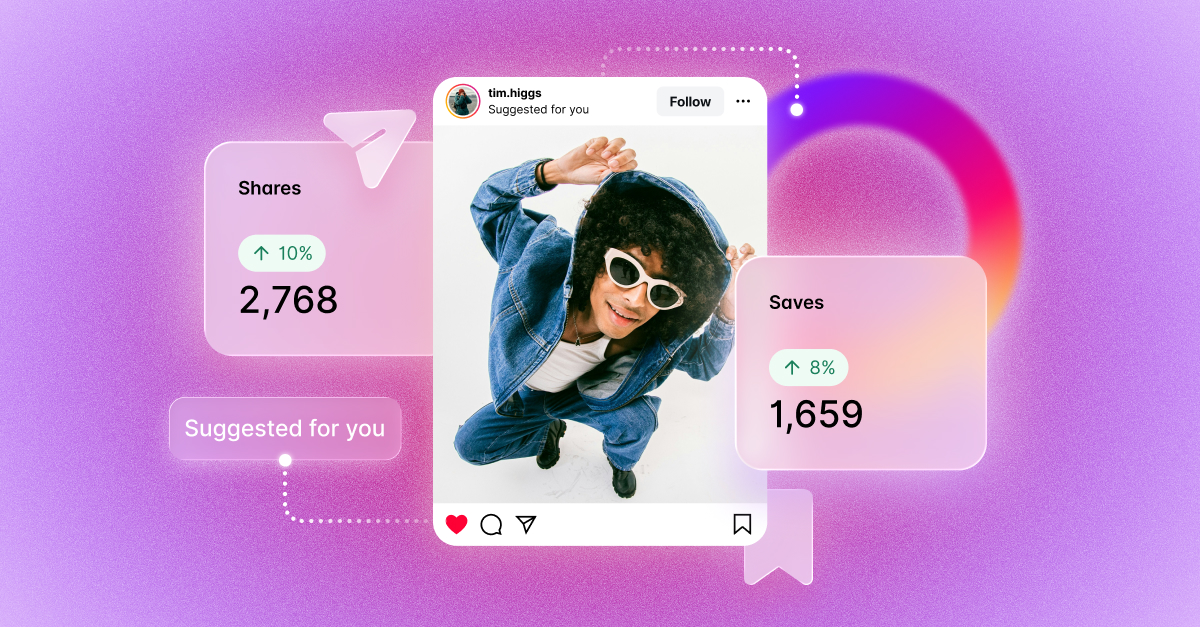
- Saves, shares, and views are more relevant metrics to measure discovery than follower growth alone.
- There’s no singular Instagram algorithm, with multiple signals impacting what reaches audiences.
- Social teams should prioritize Reels and entertainment to capture and sustain attention.
Instagram Follower Growth Is Slowing, and Content Has a New Job
In our social media benchmarks report, we discovered that views are up 27% on Instagram in 2025. With this increase in views and discoverability, follower growth and engagement naturally plateau. Instagram has also become the best channel for discovery, with 25% more reach per post than TikTok.
Now, content needs to be understood at a glance, capture attention immediately, and prioritize entertainment to sustain attention.
The key benchmark shift brands need to understand
More brands and creators are being found from non-follower feeds. Non-follower views accounted for 30% of total views in 2024, increasing to 49% by the end of 2025*. What this means is that you’re more than likely reaching engaged audiences who are interested in your brand; they just don’t feel the need to click ‘follow’ to see your content and feel connected to your brand.
*Data collected from July 1, 2026, to December 31, 2025.
Why slower follower growth does not automatically mean weaker performance
For many social media teams, follower growth remains their key metric to communicate success to their wider team. For large brands in particular, this metric is not necessarily indicative of success. Follower count can naturally level off over time, but this doesn’t mean that content isn’t generating engagement, views, or shares.
Data collected from July 1, 2026, to December 31, 2025
Growing brands lead in average follower growth, but larger brands still show strong performance across video views, shares, and reach. This suggests that while follower growth may slow at scale, content distribution remains strong.
How non-follower views change Instagram content planning
As brands work to earn more reach and capture non-follower views, content strategy needs to shift from follower-first to discovery-first.
That starts with clear content pillars. When you’re creating content with followers in mind, you might look at content production through an engagement lens more so than a discovery lens. Consider pillars like awareness, UGC and creator marketing, product promotion, and any other content pillars that matter to your brand.
When planning your content, you should also consider your target social media demographics. One of the biggest misconceptions is that a single algorithm determines what audiences see. Instagram is actually composed of multiple algorithms, with each part of the platform (Feed, Explore, and Reels) having its own ranking system based on how users leverage them. While who you follow does impact what content you see, there are several other signals Instagram uses to determine what gets seen.
Here are a few signals the Instagram algorithm factors into surfacing relevant content:
- Post information: How many people have liked a post, its length, what location is attached to it.
- Interactions: Overall, how many interactions did the creator receive in the past few weeks?
- User activity: This factors in things like what other content the viewer is interested in, how many posts you’ve liked, etc.
- Interaction history: This factors in frequency and mutual interactions, such as direct messages, engagements, and profile visits.
That’s why audience insight and content strategy need to work together. The more you understand who you’re trying to reach and what Instagram is likely to surface, the better equipped you are to create content that earns attention from the right people.

Why Non-Followers Are Now Your Most Important Instagram Audience
That shift has made non-follower reach one of the clearest signs that your content is working.
Instagram’s recommendation system is built to move relevant content beyond a brand’s existing audience. It looks at signals like what people engage with, which creators they interact with, and how similar users respond to content to determine what gets surfaced next.
When your posts consistently reach people who don’t follow you, it’s a strong signal that your content is resonating beyond your core audience. It shows Instagram has enough confidence in your creative to recommend it more widely, which makes non-follower reach a key measure of discoverability, relevance, and long-term growth.
Instagram is no longer primarily a follower-distribution platform
Instagram has shifted from a follower-based platform to a recommendation-driven one. While followers still matter and your team would likely want to explore why they’re losing followers when experiencing a big dip, they’re no longer the only audience your content is built to reach.
Reels, Explore, suggested posts, and search all give brands more ways to appear in front of people who have never followed or engaged with them before.
Discovery now happens through interest, not just audience loyalty
People discover content based on what they watch, save, share, and engage with, not only who they follow. Instagram is increasingly matching content to behavior and intent, which means brands need to think beyond their existing audience.
That makes relevance more important than audience size. The strongest content connects to what your target audience already cares about, even before they’ve discovered your account.
Niche marketing is one way to do this well. Instead of trying to reach everyone, brands can focus on communities with shared interests, behaviors, or values that naturally connect back to their product. Red Bull is a strong example. The brand doesn’t only market energy drinks. It builds content around adventure, extreme sports, and high-performance lifestyles, reaching audiences that already care about energy, endurance, and excitement.
Non-followers help determine whether a post earns broader distribution
When non-followers engage with a post through saves, shares, comments, and strong watch time, Instagram gets a stronger signal that the content has broader appeal.
That makes non-follower performance a key measure of content health. If your content consistently reaches and engages people outside your follower base, it’s earning distribution.
How Instagram Decides What Gets Recommended
Instagram reach is no longer tied to a single feed or a single algorithm. Each part of the platform, including Feed, Explore, and Reels, uses different signals to decide what content people are most likely to care about.
If you want to earn more non-follower reach, your content needs to give Instagram the right signals. That means creating original content, understanding what your target audience already engages with, and optimizing for behaviors that show real interest, like shares, saves, watch time, and retention.
Instagram uses interest signals to expand reach
Instagram’s recommendation systems surface content based on a person’s interests, behaviors, and engagement patterns. That means your content can reach people who have never followed your account, as long as it aligns with what they already watch, save, share, or engage with.
Reels, Explore, and suggested posts drive discovery
Discovery now happens across Reels, Explore, and suggested posts, where people encounter content from brands and creators they don’t already follow.
This is why format strategy matters. Reels can help brands reach new audiences through entertainment-led discovery, while Instagram carousels can give people a reason to spend more time with a post, save it, or engage more deeply. The best format depends on your audience, content goals, and what Instagram’s signals suggest is working.
Quality signals matter more than follower count
Follower count can show audience size, but it does not tell you whether your content is earning attention.
Shares, saves, watch time, and retention are stronger indicators of content quality because they show how people respond after your content reaches them. These signals help Instagram understand whether a post is worth recommending more widely, which makes them essential for increasing reach beyond your existing audience.
What This Means for Brand Content Strategy
As follower growth becomes a less reliable measure of performance, brands need to focus on what helps content travel beyond their existing audience. Original content plays a major role in that shift.
Adding a distinct perspective, thoughtful commentary, analysis, or creative edits can make content more valuable, more recognizable, and more likely to be recommended to new audiences.
Build every post for someone who has never seen your brand
Many social teams create content assuming viewers already understand their products, voice, or industry. Increasingly, that assumption does not hold.
Because so much content is now discovered through recommendations, every post should be understandable without prior context. Treat every post as your brand’s first impression. New viewers should be able to quickly understand who you are, what you offer, and why the content matters to them.
Favor clear, broadly relevant, highly shareable formats
The formats that perform best on Instagram are often the easiest to understand and share.
Educational content, creator partnerships, relatable insights, trend-driven content, before-and-after transformations, and practical tips tend to travel well because they provide immediate value. The easier it is for someone to share your content with a friend or save it for later, the more opportunities it has to earn additional reach.
When planning content, consider whether the value is clear within the first few seconds or first impression. If not, discovery may suffer.
Stop over-optimizing for follower-only content
Content designed exclusively for followers will limit your potential reach.
Inside jokes, highly niche references, and posts that require significant brand familiarity can still serve a purpose, but they are less likely to perform with new audiences. If discovery is a priority, a larger portion of your content mix should be accessible to people who are encountering your brand for the first time.
The strongest Instagram strategies balance community-building content with discovery-focused content that can reach beyond your follower base.
Treat profile follows as a downstream conversion metric
A follow is still valuable, but it should no longer be treated as the starting point of the customer journey.
Today's Instagram users often engage with brands multiple times before choosing to follow. According to the Boston Institute of Analytics, a potential customer interacts with your brand about seven times before they’re ready to convert. They may discover a Reel, save a post, watch additional content, visit a profile, and only follow after several interactions.
For that reason alone, social media managers should focus first on earning reach and engagement from qualified audiences. Follows are often the result of successful content distribution, not the prerequisite for it.
How To Create Instagram Content That Performs With Non-Followers
Reaching non-followers requires a different approach than creating content for an existing community. Instead of relying on brand familiarity, content needs to quickly communicate value, capture attention, and give new audiences a reason to engage. The brands seeing the most success on Instagram today are creating content that is easy to discover, easy to understand, and worth sharing.
Make the value obvious in the first three seconds
Instagram users make split-second decisions about whether to keep watching or scroll away. Strong content quickly answers the viewer's unspoken question: "Why should I care?" Whether you're educating, entertaining, or promoting a product, the value should be clear from the opening frame, headline, or hook.
Use stronger standalone storytelling in Reels and Carousels
Since many people will encounter your content with no prior knowledge of your brand, Reels and carousels should stand on their own. Include enough context, narrative, and payoff for a first-time viewer to understand and engage with.
Create sendable content people want to share
Shares are one of the strongest indicators that content resonates with an audience. In our recent social media benchmarks report, we uncovered that on average, brand posts generate 1.1K shares, up 9% from our previous report. This shows us that strong content keeps working after it’s published.
Focus on creating content that sparks conversation, teaches something useful, solves a problem, or captures a relatable experience. If someone immediately thinks of a friend or colleague when they see your post, you've created something worth sharing.
Improve viewer retention with pacing, structure, and payoff
Getting a view is one thing. Keeping attention is another. Strong-performing content creates curiosity early, delivers information in a clear sequence, and rewards viewers for sticking around. Tight editing, concise messaging, and a compelling payoff can all help improve follower retention and signal quality to Instagram's recommendation systems.
Use captions, on-screen text, and keywords for search and AI discoverability
Instagram is becoming increasingly searchable, and its recommendation systems rely on more than just engagement signals. Clear captions, descriptive on-screen text, and relevant keywords help Instagram understand what your content is about and who may find it valuable. The easier it is for the platform to categorize your content and the more people that can easily interpret your content, the more opportunities it has to surface it to interested audiences.
Which Metrics Matter More Than Follower Growth Now
As Instagram shifts toward interest-based distribution, brands need to measure how well content earns attention, reaches new audiences, and prompts action. These are the metrics that show whether your content is built to travel.
When Followers Still Matter, and How To Think About Them Correctly
A strong following still plays a role in building brand awareness, driving repeat social engagement, and generating conversions among loyal customers. However, brands should consider follower growth as one outcome of successful content distribution, not the main driver. It’s important to understand the balance between discovery and loyalty, measuring each separately and strategizing for both.
Followers still support trust, repeat exposure, and conversion
Followers are your most engaged audience. They are more likely to see your content regularly, engage with your posts, visit your profile, and take action when they're ready to make a purchase or learn more about your brand.
Consider attracting non-followers to drive discovery, and building followers to help strengthen relationships with repeated exposure that builds familiarity and trust.
Why follower growth is slower but still valuable
As Instagram prioritizes recommendations, users can engage with brands without ever hitting the follow button. Someone may regularly watch your Reels, save your content, or visit your profile, relying on Instagram to surface future posts.
This means follower growth is naturally slower than it was in the past. However, gaining followers still signals that someone wants an ongoing relationship with your brand, making it a valuable indicator of audience affinity rather than a primary measure of reach.
How to separate discovery metrics from loyalty metrics
Discovery metrics show how effectively your content breaks beyond your existing audience. Metrics like reach, impressions, non-follower reach, profile visits, follower growth, and share of voice help social teams understand whether content is building awareness and attracting new audiences.
Loyalty metrics tell a different story. They show whether the audiences you have already reached are continuing to engage, return, and take action over time. Separating these metrics helps teams report more clearly on how content drives discovery, deepens audience relationships, or gets viewers closer to conversion.
A Practical Reporting Framework for Social Teams
Not every metric serves the same purpose. By grouping social metrics into discovery, content resonance, and conversion, social teams can build a clearer picture of performance and focus on the KPIs that matter most at each stage of the customer journey.
How To Reframe Follower Growth for Stakeholders
Many marketing teams are still honed in on follower count. While making the shift from follower growth as a key metric doesn’t always happen overnight, social media managers can start by positioning follower growth as just one outcome of strong performance rather than the main measure of success.
Highlight metrics like shares, saves, watch time, and non-follower reach to demonstrate how content reaches new audiences, along with instances of rising engagement rates or interactions. Another metric that can help communicate overall social success to stakeholders is Total Social Impact (TSI). TSI helps contextualize your social performance across all platforms, formats, and distribution methods. With a breakdown that shows which platforms and UGC formats drive the most impact, brands can make smarter content decisions and pinpoint growth.
Non-Follower FAQs
Why are my Instagram views going up, but my followers are not?
In our Social Media Trends Report, we found that since 2023, FYP views have grown from 31% to 58% in 2025, while non-follower views on Instagram have grown from 30% to 49% in 2025. Now, audiences don’t necessarily need to hit ‘follow’ to see your content, with a rise in reach and views naturally resulting in lower follower growth.
How does Instagram show content to non-followers?
Instagram uses signals like engagement, watch time, relevance, and user interests to recommend content beyond a creator's existing audience. Features like Reels, Explore, and suggested posts help surface content to people who don't already follow an account. This recommendation-driven approach allows brands to reach new audiences and earn organic growth on Instagram.
Do Instagram followers still matter for brands?
Yes, followers still matter for brands, because they represent an audience that has chosen to connect with your brand and is more likely to engage over time. However, follower count is no longer the best, singular measure of Instagram success. Reach, engagement, views, and metrics like TSI often provide a clearer picture of content performance and business impact.
What metrics matter more than follower count on Instagram?
To understand how effectively your content reaches the right audiences, measure shares, views, and reach. Engagement rate is also a relevant metric to gauge whether or not your content inspires interaction, while recognizing that engagement often dips when reach expands.