How To Find Influencers for Any Campaign or Platform
Discover the different types of influencers and how to find influencers on social media across the most popular platforms.
Contents

It’s no surprise that the majority of brands tap into influencer marketing for their social strategies. Now, what this doesn’t mean is that you should be throwing your valuable budget at just any influencer, even if they’re one of the most followed influencers on social.
It means that finding the right influencer looks different for everyone. It might mean a creator with a smaller following that’s ultra-popular in your niche or that reaches an ultra-engaged segment of the audience demographic you’re trying to target. Finding the best influencers is a balanced practice that can propel your campaign to new heights. Here’s how to find influencers for your brand who can help you build trust, drive sales, and achieve your goals.
Key Takeaways:
- Influencer marketing is continuing to grow, but strategy ultimately matters more than scale.
- The best influencer for your brand depends on your goals and audience preferences.
- Engagement and alignment outweigh follower size every single time.
- Influencer sourcing requires research and due diligence to avoid inflated metrics, misalignment, or reputational risk.
- Strong partnerships depend on thoughtful outreach and relationship-building.
Who and What Is an Influencer?
An influencer is someone who can affect other people’s opinions or buying decisions based on their audience, credibility, or expertise in a particular area. Influencers have built trust with their audience enough to have genuine sway on their daily purchases or decisions. Anyone can be an influencer if they have the right audience, the right area of interest, and most importantly, the consistency to show up for their community on a regular basis.

What Does An Influencer Do?
An influencer typically creates content (anything from photos to videos, to blog posts, and beyond) for social media with the intention of sharing their thoughts, building an audience, and collaborating with brands or businesses to promote products or services. Successful influencers typically have a niche they stay within, as this allows them to tailor their content and presence for a specific audience and create a more engaged community. Think BookTok on TikTok or Health and Wellness on Instagram.
The Four Types of Influencers
There are many different types of influencers that vary by industry, platform, or content type, but they are most commonly grouped by follower amount:
- Nano (0-10K followers): Nano influencers are the smallest influencers by follower size. This type of influencer tends to have an extremely engaged audience and is perfect for niche collaborations or local campaigns.
- Micro (10K-100K followers): Micro influencers are the perfect collaboration opportunity for smaller brands with a leaner budget, that are still looking to get decent reach and engagement.
- Macro (100K-1M followers): Macro influencers offer great reach and brand exposure. These are the perfect influencers to launch collaborations or special products with because of their audience size and demand.
- Mega (1M+ followers): Mega influencers are essentially celebrities. While their collaborations can be extremely valuable and return a lot of profit, they also come at a very high cost that reflects those specific results.
As a brand, it’s important to decide on the right type of influencer mix. We recommend starting with nano and micro influencers to get yourself familiar with what partnership looks like, and then branching into macro or mega influencers as your strategy and budget grow.
Why Finding the Right Influencers Matters
No matter their size, just because someone is an influencer doesn’t mean they are the right person to collaborate with your brand. Once you’ve entered into a partnership, an influencer becomes a direct extension of your brand, so you want to make sure that they are a good representation of your brand's morals and values. Making the wrong choice can confuse customers, negatively impact your brand, or even change the way people feel about you as a whole.
How To Define Your Perfect Influencer
Before you can find your perfect influencer, you need to define them. What attributes, characteristics, or aesthetics are you looking for? Where should they be from? Does your audience already know them? These are all things to consider when defining your top pick.
Establish your goals and set parameters
The last thing you want to do is enter into an influencer partnership without any specific goals or aspirations. This can help guide you towards the type of influencer you want and also sets up your future partnership for success right off the bat because it’s clear to the influencer what exactly is expected of them. Keep your goals straightforward and realistic, especially for newer partnerships, to help measure influencer ROI.
Know your audience and who they’re watching
Your audience is truly the key when it comes to finding the best influencers. Take note of who they’re already watching and interacting with to get an idea of who they like. You don’t necessarily need to partner with those exact influencers (though you should try); you can use them as inspiration to source content creators who are like them so that you can not only introduce your audience to new creators, but also have your audience associate this new creator they’re following directly with your brand.
Monitor social mentions and conversations
Similarly to knowing who your audience is watching, it’s also important to know who they (and the greater public) are talking about. By using social listening to keep tabs on conversations and mentions on social media, you can give yourself a really good idea of who your audience likes, who they don’t, and how specific creators are portrayed in the media. Stay monitoring these conversations in real time to keep your finger on the pulse and attuned to any up-and-coming talent.
Identify key influencer traits and attributes
Beyond the basics, there should be key traits or things about your influencers that you’re looking for. This can be in relation to their personality type, the type of content they make, or even where they’re from, if you’re looking for more region-specific influencers and content. Make sure these attributes take things like diversity into account, as you don’t want to isolate certain groups. A great influencer strategy covers all the bases and makes all of your customers feel seen and represented.
Create your ideal influencer and creator persona
Based on all the information you’ve collected above, it should be very clear who your ideal influencer is. This doesn’t need to be a specific person, but instead a persona that you can put together with demographic information and other key signals you’re looking for. When you actually begin sourcing influencers, you can use this persona as a source of truth and to help you filter between options on platforms or when you’re sourcing organically.
How To Find the Perfect Influencers For Your Brand (By Platform)
While sourcing influencers is generally the same process across channels, it can differ slightly from platform to platform.
TikTok
To find influencers on TikTok, it’s as simple as utilizing the search bar. You can type in keywords specific to your industry, product, or campaign and filter by ‘Users’. You can also leverage the Creator Marketplace to search for influencers by category, audience size, and performance metrics to enhance your TikTok influencer marketing strategy.
Much like TikTok, brands can use the Instagram search and Explore page to look up brand or product-specific keywords or hashtags and then tap into ‘Top’ posts to find creators that are consistently getting strong engagement. Features like “Suggested for You” and “Similar Accounts” on creator profiles can also help you discover new Instagram influencers organically.
YouTube
To find influencers on YouTube, plug your specific keywords or topics into the search bar and filter by Channels. Here you will see all of the creators who are posting relevant content, and you can review things like their subscriber count, average video views per post, and engagement to gauge their level of influence and how they’ll fit into your campaign or strategy.
For Facebook, you can also use the search bar with keywords and filter by Pages, Groups, and Posts to identify creators and community leaders that are posting in your niche and driving engagement. You can also check the Page Transparency section to explore suggested or related pages or groups to discover other influencers in the same vertical.
Snapchat
Find influencers natively on Snapchat by using the search bar and exploring the Discover and Spotlight tabs to identify creators that are consistently posting content. Review their public profile for subscriber count (if visible), story views, posting frequency, and overall engagement to help you understand whether or not the influencer would be a good fit for you.
The search bar also comes into play when looking for influencers on Pinterest. Add your specific keywords to the search and filter by Profiles to gain access to creators that are posting relevant Pins and content. You can check metrics like monthly viewers, follower count, and how often they post to ensure relevancy, and can explore related profiles if you’re looking for something similar, but different.
On LinkedIn, start by searching niche keywords and switching to the Posts or People tab to see who is consistently sparking conversations in your industry. Prioritize creators whose content generates meaningful discussions and whose audience aligns with your target market. You can also scan event speakers, newsletter authors, and active contributors to uncover credible voices.
X (Twitter)
To find influencers natively on X, search relevant keywords and switch to the Top or Latest tabs to find engaging users. You can also explore trending topics and the “Who to follow” suggestions tied to relevant accounts to uncover similar creators in the same space and talking about the same things.
General Influencer Sourcing Tips
Although we went through how to find influencers platform by platform, there are even more ways to find influencers that don’t require scrolling social media for days on end. The following tips can be applied to any platform to hopefully make your sourcing journey easier and faster.
Use an influencer sourcing platform
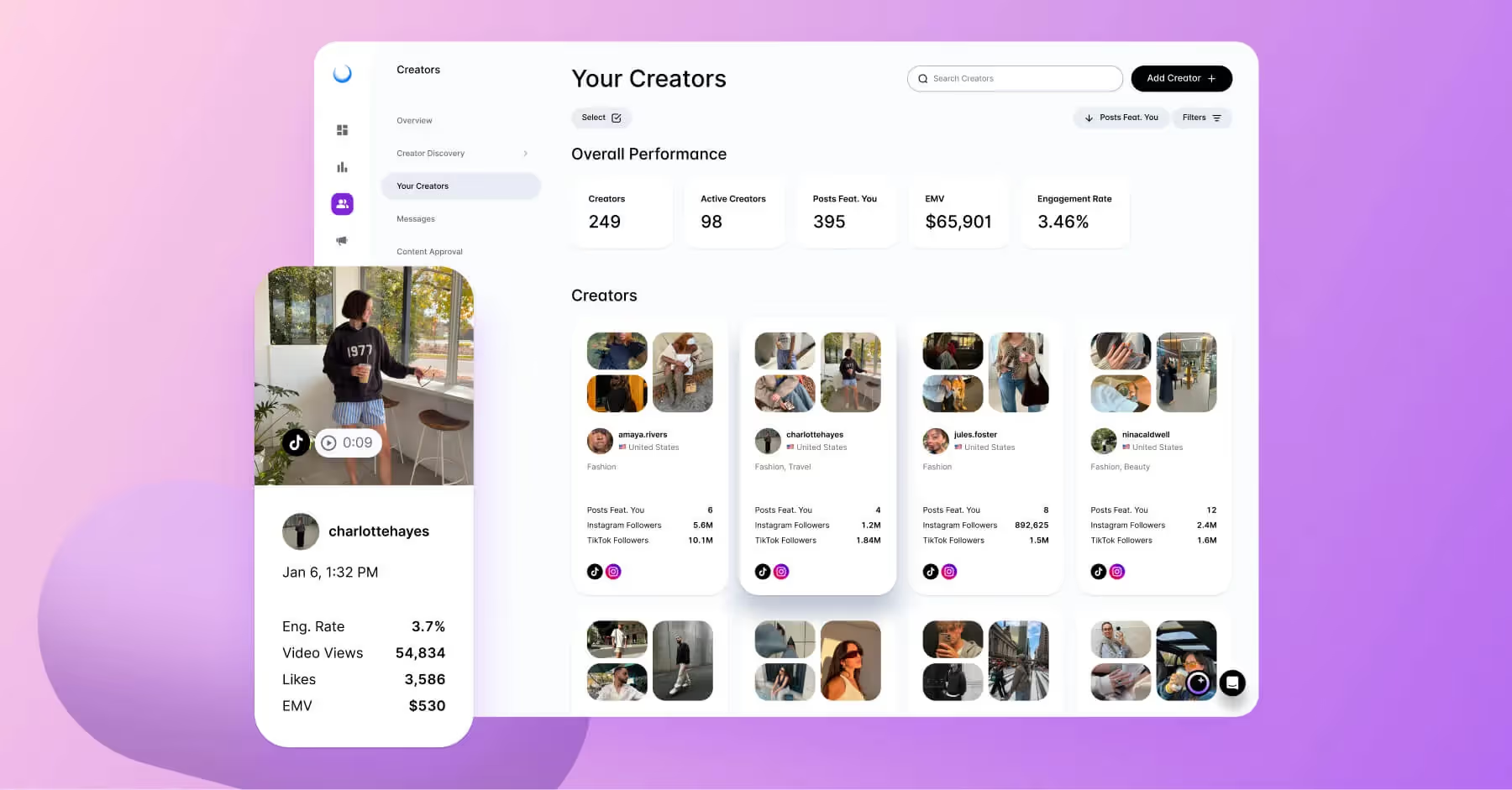
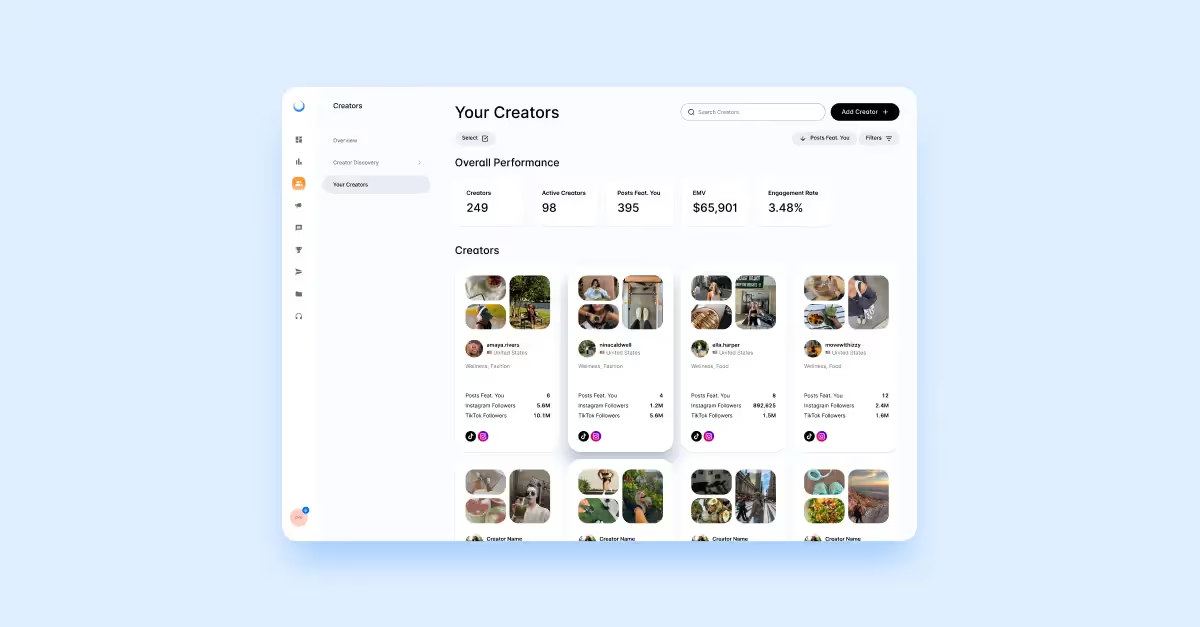
Influencer platforms are built to make brands’ and influencers’ lives easier with one central hub to access the right creators for a partnership. Many of today’s best influencer analytics tools also help brands go beyond discovery by evaluating audience quality, engagement patterns, and campaign fit before outreach begins.
Use hashtag research
Hashtag research is simple but effective when it comes to influencer sourcing. All you have to do is pick a couple of hashtags that relate to the campaign or product you want to promote and see who is already posting using those hashtags. This is a great way to not only find influencers who you already know are interested in the topic, but also who know the value of things like hashtags and making content more surfaceable.
Conduct a competitive analysis
It never hurts to get some inspiration from your competitors, especially in relation to influencers. While you’re not going to want to launch partnerships with influencers who are working with your direct competitors, their influencer strategy can help inform the types of people you will want to look for, and you can use those creators to find other, similar influencers who could be a great partnership for you.
Attend industry events
While it may feel a little old school, it is still extremely possible (and fun) to meet influencers out in the wild. Keep a pulse on events happening in your area (or in any of your target markets) and make a note to attend, socialize, and make connections. If you feel like these types of events are lacking, it’s a great opportunity for your brand to host something that works for you.
Tap into existing brand advocates
You might not have thought about it before, but your existing brand advocates can do so much more than just create UGC. While not everyone who rides for your brand is necessarily an influencer, there's a good chance that there are at least a couple of users who have some influence or following. Dig deeper into your loyalists to see if the fit is there. It’s a natural pairing since you already know they love what you’re offering.
Common Mistakes To Avoid When Sourcing Influencers
Sourcing the right influencers isn’t a perfect science. Because of this, it’s easy to fall into ‘traps’ of what the best type of influencer looks like for your brand, when in reality, it may be something completely different. Below are some pitfalls you’ll want to avoid when looking for influencers for your brand.
Focusing on the wrong things
With influencer sourcing comes a lot of research and competitive analysis. When doing this, you may identify influencers who work with your competitors or brands you like that are performing extremely well and think they’re the perfect fit for you. You’re going to want to avoid choosing influencers simply because they’re working with someone else, and think more deeply about how they fit into your actual influencer marketing campaign or strategy. Focus on what makes someone work for you, not what makes them work for someone else, to know if they would actually be a good fit or not.
Prioritizing size over engagement
Wanting to partner with an influencer who has a ton of followers makes total logical sense. More followers = more engagement = more conversions. Simple math. But it’s actually not that simple. More often than not, influencers with massive followings have lower engagement rates than those with more moderate follower counts. This is because once an audience gets big enough, it tends to lose some level of engagement or interactivity.
The influencer is no longer interacting as closely with the audience due to its size, meaning many followers just see and scroll, versus stopping to actually interact. Not to mention the cost that is often associated with working with larger influencers. Smaller creators with higher engagement are going to be a better bang for your buck.
Ignoring suspicious activity
Not many influencers inflate their numbers or metrics, but it’s always a possibility you’ll want to consider and rule out before moving forward. Even if the influencer is a perfect fit for your brand or your campaign, you must do all of the proper checks to ensure their following is legit, their business practices are ethical, and you aren’t putting your brand in the middle of a potential scandal or situation. Ignoring your gut or suspicious activity will never be worth the potential gains of a partnership.
What To Do Once You’ve Found ‘The One’
Now that you know who you want to work with, it’s super important to get the next part right. How you interact with an influencer can make or break your chances of working with them, so here are a couple of tips to get you started:
Engage authentically
Remember, influencers are people. They likely won’t respond to robotic messages that sound like they’ve been sent to 100 people, so it’s important to add some personalization and personality into your influencer outreach. You’ve already done your research and understand what makes this specific influencer unique, so use your knowledge to reach out to them and make them feel more connected to you.
Create a proposal
Once you’ve gotten word that the influencer is interested in collaborating with you, it’s time to put together a proper proposal. As you’ve already done your research into the influencer, you’ve set goals and timelines for your project, so putting together a proposal shouldn’t be challenging and instead just a culmination of all of the work you’ve already done in one place.
Meet the influencer
Influencer authentically outreached? Check. Proposal sent and possibly accepted? Check. Naturally, now would be a good time to get some face time with the influencer if possible. This doesn’t need to be super formal or even in person, just a couple of minutes to touch base, connect person to person, and clarify any details from the proposal that they may want more information about.
Influencer Sourcing FAQs
Which tools and platforms can be used to search and filter influencers?
Platforms like Dash Social, Influencity, Upfluence, GRIN, and CreatorIQ can all be used to search and filter influencers depending on your needs.
How do you find local influencers?
Finding local influencers can be done both online and offline. Online, you can find local influencers by searching specific places or other local brands to see who’s posting. Offline, you can go to (or even better, host) specific events to attract local influencers and connect with them in person.
What’s the best way to reach out to a creator?
The best way to reach out to a creator is either through email (they usually have this in their bio) or through their most active platform DM’s. Either the influencer themself or their team should be monitoring both their email and DM’s, so you should be likely to hear back from them there.
How to check if influencer engagement is real or fake?
A good indicator of whether an influencer's engagement is real or fake is by looking at their followers. While almost every social media account has at least a couple of fake followers, using something like a Fake Follower Checklist can help you sift through large amounts of followers to see if they are legit. The results of this checklist will help inform you of whether a specific influencer's engagement is the real deal or not.