13 Best Influencer Analytics Tools for 2026
Compare the top influencer analytics tools for better creator fit, reporting, and ROI.
Contents

Influencer analytics tools help brands measure creator performance, track campaign ROI, and decide which partnerships are worth scaling. The right platform makes it easier to compare influencers, understand audience quality, monitor campaign results, and connect creator activity to broader social and business goals.
Influencer measurement tools are especially important for teams running campaigns across Instagram, TikTok, YouTube, and other social channels. Before a campaign goes live, they help brands evaluate audience quality, engagement rate, authenticity, demographics, and brand fit. After a campaign launches, they help measure reach, impressions, engagement, earned media value, conversions, user-generated content, and ROI.
Key Takeaways:
- Best influencer analytics tools overall: Dash Social, Sprout Social, and CreatorIQ. These platforms help brands measure creator performance, connect results to social strategy, and report on campaign impact.
- Best influencer analytics tools for creator discovery: Modash, HypeAuditor, and Afluencer. These platforms help brands find, vet, and compare creators based on audience quality, reach, engagement, and fit.
- Best influencer analytics tools for enterprise teams: CreatorIQ, Traackr, and Dash Social. These platforms support larger teams managing global creator programs, complex reporting, and multiple campaigns.
- Best influencer analytics tools for audience insights: Audiense, HypeAuditor, and Modash. These tools help brands understand audience segments, creator relevance, and follower quality before investing in a partnership.
What Are Influencer Analytics Tools?
Influencer analytics tools are platforms that help brands measure how creator partnerships perform, from audience quality and engagement trends to influencer campaign ROI, brand fit, and cross-channel impact. Instead of looking at influencer marketing in isolation, these tools connect creator performance to the broader social strategy, helping teams understand what’s working, why it’s working, and where to invest next.
They’re typically used by influencer marketing managers, social media teams, digital marketing leaders, and analytics teams that need clear, reliable reporting across creator campaigns. The right tool helps teams move beyond surface-level metrics like follower count and see whether a creator’s audience is real, relevant, engaged, and likely to drive meaningful results for the brand.
Top 13 Influencer Analytics Tools for Brands
For a quick side-by-side view, here’s how the top influencer analytics tools compare before we get into the detailed reviews.
Last verified: May 2026
How we evaluated these influencer analytics tools
We evaluated each influencer analytics tool based on how well it helps teams make better creator decisions, measure performance, and prove impact. Outside of campaign data, the best influencer analytics tools help brands understand whether a creator is the right fit, whether their audience is authentic, and whether their content is driving meaningful results.
Our criteria focused on four key areas: creator fit, campaign performance, audience authenticity, and business impact. We looked for tools that make it easy to evaluate brand alignment, spot engagement trends, compare creator performance across campaigns, and connect influencer activity to broader marketing goals.
We also considered ease of use, reporting flexibility, data quality, and how well each platform supports cross-channel analysis.
Our criteria included:
1. Dash Social
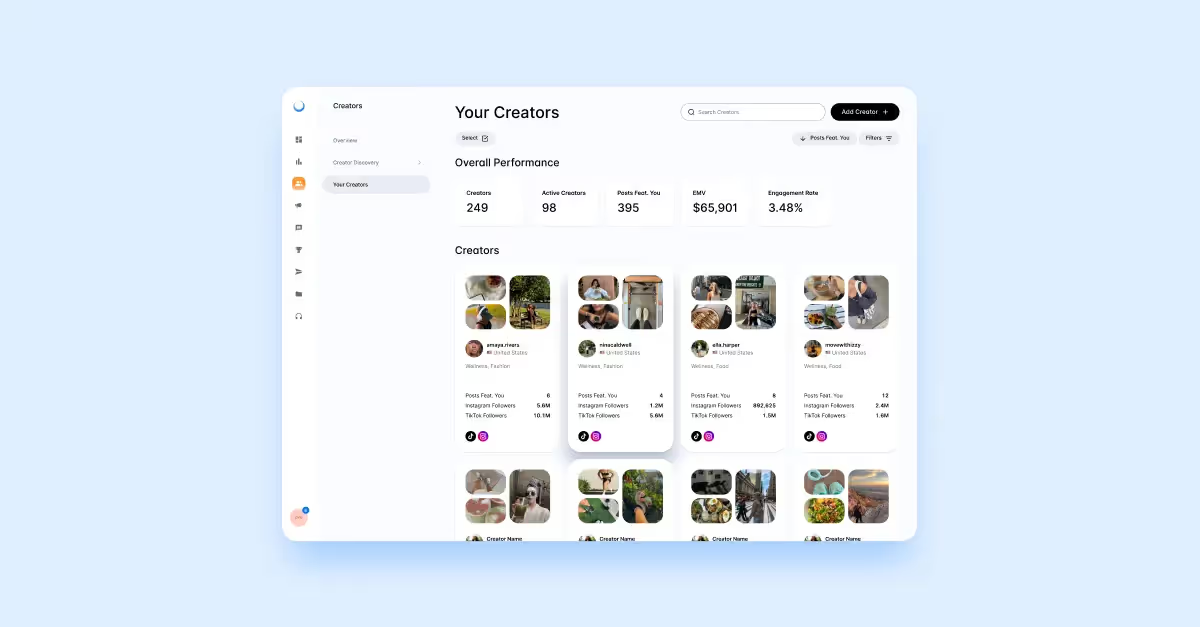
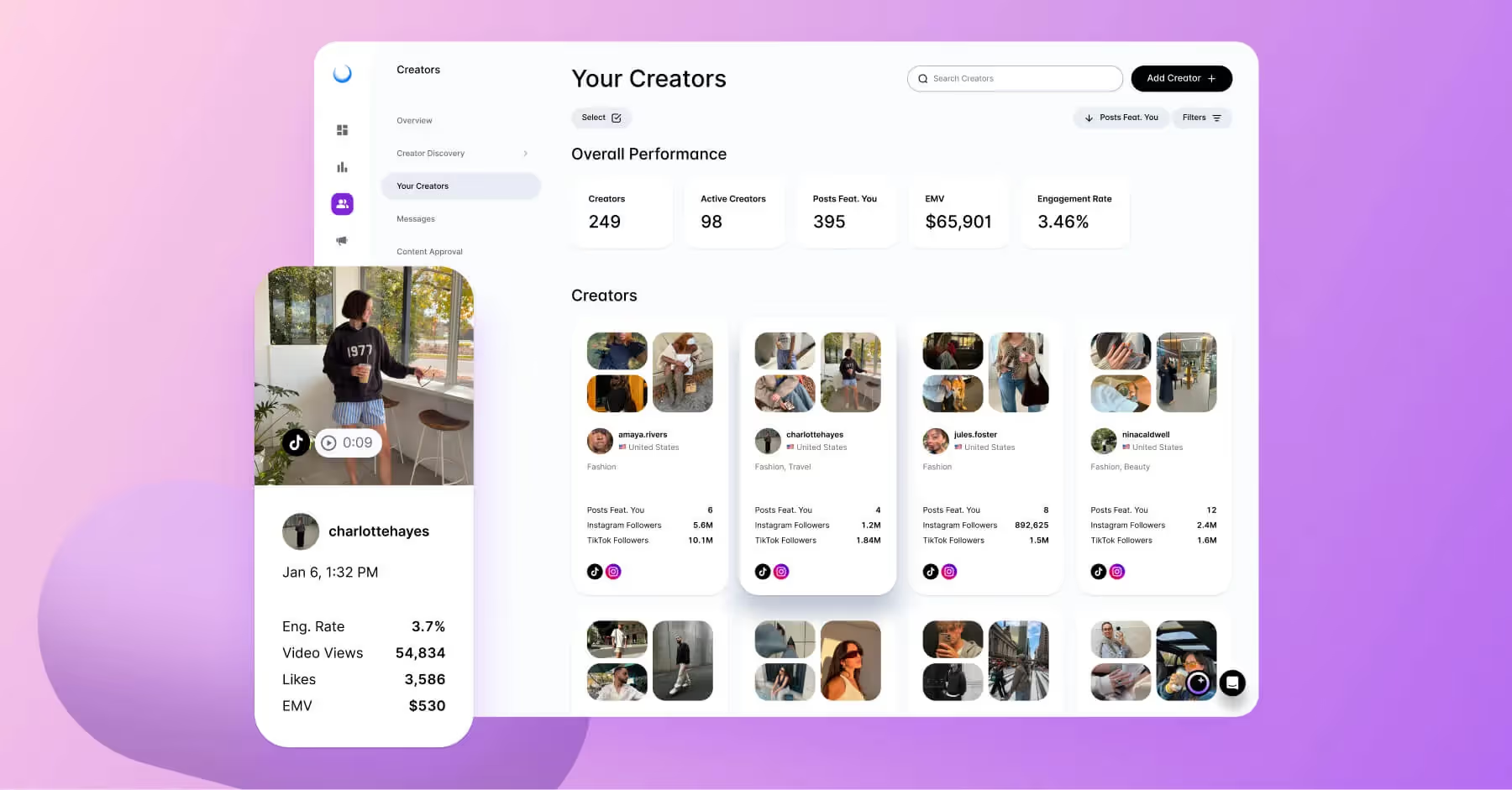
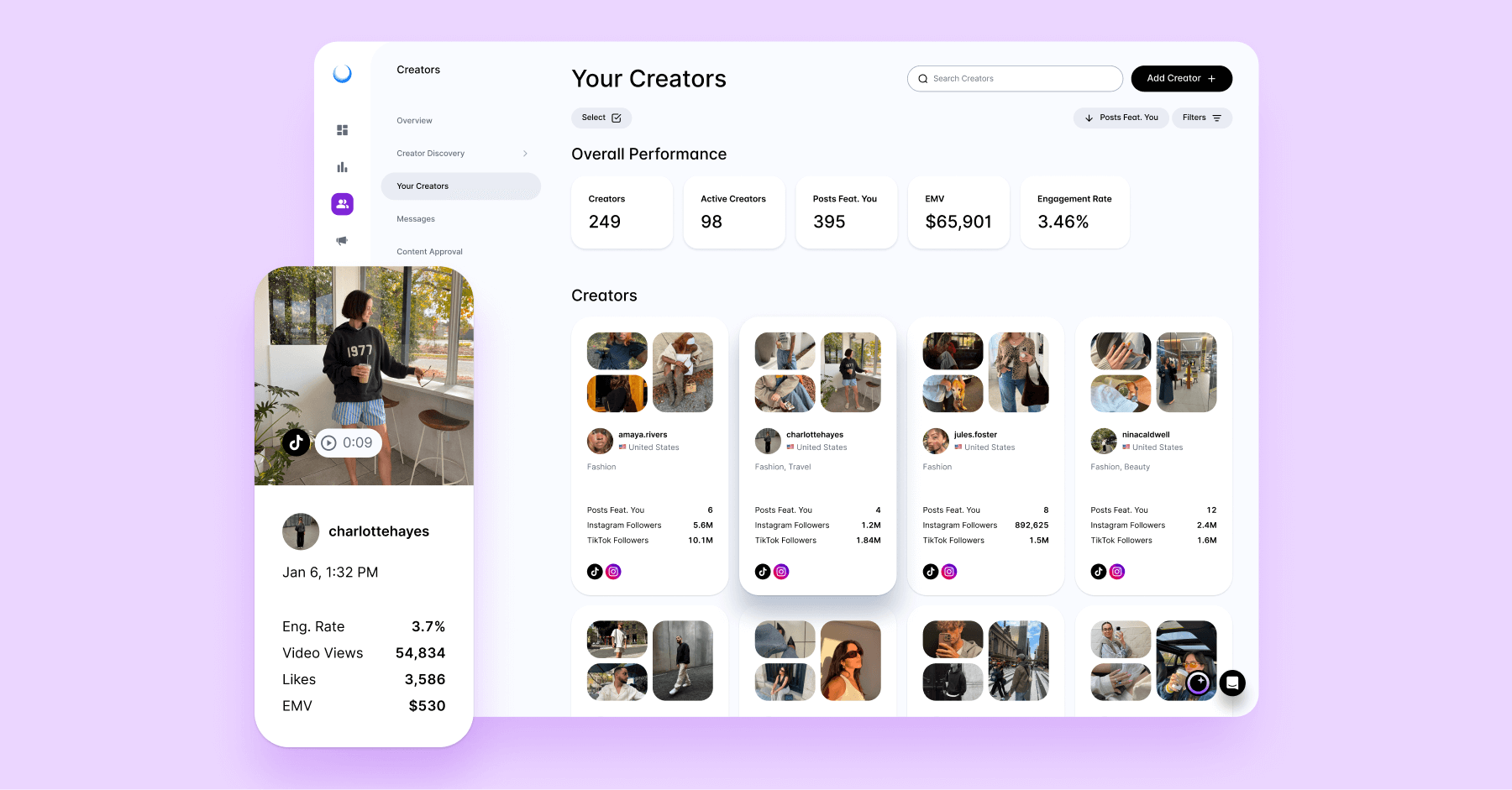
Dash Social is a social media management and influencer marketing platform. It offers sophisticated cross-channel insights, creator discovery, and a creator management tool for end-to-end influencer campaign management. Dash Social integrates social content scheduling, publishing, and in-depth social media analytics so brands can measure influencer and content performance in one place.
- Best for: Cross-channel social and influencer reporting.
- Core analytics strength: Creator, owned, paid, UGC, EMV, campaign performance, and AI-powered creative insights in one platform.
- Limitations: Best fit for brands that treat creator marketing as part of a broader social strategy, rather than teams looking for a standalone influencer-only tool.
- Pricing: Tiered plans. Demo available.
- Ideal brand size: Mid-market and enterprise brands.
2. Sprout Social
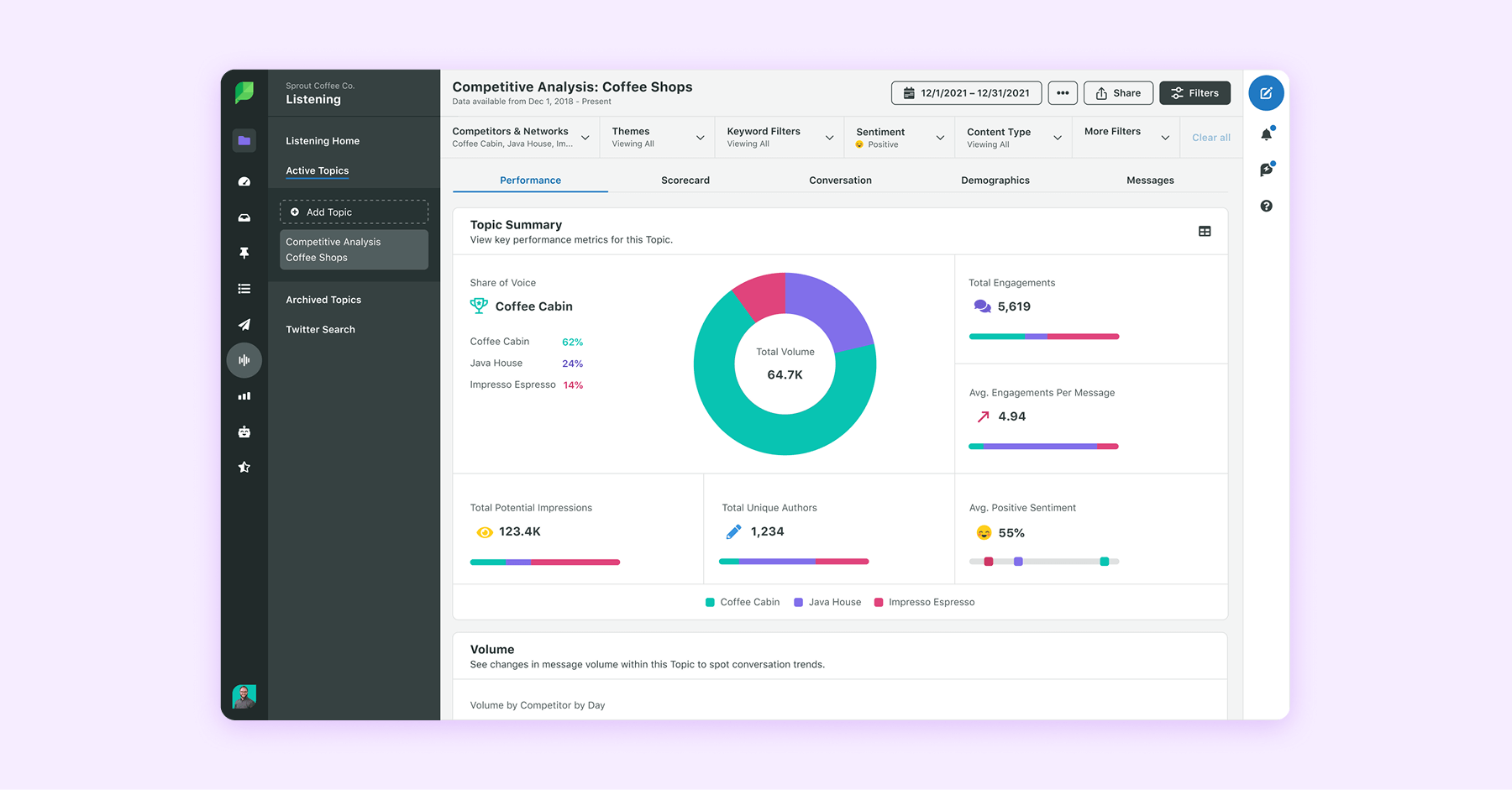
Sprout Social is a social media management tool that has expanded into influencer analytics through its Sprout Social Influencer Marketing product. Sprout offers a unified solution for social publishing, engagement, listening, and now, influencer discovery, along with campaign management. Within Sprout, brands can find influencers, analyze content performance, and manage influencer campaigns alongside their regular social media efforts.
- Best for: Social media management with influencer workflows.
- Core analytics strength: Social analytics, listening, engagement, influencer performance, and campaign reporting.
- Limitations: Influencer marketing is positioned as a dedicated solution, so buyers should confirm what is included in their plan.
- Pricing: Tiered subscription, with influencer marketing available separately.
- Ideal brand size: Small business to enterprise.
3. Modash
Modash is known for its extensive influencer database and emphasis on micro-influencers. Designed to help brands discover and vet creators at scale, Modash pulls public social data to offer a robust list of influencers. Brands can find niche creators and analyze their followers for authenticity and engagement.
- Best for: Creator discovery and vetting.
- Core analytics strength: Audience quality, engagement, creator performance, and campaign tracking.
- Limitations: Better fit for discovery and vetting than complex enterprise workflow management.
- Pricing: Usage-based subscription tiers.
- Ideal brand size: Small to mid-sized teams.

4. HypeAuditor
Popular for its fake follower audit tool, HypeAuditor has evolved into an all-in-one solution offering influencer discovery, follower quality analysis, competitive benchmarking, and campaign tracking. It has a proprietary influencer scoring algorithm and provides an extensive range of AI-powered tools.
- Best for: Audience authenticity and fraud detection.
- Core analytics strength: Audience quality, authenticity, demographics, competitive benchmarks, and campaign tracking.
- Limitations: Teams looking for broader social management workflows may need additional tools.
- Pricing: Subscription and custom plans.
- Ideal brand size: Mid-sized and enterprise teams.

5. GRIN
GRIN is an influencer analytics tool that specializes in e-commerce and affiliate programs, including product gifting, payments, and shipping. It also allows marketers to discover creator partnerships and measure results. GRIN integrates directly with major e-commerce platforms like Shopify and Magento, giving brands real-time visibility into social media ROI. Its CRM-style interface helps teams manage creator relationships at scale.
- Best for: E-commerce influencer programs.
- Core analytics strength: Product seeding, affiliate links, discount codes, creator payments, sales tracking, and content collection.
- Limitations: Best suited to e-commerce and DTC workflows, rather than broad audience intelligence or social media management.
- Pricing: Free trial and paid packages.
- Ideal brand size: Mid-sized and enterprise e-commerce brands.

6. Upfluence
Upfluence bridges influencer marketing with social commerce tools. It scans a brand’s own customers to reveal creators, then automates outreach, gifting, and discount-code setup. Numerous e-commerce integrations feed sales back into campaign reports. Retailers and DTC brands choose Upfluence to convert customers into brand ambassadors and tie posts to revenue.
- Best for: Customer-led creator programs.
- Core analytics strength: Creator discovery, affiliate tracking, product seeding, campaign management, and sales attribution.
- Limitations: Strongest for e-commerce and affiliate workflows, so teams should confirm fit for broader social reporting needs.
- Pricing: Custom pricing.
- Ideal brand size: Mid-market, enterprise, and agencies.

7. Traackr
Traackr is built on its Reach, Relevance, Resonance scoring model. Global brands map thousands of creators, track content automatically, and benchmark share of voice against rivals. Network graphs reveal which influencers amplify one another, guiding smarter seeding. The tool also supports budget tracking and campaign forecasting, helping teams optimize spend across regions and verticals.
- Best for: Global influencer benchmarking.
- Core analytics strength: Audience insights, spend tracking, benchmarking, campaign performance, and ROI measurement.
- Limitations: Better fit for mature influencer programs than small teams running simple campaigns.
- Pricing: Custom pricing.
- Ideal brand size: Enterprise and global agencies

8. CreatorIQ
CreatorIQ positions itself as the secure backbone for enterprise creator programs. Direct APIs keep data fresh and authentic, while campaigns cover briefing, e-signature contracts, and rights management. Its addition of an EMV metric lets teams measure the value of their partnerships. CreatorIQ also offers fraud detection, allowing brands to filter out creators with inflated followings or poor engagement quality.
- Best for: Enterprise creator management.
- Core analytics strength: Creator discovery, campaign management, EMV, analytics, creator CRM, and ROI measurement.
- Limitations: Enterprise depth may be more than smaller teams need.
- Pricing: Custom pricing.
- Ideal brand size: Enterprise and large agencies.

9. Klear by Meltwater
Klear slots influencer workflows into Meltwater’s wider listening suite. Brands can search profiles, vet creators by audience affinity, then chat, brief, and pay without leaving the tool. Brands already using Meltwater adopt Klear for a single source of earned-media truth. Klear’s historical performance data and campaign tracking features make it easy to replicate winning strategies.
- Best for: Influencer workflows connected to media intelligence.
- Core analytics strength: Creator discovery, audience insights, campaign management, e-commerce integrations, fraud detection, and ROI reporting.
- Limitations: Best for teams that will benefit from Meltwater’s broader media intelligence ecosystem.
- Pricing: Custom pricing.
- Ideal brand size: Mid-sized teams, agencies, and enterprise.

10. Bazaarvoice
Bazaarvoice turns sampling into reviews and social chatter through its ‘Influenster’ community, a team of consumers dedicated to providing honest reviews. Brands ship products to targeted members who post reviews on retailer sites and splash content across social. In general, brands use Bazaarvoice to launch their influencer campaigns with authentic social proof.
- Best for: Product sampling and review generation.
- Core analytics strength: Sampling, reviews, UGC, social proof, and product launch insights.
- Limitations: Better positioned for sampling and shopper-generated content than full influencer campaign analytics.
- Pricing: Custom pricing.
- Ideal brand size: Mid-sized and enterprise consumer brands.

11. Audiense
Audiense excels at audience segmentation and intelligence. Persona reports include demographics, interests, active hours, and more. Insights teams use Audiense to identify which creators will truly make a difference. It also helps brands surface micro-communities within larger audiences, aligning partnerships with high-relevance creators instead of relying solely on reach.
- Best for: Audience intelligence.
- Core analytics strength: Audience segmentation, micro-communities, interests, demographics, and influencer relevance.
- Limitations: Not primarily an end-to-end influencer campaign management platform.
- Pricing: Tiered and custom plans.
- Ideal brand size: Strategy teams, insights teams, and agencies.

12. Influencity
Influencity offers an in-depth profile database. Side-by-side comparisons flag audience overlap, predicted story views, and engagement quality. Its campaign builder estimates results before launch, then tracks posts and EMV after. Its multi-language UI makes Influencity popular across regions. Brands can drill into follower authenticity metrics, cross-platform performance, and historical content trends. The platform also supports customizable reports for stakeholder sharing.
- Best for: Flexible influencer campaign planning.
- Core analytics strength: Audience analysis, authenticity checks, EMV, campaign tracking, and performance reporting.
- Limitations: Teams should compare workflow depth against more enterprise-focused platforms if they manage complex global programs.
- Pricing: Tiered subscription and custom plans.
- Ideal brand size: Mid-sized and enterprise teams.

13. Afluencer
Afluencer is a matchmaking marketplace geared toward nano and micro influencers. Brands list a collab with requirements, see instant matches, and chat with potential creator partners in-platform. Its dashboards log deliverables to help marketers execute and track engagement after the fact. The platform also offers a creator rating system to help brands vet potential partners quickly. Afluencer’s mobile-first approach makes it especially useful for small teams managing campaigns on the go.
- Best for: Beginner influencer campaigns.
- Core analytics strength: Creator matching, campaign setup, applications, and basic collaboration tracking.
- Limitations: Less robust for advanced enterprise analytics, benchmarking, and cross-channel reporting.
- Pricing: Free and paid subscription tiers.
- Ideal brand size: Small teams and startups.

Best Influencer Analytics Tools by Use Case
Best for influencer discovery
Best-fit tools: Upfluence and Modash
Upfluence is a strong fit for brands that want creator discovery tied closely to e-commerce, affiliate programs, and customer data. It helps teams identify creators based on audience, content, and performance, including creators who already have a relationship with the brand.
Modash is a good choice for teams that need broad discovery across Instagram, TikTok, and YouTube. Its analytics include audience demographics, engagement rate, fake followers, and other profile-level data that help marketers narrow large creator lists into more relevant shortlists.
Best for audience authenticity and fraud detection
Best-fit tools: HypeAuditor and Modash
HypeAuditor is built for teams that need to vet creator credibility before investing in a partnership. Its influencer analytics focus on audience quality, engagement, demographics, and authenticity, making it useful for identifying creators with real, relevant audiences.
Modash is also a strong option for audience authenticity checks, especially for brands comparing creators across TikTok, YouTube, and Instagram. Its fake follower data and audience breakdowns help teams avoid partnerships that look strong on the surface but lack real audience quality.
Best for influencer campaign reporting
Best-fit tools: CreatorIQ and Sprout Social Influencer Marketing
CreatorIQ is a strong fit for teams that need automated, real-time campaign reporting across influencer programs. It helps brands track performance, prove ROI, and create a clearer view of how creator activity is contributing to campaign goals.
Sprout Social Influencer Marketing is a good choice for teams that want influencer discovery, campaign execution, and performance tracking in one workflow. It’s especially useful for brands already using Sprout Social and looking to centralize influencer campaign management.
Best for measuring ROI and EMV
Best-fit tools: GRIN and Traackr
GRIN is well-suited for e-commerce brands that need to connect influencer activity to sales, revenue, and campaign goals. Its reporting tools help teams monitor influencer, campaign, and program performance from a single dashboard.
Traackr is a strong option for brands that need more advanced influencer measurement, including ROI and earned media value. Its platform supports creator discovery, campaign management, and performance measurement, which makes it a practical fit for teams tracking influencer impact across larger programs.
Best for enterprise creator programs
Best-fit tools: CreatorIQ, Traackr, and Dash Social
CreatorIQ is built for large teams managing complex influencer programs, especially when reporting, governance, and scalability matter. Its enterprise focus makes it a strong fit for brands that need structured workflows and visibility across campaigns, creators, and markets.
Traackr is another strong enterprise option, particularly for global brands that need creator intelligence, campaign management, and measurement in one platform. It’s designed to support influencer programs at scale, with AI workflows and performance insights that help larger teams manage complexity.
Dash Social is a strong fit for enterprise brands that want creator management connected to the rest of their social strategy. It brings owned, creator, and paid performance into one view, helping global teams manage workflows, prove impact, and make smarter budget decisions across campaigns, regions, and channels.
Best for cross-channel social and influencer insights
Best-fit tool: Dash Social
Dash Social is the best fit for teams that want influencer analytics connected to the rest of their social strategy. It brings creator, owned, and paid social insights into one view, helping brands measure creator impact alongside broader campaign and channel performance.
This is especially valuable for social-first teams that need to move beyond siloed influencer reporting. Dash Social’s Creator Management tool is built around reliable, API-backed data and unified reporting across social strategy, helping teams understand what’s performing and where to invest next.

Stay on top of creator and influencer performance
Seamlessly measure the ROI of your ambassador, influencer and creator programs.
Discover Creator Measurement ToolsHow To Analyze Influencer Metrics Step by Step
Analyzing influencer metrics is less about pulling every number available and more about knowing which numbers answer the right questions. Use this process to evaluate creator performance, connect campaigns to business outcomes, and build reporting that your team can repeat.
1. Start with campaign goals
Before you look at performance, define what the campaign is meant to do. Are you trying to grow awareness, drive engagement, increase traffic, generate sales, or build a pipeline of creators for future partnerships?
Your goal determines which metrics matter most. For awareness, focus on reach, impressions, views, and earned media value. For consideration, look at engagement quality, saves, shares, comments, and click-through rate. For conversion, prioritize clicks, conversions, revenue, cost per acquisition, and return on investment.
2. Segment creators by role and audience fit
Not every creator should be measured the same way. A macro-influencer may be best for reach, while a niche creator may drive stronger engagement or higher-intent traffic.
Group creators by their role in the campaign, audience size, platform, region, content format, and target audience. Then compare performance within those segments. This gives you a clearer read on who is doing the job they were hired to do, rather than ranking every creator against one generic benchmark.
3. Compare content performance, not just creator size
Follower count can help estimate potential reach, but it rarely tells the full story. Look at which specific posts, videos, formats, hooks, and creative themes drove the strongest response.
Compare metrics like engagement rate, video completion rate, saves, shares, comments, clicks, and conversions at the content level. This helps you understand which creative choices are working, so you can brief creators more effectively and reuse top-performing concepts across organic, paid, and future influencer campaigns.
4. Validate audience quality
Strong performance is only useful if the audience is real and relevant. Review audience demographics, location, interests, engagement patterns, follower growth, and fake follower signals before making decisions.
This step helps protect the budget and brand trust. A creator with a smaller, highly relevant audience can be more valuable than one with a larger following that does not match your customer or shows signs of inflated engagement.
5. Connect engagement to conversions and ROI
Engagement shows whether people paid attention. Conversions show whether that attention turned into action.
Use trackable links, promo codes, affiliate links, UTM parameters, landing page data, and commerce integrations where possible. Then compare the full path from content to action, including clicks, site sessions, add-to-carts, purchases, revenue, and ROI. This gives your team a stronger case for which creators to renew, where to increase spend, and which partnerships need to be reworked.
6. Build a repeatable reporting workflow
A strong reporting process should make each campaign easier to evaluate than the last. Set a consistent cadence for reporting, align on the metrics each stakeholder needs, and use the same structure across campaigns so results are easier to compare over time.
Your workflow should capture campaign goals, creator segments, top content, audience quality, engagement trends, conversions, ROI, and next steps. The goal is to turn influencer reporting into a decision-making system, so your team knows what to repeat, what to test, and where to invest next.
Stay on top of creator and influencer performance
Seamlessly measure the ROI of your ambassador, influencer and creator programs.
Discover Creator Measurement ToolsHow To Choose the Right Influencer Analytics Platform
Choosing the right influencer analytics platform starts with one question: what decision does your team need to make faster, better, or with more confidence? Some tools are built for finding creators. Others are stronger for reporting, fraud detection, campaign tracking, or connecting influencer performance to broader social results.
Use the criteria below to compare vendors internally and make sure the platform fits how your team actually works.
Choose based on your primary use case
Start by identifying the main problem you need the platform to solve. Are you trying to find better-fit creators, reduce manual reporting, validate audience quality, prove ROI, or manage a growing creator program across teams and regions?
This helps keep the evaluation focused. A discovery-first tool may be enough for teams sourcing creators at scale, while a brand with mature influencer programs may need deeper campaign reporting, creator management, and cross-channel performance insights.
Look for reporting depth, not just discovery
Creator discovery is important, but it’s only the first step. The best influencer analytics platforms help you understand what happens after a creator is selected, including how their content performs, how their audience responds, and how each partnership contributes to campaign goals.
When comparing tools, look at the reporting experience closely. Can you segment creators by campaign, platform, region, or content type? Can you compare performance over time? Can you turn results into a clear story for leadership? If reporting still requires screenshots, spreadsheets, or manual formatting, the tool may create more work than it solves.
Prioritize integrations and workflow fit
A platform should fit into your team’s day-to-day workflow, not force everyone into a separate process. Look for integrations with the social channels, e-commerce tools, analytics platforms, and reporting systems your team already uses.
Workflow fit matters, too. If social, influencer, paid, and analytics teams all need access to the same data, choose a platform that keeps those teams connected. This is where an integrated social and creator management platform can be especially valuable, because creator performance can be measured alongside owned, earned, and paid social instead of sitting in a separate system.
Make sure the tool can prove ROI
Influencer marketing budgets are under more scrutiny, so your platform needs to connect creator activity to business impact. At minimum, look for reporting that helps track engagement, reach, clicks, conversions, earned media value, and ROI.
The strongest platforms make it easy to see which creators are worth renewing, which campaigns drove results, and where your team should invest next. Dash Social is built for this level of visibility, connecting creator, owned, and paid performance in one place so teams can prove impact with data they trust.
Why Dash Social Stands Out for Influencer Analytics
Dash Social stands out for influencer analytics because it connects creator performance to the rest of your social strategy. Instead of measuring influencer content in a separate system, teams can see how creator, owned, and paid content perform together, making it easier to understand what’s driving engagement, traffic, and business impact.
That cross-channel view gives teams clearer reporting and stronger context. You can evaluate creator performance, compare content insights, track campaign results, and understand which partnerships are helping your brand move closer to its goals. For teams managing multiple channels, campaigns, or regions, that level of visibility makes reporting easier to trust and easier to share.
Dash Social also supports the workflows modern social teams need to move faster. Teams can manage creator insights alongside broader social performance, reduce manual reporting, and make more confident decisions about which creators, content, and campaigns to scale.
Try Dash Social Today
Less busywork, more growth. Find out how to save 10 hours each week with Dash Social.
Get a demoInfluencer Measurement FAQs
How do you analyze an influencer before partnering with them?
Analyze an influencer before partnering with them by looking at fit, audience quality, and past performance. Start with their content, tone, values, and audience to make sure they align with your brand and campaign goals.
Then review key metrics such as engagement rate, average views, reach, audience demographics, follower growth, and fake-follower signals. A large audience is only valuable if it’s real, relevant, and engaged.
Finally, look at past sponsored content. Check whether their brand partnerships feel natural, how their audience responds, and whether they’ve driven measurable results like clicks, conversions, or strong engagement quality.
What are the top tools for analyzing creator-driven conversions?
The best tools for analyzing creator-driven conversions connect creator content to clicks, engagement, product interest, and revenue. Look for platforms with creator reporting, UTM tracking, affiliate links, link-in-bio analytics, and e-commerce integrations. Dash Social brings creator, organic, and paid performance into one view, so teams can prove impact and invest in what works.
How to track creator performance across TikTok and Instagram?
Track creator performance across TikTok and Instagram by setting clear campaign metrics, like engagement rate, views, clicks, conversions, and earned media value. Use UTM links, campaign tracking, and cross-channel reporting to compare results consistently.
Who provides insights into influencer-generated content engagement?
Dash Social, Sprout, Modash, and GRIN all provide brands with insights into how engaging their influence-generated content is. Beyond engagement, these tools also help you track general post and campaign performance, and provide the direct ROI brands are getting from their influencer partnerships.
How do you measure the success of influencer marketing?
Brands should set goals first (brand awareness, engagement, or sales). Next, track the matching KPI (impressions, engagement rate, conversions), then, to measure success, compare results against the target.
How do you measure influencer marketing ROI?
You measure influencer marketing ROI by comparing the revenue or value generated by creator campaigns against what you spent. The basic formula is:
Influencer marketing ROI = (Revenue or value generated − campaign cost) / campaign cost × 100
To calculate it, track campaign costs, creator fees, product gifting, production costs, paid amplification, clicks, conversions, sales, and earned media value. Use UTM links, affiliate links, promo codes, and e-commerce data wherever possible to connect creator activity to business outcomes.
For a clearer view, measure ROI by creator, campaign, platform, and content type. This helps you see which partnerships are worth renewing, where spend is working hardest, and where to adjust your strategy.
Which platforms offer influencer campaign tracking and analytics?
Influencer management platforms like Dash Social, CreatorIQ, Upfluence, and Traackr all offer detailed influencer campaign tracking and analytics. These platforms are built to help brands prove the ROI on creator campaigns by showcasing what content performed, what didn’t, and even allow for benchmarking or comparison across different platforms.
How do you measure the effectiveness of influencer marketing?
You measure influencer marketing effectiveness by connecting creator activity to the goals of the campaign. Start with the main objective, such as awareness, engagement, traffic, conversions, or sales, then track the metrics that show whether the campaign achieved it. Common influencer marketing metrics include reach, impressions, engagement rate, audience growth, clicks, conversions, earned media value, cost per engagement, and ROI.
How do influencer analytics tools differ from general social media analytics tools?
General social media analytics tools measure your brand’s owned channels. Influencer analytics tools measure creator partnerships, including creator fit, audience quality, campaign performance, and ROI. The best platforms connect both views, so teams can measure influencer content alongside owned, earned, and paid social.
What key features should I look for in an influencer analytics tool?
Look for creator discovery, audience demographics, authenticity signals, engagement analytics, campaign reporting, and ROI measurement. For growing teams, prioritize tools with cross-channel reporting, reliable data, and workflows that reduce manual reporting.