11 Facebook SEO Tips To Improve Discoverability and Traffic
Learn how to optimize your Facebook presence for search, visibility and traffic.


Facebook SEO helps brands improve their visibility across Facebook's search and discovery surfaces. Just as businesses optimize their websites to appear in search engine results, they can optimize their Facebook presence to make it easier for people to find their content, products and brand.
Today, discoverability on Facebook extends beyond search. The platform uses AI-powered recommendation systems to surface content based on user interests, engagement patterns and relevance signals. By combining traditional SEO principles with Facebook-specific best practices, brands can increase visibility, drive traffic and connect with the audiences most likely to engage with their content.
Key Takeaways:
- Research keywords your audience is already searching for on Facebook and Google.
- Optimize your profile, content and Page details to improve discoverability.
- Create search-friendly content that aligns with audience interests and intent.
- Build authority through community engagement, backlinks and brand mentions.
What Is Facebook SEO?
Facebook SEO is the process of optimizing your profile, content and page information to improve discoverability in Facebook search, recommendations and external search engines.
Although Facebook isn’t technically a search engine, it has search capabilities and people have adapted to interacting with the platform as a search engine to answer queries and find information. SEO and social media work together on the same basic principles that traditional search engines operate on. In website SEO, you optimize on-page and off-page factors to hopefully get your content to the top of search results.
For social media, it's the same idea, but you’re optimizing your social media page to be at the top of search results on the platform (and possibly Google). All platforms have their own algorithms, and just like Google, they can be difficult to figure out. Below, we touch on ten Facebook page optimization suggestions to get your content found.

11 Facebook SEO Tips to Improve Visibility and Traffic
Improving discoverability on Facebook requires more than simply creating a Page and posting content. Brands need to optimize their profiles, content and community presence to increase visibility in Facebook search, recommendations and external search engines. The following Facebook SEO best practices can help improve discoverability, drive traffic and connect your content with the right audience.
1. Conduct Keyword Research
SEO for Facebook starts like any good SEO strategy, with keyword research. While search behavior varies by platform, users often use Facebook to discover brands, products, communities and recommendations. Understanding the language your audience uses can help improve your visibility across Facebook's search and discovery surfaces. This is why it’s important to optimize your page with keywords. Think about your brand and products and the way people use them. How would they search for these things? You can use free SEO tools, or tap into Google’s Keyword Planner if you run ads, to see the volume of traffic for these keywords. It’s also a great way to find new search terms that you might not have considered.
2. Optimize your Facebook Profile
Once you’ve identified your keywords, it’s time to put them into action. Ideally, you want to use these keywords as close as possible to the beginning of the content you’re creating, exactly as they appear in your research.
Example: Facebook SEO vs. Facebook page SEO. One of these terms has significantly more search volume than the other, and you want to give your page every advantage. Even worse, you could use a term that doesn’t have any search volume if you’re not careful.
Use keywords in your business name only if it sounds natural and it makes sense.
Remember to always think of your customer first and if it doesn’t sound like something a person would say out loud in normal conversation, It probably should be left out.
Other places you can use your keywords for the Facebook algorithm to better understand your content are:
- Your Page name
- Your About section
- Your Page category
- Your captions and post copy
- Photo and video descriptions
- Your Page URL
3. Optimizing Your Custom URL
This SEO Facebook tip is often overlooked, but when you create a business page, Facebook automatically generates a default URL. This URL can be changed and customized. In order to do this you must claim your ‘vanity’ URL. This enables you to update the URL to match your business name, which at this point, hopefully, has a good keyword in it. A clear, descriptive URL can improve brand recognition and make it easier for users and search engines to understand your Page.
4. Optimize Reels and Content for Discovery
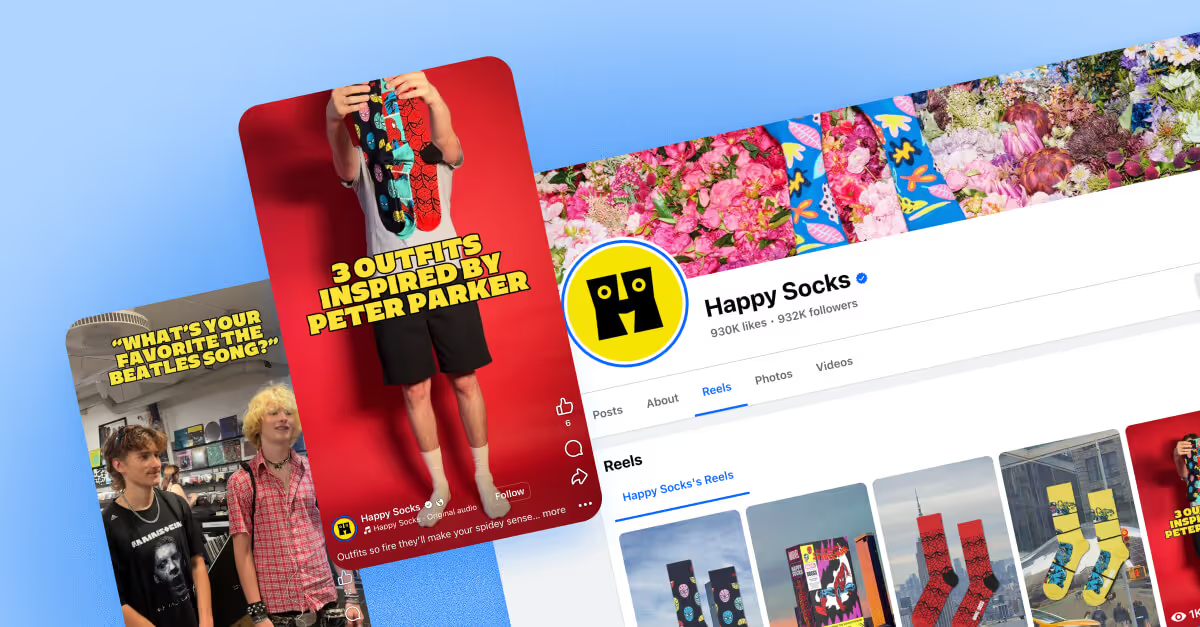
Optimizing your Facebook business page with focus key terms is the first step in getting your page found, but don’t stop there. Brands should look for opportunities to optimize their shared content, especially lo-fi content like Facebook Reels and paid advertisements for search. All brand-supported content shared on Facebook should be optimized to give it the best chance of being found by your target audience.
Consider incorporating relevant keywords into captions, on-screen text and spoken dialogue where appropriate. Facebook's recommendation systems increasingly use content context to understand and surface videos to relevant audiences.
5. Conduct Competitive Research
Now that you’ve mastered the art of keyword research and optimization for your own Facebook business page, it’s time to check in on the competition. Benchmarking yourself against the performance of competitors is crucial to understanding how your brand is actually performing in the social landscape. It can also help you inform brand strategy and gain valuable insights.
When starting a competitive analysis, brands need to first identify their competitors. This should be easy since your main product or brand competitors will be the same on socials. Now the investigation begins. Look at how they set up their pages, and what terms are they using to describe their products, themselves, and their content. Put these terms into your SEO tools to see the search volume and you’ll get a better understanding of their strategy. You might even gain great ideas for your own Facebook posts, videos or Reels. You want to show up where your competitors are, so use the keywords they do that are relevant to your brand.
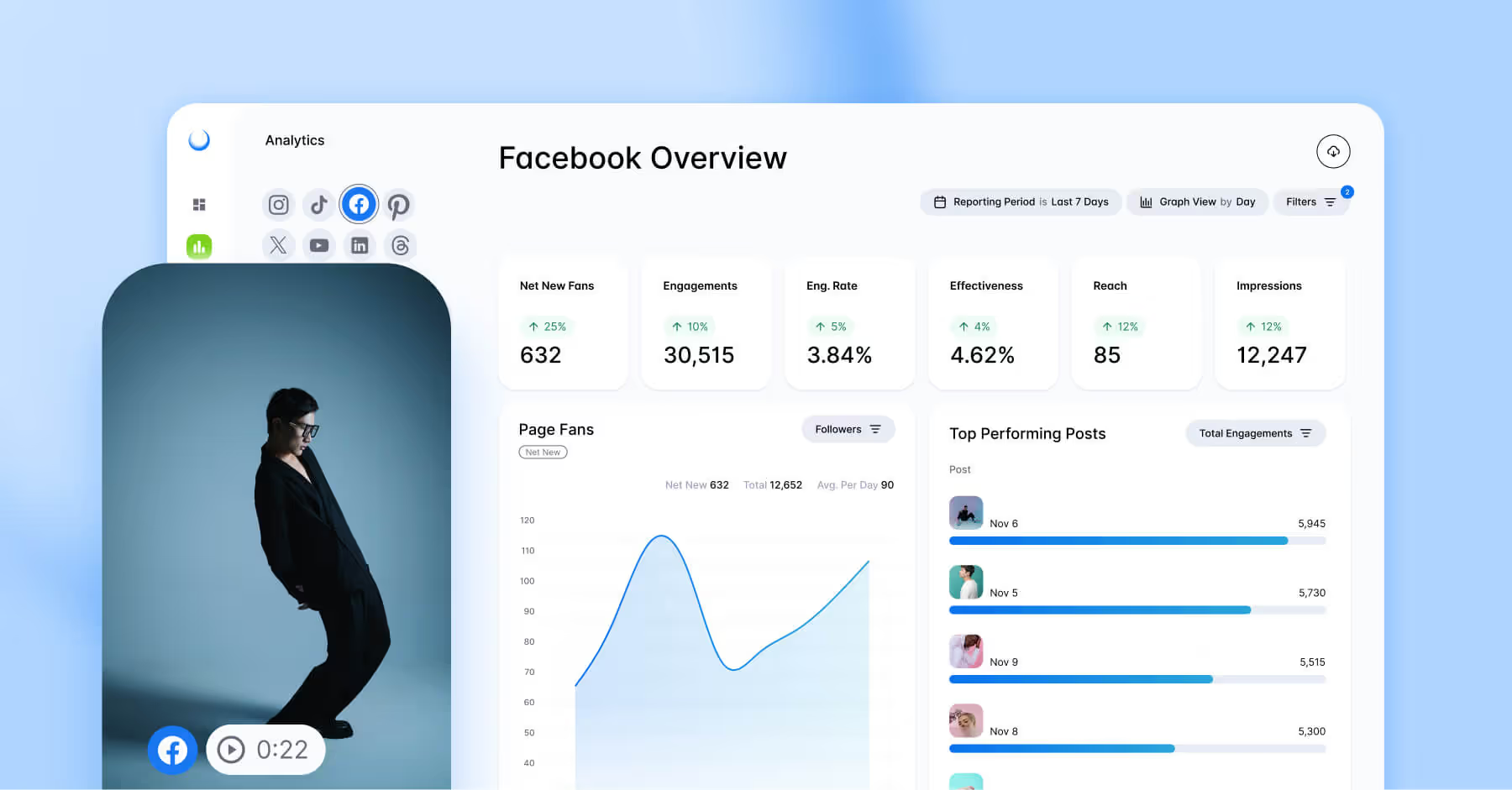
If you want to take this a step further, Dash Social’s Competitive Insights and Benchmarking feature allows you to compare your performance directly against competitors and Facebook benchmarks, giving you a clearer picture of how your content stacks up. Take an interactive product tour to see it in action.
6. Post at the Right Time
Finding the best time to post on Facebook can be as difficult as finding the best time to post on TikTok or Instagram. The short answer is, there is no exact right time to post, but there are optimal times. It’s important to post when your audience is active so that you maximize visibility and engagement when your audience is most active.
Marketing budgets can be tight at times, and paid ads might not be in the budget to ensure your brand is showing up when and where you want to. Finding the best time for your brand to post will require some testing. It helps if you already have an idea of time, but if you don’t, that’s okay. Test similar topic posts at the same time of day each day of the week, record your post engagement metrics, and keep testing. Test different times, and different post types (Reels, videos, static posts) until you have enough data to see a trend.
You can also use a scheduler tool to help with posting at certain times and days to make life a little easier. Posting your content at the right time can help drive organic traffic to your Facebook page and build brand awareness.
7. Share SEO-Focused Content
Facebook remains an important discovery platform for brands, making content optimization a valuable part of any social strategy. Optimizing your content can increase your chances of being found via Facebook search, and as a result, increase your chances of growing your audience, visibility and share of voice.
Creating optimized content that engages users (in other words, content you know they’re looking for) not only benefits your Facebook marketing goals but adds value for your audience. They are looking for something, and you are providing the answer or content. Great brands not only create content for their own purpose but think about what will benefit their audience the most.
Facebook uses AI-powered ranking and recommendation systems to understand content and surface the most relevant results to users. Like search engines, these systems evaluate content quality, relevance and engagement signals to determine what content appears in search results and recommendations.
8. Localize your Facebook Profile
This won’t be a strategy for every brand, as there is a difference between global vs. local Facebook pages. But, it is helpful to localize your Facebook business profile if you have a location-specific target audience. Localization includes specifying language, using keywords familiar to the region, and even hours of operation for brick-and-mortar businesses. If you’re not a brand or business with a physical location, you can still localize your profile. Think about adding the country and or continent you operate in and where your headquarters are to encourage local search indexing by Google.
Lots of businesses, especially large organizations with multiple locations, take on this strategy to target a location-specific audience. For example, Margaritaville Hotels and Resorts has many locations where you can search for that lost shaker of salt. Each hotel has a Facebook page with the location in the business name and page details. This allows the Facebook algorithm to easily and quickly identify the differences between them and which location best matches a user's location-based query.
9. Build Community Through Meaningful Engagement
Look for opportunities to share UGC. UGC is an organic, fun way to connect with the audience that already loves your brand while having the added benefit of potentially reaching new users. Think about joining Facebook groups that are relevant to your brand or business and when natural opportunities to share content arise, go for it.
Avoid any type of sales pitch, instead opt to join the conversation in a fun and interesting way. Converse with commenters to encourage engagement. Keep your keywords handy, and when you see them pop up in groups, make sure to comment. You want your brand name associated and connected to those terms.
10. Develop a Backlink Strategy
A backlink strategy is one of the core pillars for SEO success. The more credible links from high domain authority sites to your content the better. A link is like a vote of confidence, a referral from a trusted source, it demonstrates the value of your content. These votes of confidence over time, contribute to your own site's Experience, Expertise, Authoritativeness and Trustworthiness (E-E-A-T) and as a result, help your content rank higher. Share and link your social media accounts from your website, from your blog and anywhere it seems natural to do so. This authority-building strategy can boost your Facebook SEO ranking by increasing the number of quality “votes” to your social media page.
11. Optimize for Facebook Recommendations
Facebook SEO is no longer simply about appearing in search results. Today, Facebook uses AI-powered recommendation systems to surface content based on user interests, engagement patterns and relevance signals. This means brands need to optimize for discoverability across both search and recommendations.
One of the best ways to improve your chances of being recommended is to create original, high-quality content that provides value to your audience. Content that sparks meaningful interactions, encourages conversation and keeps users engaged is more likely to be surfaced to relevant audiences.
Consistency also matters. Regular posting helps Facebook better understand your content and who it should be shown to. Pay attention to engagement metrics, audience insights and content performance to identify what resonates most with your audience and refine your strategy over time.
By combining traditional Facebook SEO tactics with content designed for recommendations, brands can increase visibility, reach new audiences and drive more traffic to their Facebook Page.
How Facebook SEO and Advertising Work Together
Facebook SEO and Facebook advertising serve different purposes, but they can support one another. Facebook SEO helps improve organic discoverability through search, recommendations and content optimization, while Facebook boosting and ads help brands reach specific audiences through targeting and paid promotion.
When used together, organic and paid strategies can increase visibility, strengthen brand awareness and drive more traffic to your content.
Before launching a Facebook advertising campaign, consider these best practices:
Start With Clear Goals
Define what success looks like before building your campaign. Whether your objective is awareness, traffic, leads or conversions, your campaign goal should guide your targeting, creative and bidding strategy.
Use Audience Insights To Inform Targeting
Audience data can help you understand who engages with your content and which audiences are most likely to convert. Use these insights to refine your targeting and create more relevant campaigns.
Analyze Competitor Activity
Review how competitors position their products, communicate their value proposition and engage their audience. Competitive research can help uncover content opportunities and messaging gaps.
Create Relevant, Search-Friendly Creative
While Facebook ads aren't driven by keywords in the same way as search advertising, using clear language and audience-relevant terminology can help improve engagement and reinforce your broader Facebook SEO strategy.
Include Strong Calls to Action
Every ad should encourage a next step. Whether you're driving traffic to a website, product page or Facebook Shop, clear calls to action help audiences understand what to do next and improve campaign performance.
Improve Facebook Visibility With Dash Social
Facebook SEO is only effective when you can measure what's working. Dash Social helps brands track content performance, uncover audience insights and identify the strategies that drive visibility and engagement.
From content planning and scheduling to analytics, benchmarking and social commerce, Dash Social brings every stage of your Facebook strategy into one platform. The result is a more data-driven approach to growing your audience, increasing discoverability and turning social engagement into business results.

Facebook SEO FAQs
Can a company Facebook page help my website SEO?
A Facebook page can help your website's SEO. Although it doesn’t have a direct impact on website rankings, it can help other SEO factors like brand recognition, and build trustworthiness. Social media pages are another trusted source for Google and potential customers to verify brand, business, or company information.
Creating posts and having a presence with a Facebook business page can also help drive awareness, which can result in organic traffic in the future.
Do Facebook likes help SEO?
Likes are one engagement signal among many. Facebook's ranking systems also consider comments, shares, watch time, clicks and other indicators of content quality and relevance.
Do Facebook links help SEO?
Links from your Facebook page to your website are technically considered a backlink, although they are social links, they can still add value. Links to and from social platforms like Facebook help build trust. This network of links shows your business or brand is active on multiple websites and social channels. This can aid in building brand awareness from different customer demographics as not everyone is on multiple social channels. So, like many tactics, it has an impact but does not directly impact your SEO.
Do Facebook reviews help SEO?
Yes and no. Again, Facebook reviews do not directly impact your SEO, but they can help boost your credibility, your trustworthiness and help increase organic reach on Facebook.


.avif)