Top 10 Competitor Analysis Tools for Market Success in 2026
Discover the best way to conduct a competitive analysis.

As social media trends continue to change, brands strive to outdo one another. Staying ahead of your competition is crucial for driving continued success.
If you want to level up your marketing strategy in 2026 and beyond, it’s time to leverage the power of competitor analysis tools. These tools compile the vast amounts of data available about your competition, making it much easier to compare performance, dig into their social media strategies and spot industry trends.
TL;DR:
- Competitive analysis allow you to benchmark performance, analyze and monitor competitor content and source new industry trends.
- Tools vary in focus, ranging from listening and keyword analysis to web traffic monitoring; so choose one that aligns with your goals.
- Regular monitoring prevents complacency by discovering new tactics and strategy gaps.
- Top tools include Dash Social, Sprout Social, Rival IQ, Brandwatch and more.
What Is a Competitive Analysis?
Broadly, the goal of any competitive analysis is to gather insights into what your competitors are doing, what they’re doing well and identify opportunities to improve your social media marketing strategy. These analyses gather insights across social media, website traffic and more to:
- Benchmark Performance. Scoring your engagement, reach and audience growth against your competitors is a core component of any analysis and helps you quickly pinpoint areas for growth and differentiation in your strategy. This can also include diving into industry benchmarks or regional averages for an even greater understanding of performance in context.
- Analyze Competitor Content. Using social media analytics to go beyond surface-level metrics and dig into competitor content is a valuable way to truly understand which marketing tactics are working for them. This can also offer valuable insights into how successful content approaches might be for your brand.
- Discover Industry Trends. Catch TikTok trends, Instagram trends and more in their early stages and discern whether jumping on them is worthwhile for your brand.
- Monitor Competitor Activity. Keep a pulse on your competitor’s online activities such as marketing strategies, product updates, pricing changes and customer reviews.

Why Is a Competitive Analysis Important?
As all social media managers know, it can be extremely easy to fall into a comfortable routine regarding your content calendar. A competitive analysis pushes you out of that comfort zone to showcase what other brands in your niche are doing, how it’s working for them and how it could also work for you. These analyses are also great for catching industry trends in the early stages.
As mentioned previously, the point of an analysis is to see what your competition is doing right and how you can emulate that with your own brand's unique spin. It’s a great way to stay in touch with what is going on in your niche and identify your brand's strengths and weaknesses.
Discover Industry Trends
Conducting a competitive analysis will help you identify industry trends within your niche. Whether or not these are right for your brand, developing an understanding of social media trends gives you a better knowledge of your industry and how these trends shape your business.
Set Industry Benchmarks
Identifying which social media benchmarks larger and smaller competitors reach will help you define your own. This gives you an idea of how smaller brands are newly entering your industry while looking at larger brands helps your team identify opportunities for growth and how you can scale your social strategy as your business grows.
Find Opportunities To Enhance Your Strategy
Overall, performing a competitive analysis is crucial to discover new opportunities and preventing your social media strategy — and presence — from going stale. While we don’t recommend directly copying your competitors’ creative assets, looking at how they optimize their profiles using social media SEO, which products they promote and which social channels they show up on benefits your social strategy and overall online presence.
10 Best Social Media Competitor Analysis Tools
As you can see, competitor research and analysis can be done in a variety of ways. There are plenty of ways to dig into what your competitors are doing and just as many tools to help you do it.
As you start exploring your options, you’ll likely come across platforms that specialize in different areas, like social media management, competitive monitoring and social listening, keyword research, and website analytics. Each one brings something different to the table.
The right tool can make your analysis faster, more efficient, and a whole lot more insightful. But with so many choices out there, figuring out which one actually fits your needs can feel overwhelming.
That’s why we’ve rounded up 10 of the best competitor analysis tools, spanning everything from social media to SEO, to help you find the right fit and stay one step ahead of the competition.
1. Dash Social - Social Media Focused
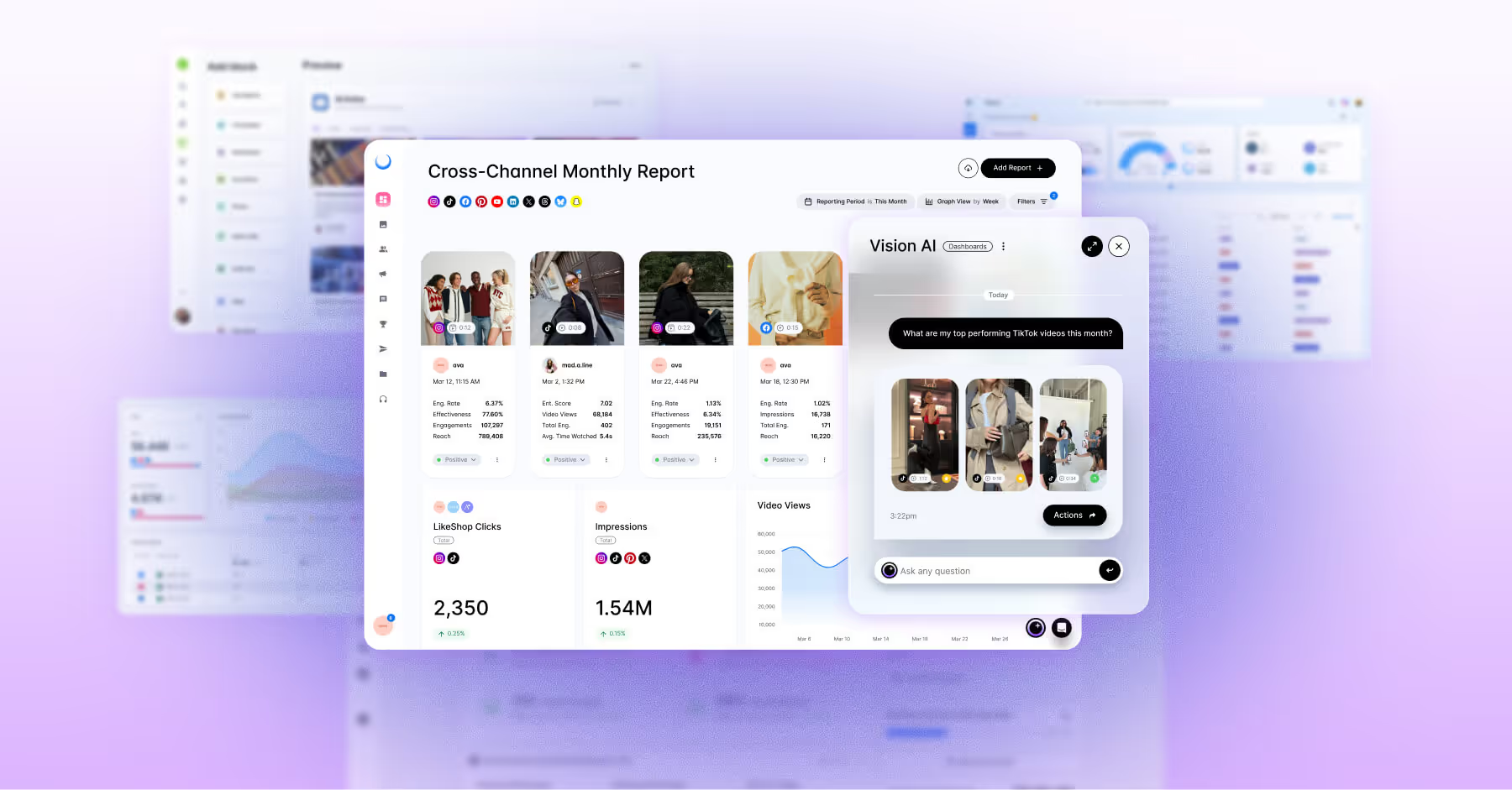
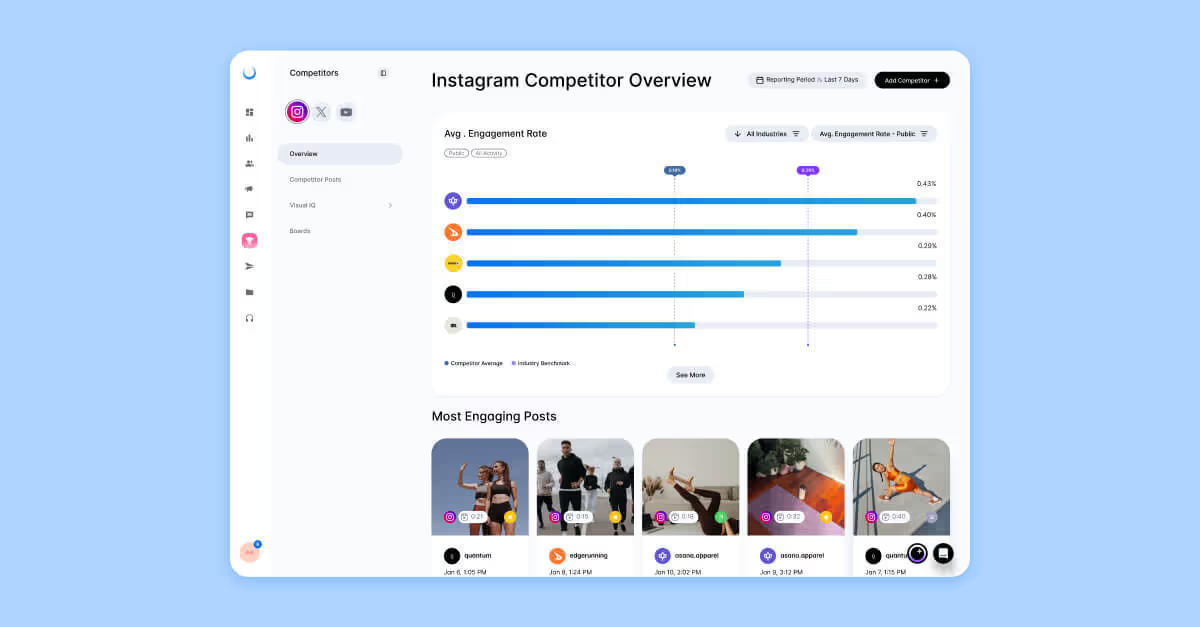
Dash Social’s Competitive Insights and Benchmarking offers in-depth competitive analysis tools for social media platforms including Instagram, Threads, TikTok, Pinterest, LinkedIn, and YouTube. With Dash Social, you can monitor competitor performance on key platforms and benchmark against industry averages to see how you perform relevant to your niche. Plus, its visually focused insights are perfect for digging into competitor content. Dash Social is well-suited for brands that rely on visual-first social media channels and are looking to stay ahead of the competition.
Pros:
- Summarize complex competitor reports with AI.
- Segment competitor content by topic or campaign.
- User-friendly interface.
Cons:
- Best for social, not as helpful for scouring the entire internet.
- Higher price point may be restrictive for brands with tight budgets.

2. Sprout Social - Social Media Focused
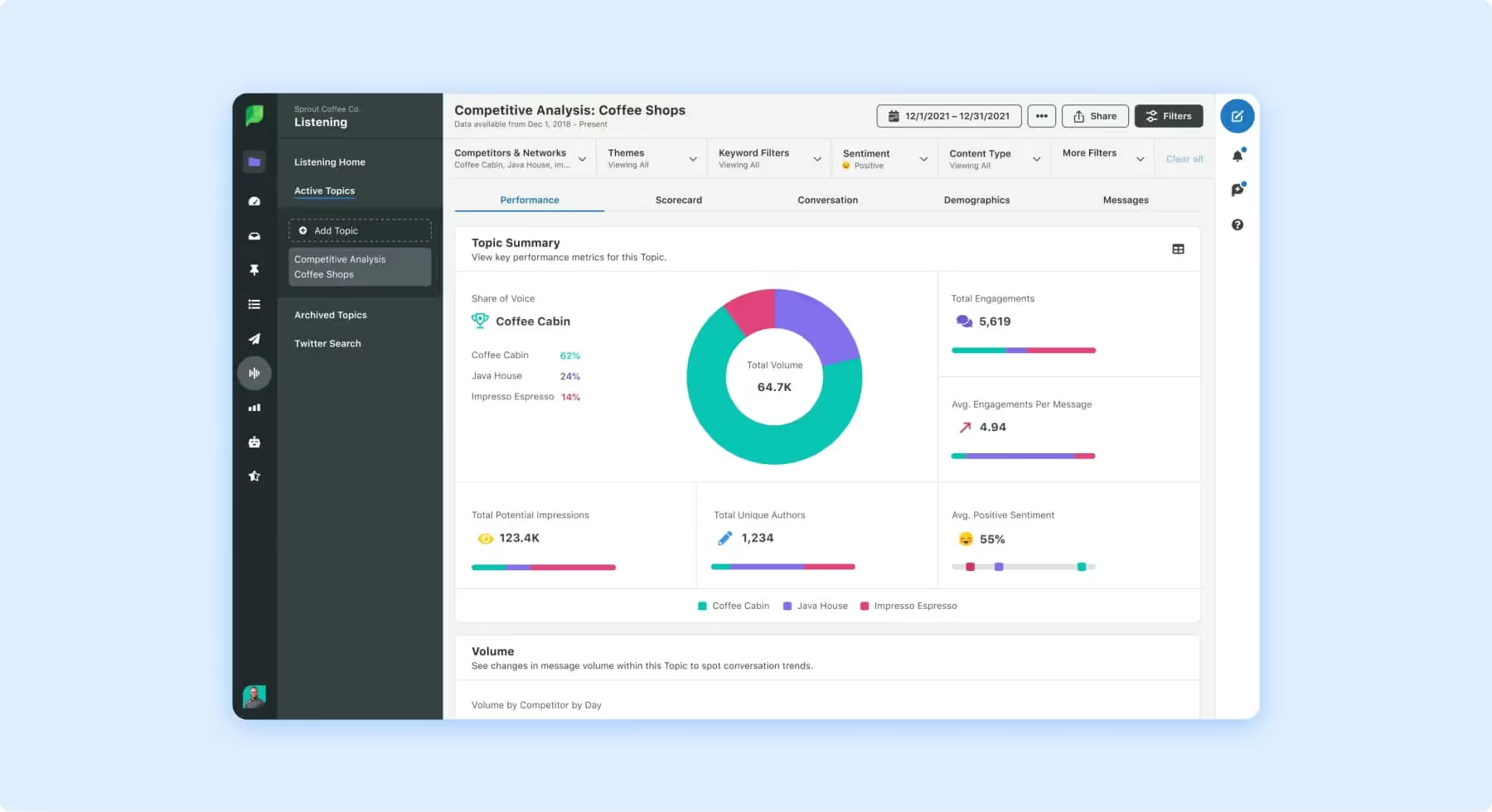
Sprout Social is an all-in-one social media management platform with solutions for publishing, reporting and community management. It also offers competitive benchmarking tools for Facebook, Instagram and X (Twitter) to easily measure your competitor’s social media activity and compare your average performance against competitors with insights into audience growth, engagement metrics and post volume. If you’re a social media manager who needs to report on competitors’ social media performance in the same place you’re managing your social media channels, Sprout Social is a good choice.
Pros:
- Displays a feed of competitor’s recent posts.
- Offers integrated publishing and reporting tools for social media.
Cons:
- Only offers surface-level post insights, with no way to dig deeper into content.
- Users say the customizability of reports is lacking.
- Relatively expensive with per-seat pricing and keyword monitoring only available as an add-on.
3. Socialinsider - Social Media Focused
Socialinsider is a social media competitor analysis tool built for marketing teams, agencies and brands that want a clearer view of how their performance stacks up against competitors. Rather than focusing only on your own analytics, Socialinsider helps you understand the broader competitive landscape by showing how your content performs compared to competitors and industry benchmarks.
The platform makes it easy to analyze engagement rates, posting frequency, follower growth and top-performing content across multiple competitors. This helps teams spot patterns, identify what is working in their industry and make more informed decisions about their social strategy. With data from multiple platforms pulled into one dashboard, Socialinsider is a strong option for teams that want faster, more streamlined competitive analysis.
Pros:
- Brings data from multiple platforms into one dashboard for faster analysis.
- Clean, intuitive interface makes insights easy to understand.
- Automated reporting saves time on manual data collection and formatting.
Cons:
- Not a full social media management platform.
- Customization can feel limited for teams that need highly specific reporting options.
.jpg)
4. Social Blade - Social Media Focused
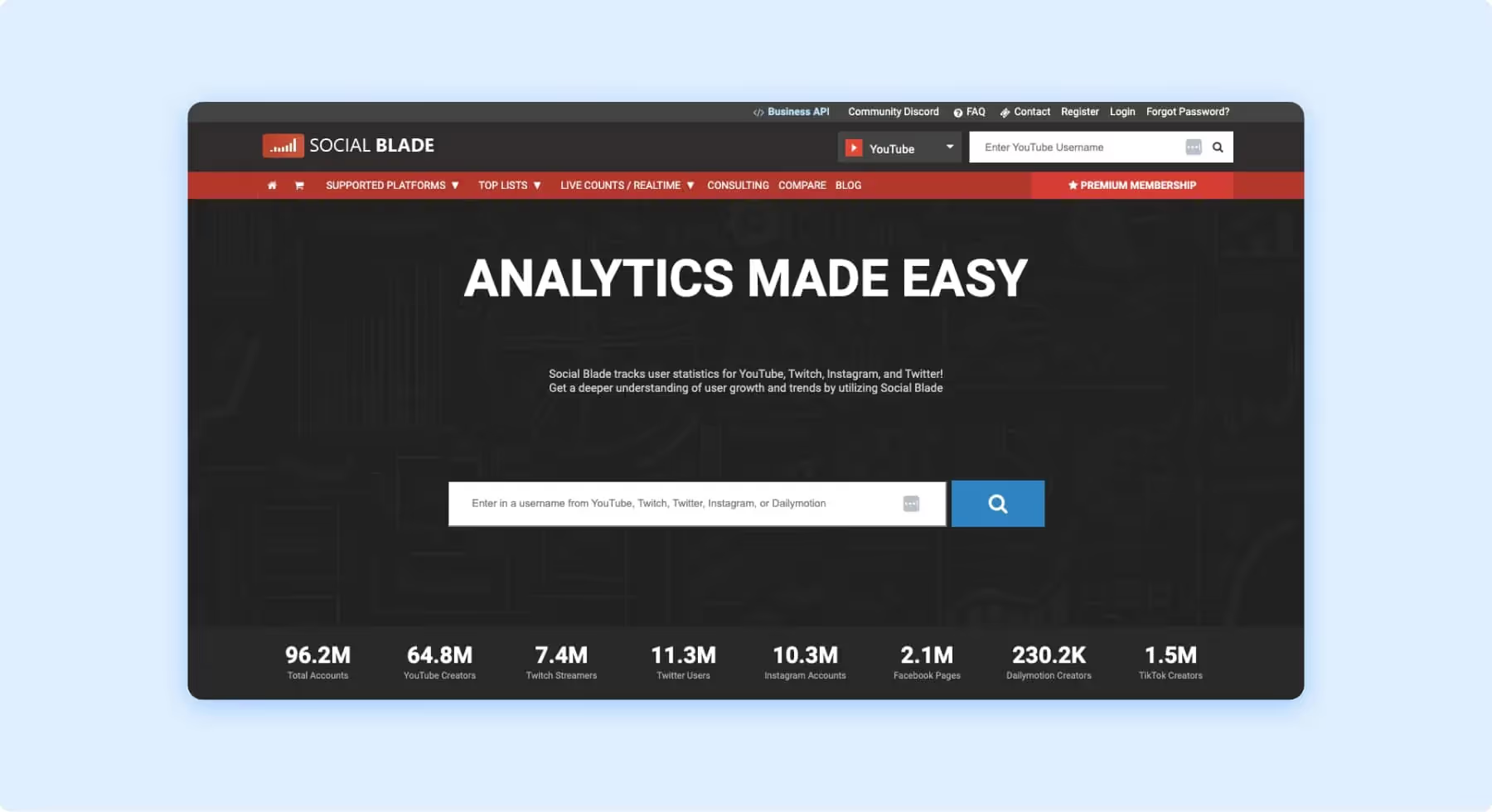
Social Blade is a public database of social media analytics that can be used for competitor tracking on YouTube, Twitch, Instagram and X (Twitter). It offers a free and easy way to perform quick high-level analyses of channel performance and the ability to compare multiple competitors against each other.
Although it lacks in-depth, private insights, Social Blade is a great option for social media marketers who are on a tight budget and need a quick glimpse into competitor performance.
Pros:
- Offers free access to basic, public insights.
- Tracks daily changes in performance.
- Includes a grading tool to measure a channel’s influence based on a variety of metrics.
Cons:
- Free access to their tool includes a high volume of ads.
- Only includes publicly available insights.
5. Brandwatch - Social Media Focused
Brandwatch is a competitor analysis and market research tool that allows you to benchmark your performance against competitors on key performance indicators such as audience growth, engagement and content performance across several social channels.
With its complex suite of features, Brandwatch is a solution designed primarily for enterprises that need deep insights into large datasets.
Pros:
- Discerns which types of competitor posts receive the most engagement.
- Measures share of voice against competitors.
- Ability to filter results based on industry and/or region.
Cons:
- Steep learning curve due to its complexity.
- Reports are less customizable.
- Higher cost can often be a barrier for smaller businesses.
6. Rival IQ - Social Media Focused
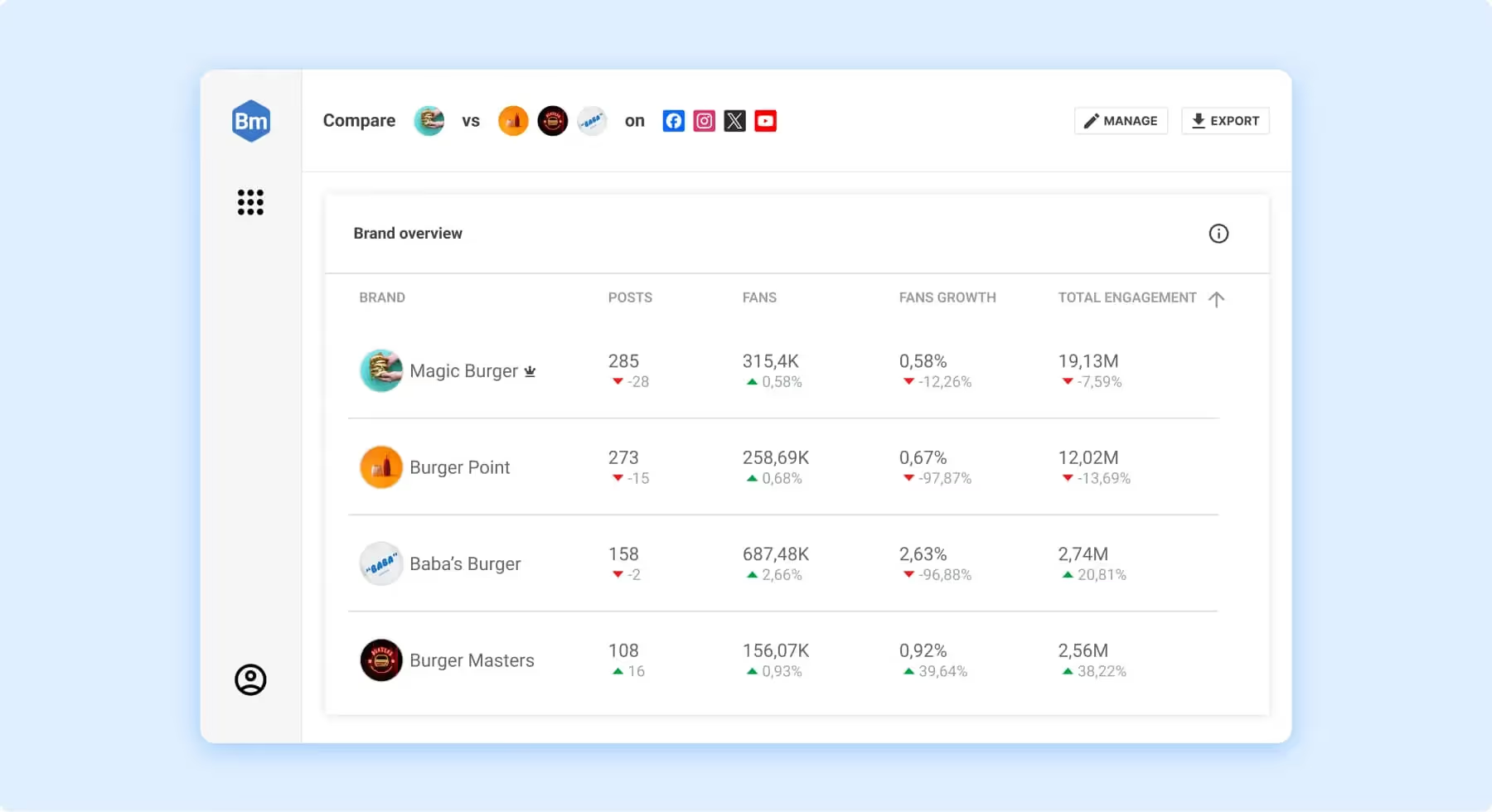
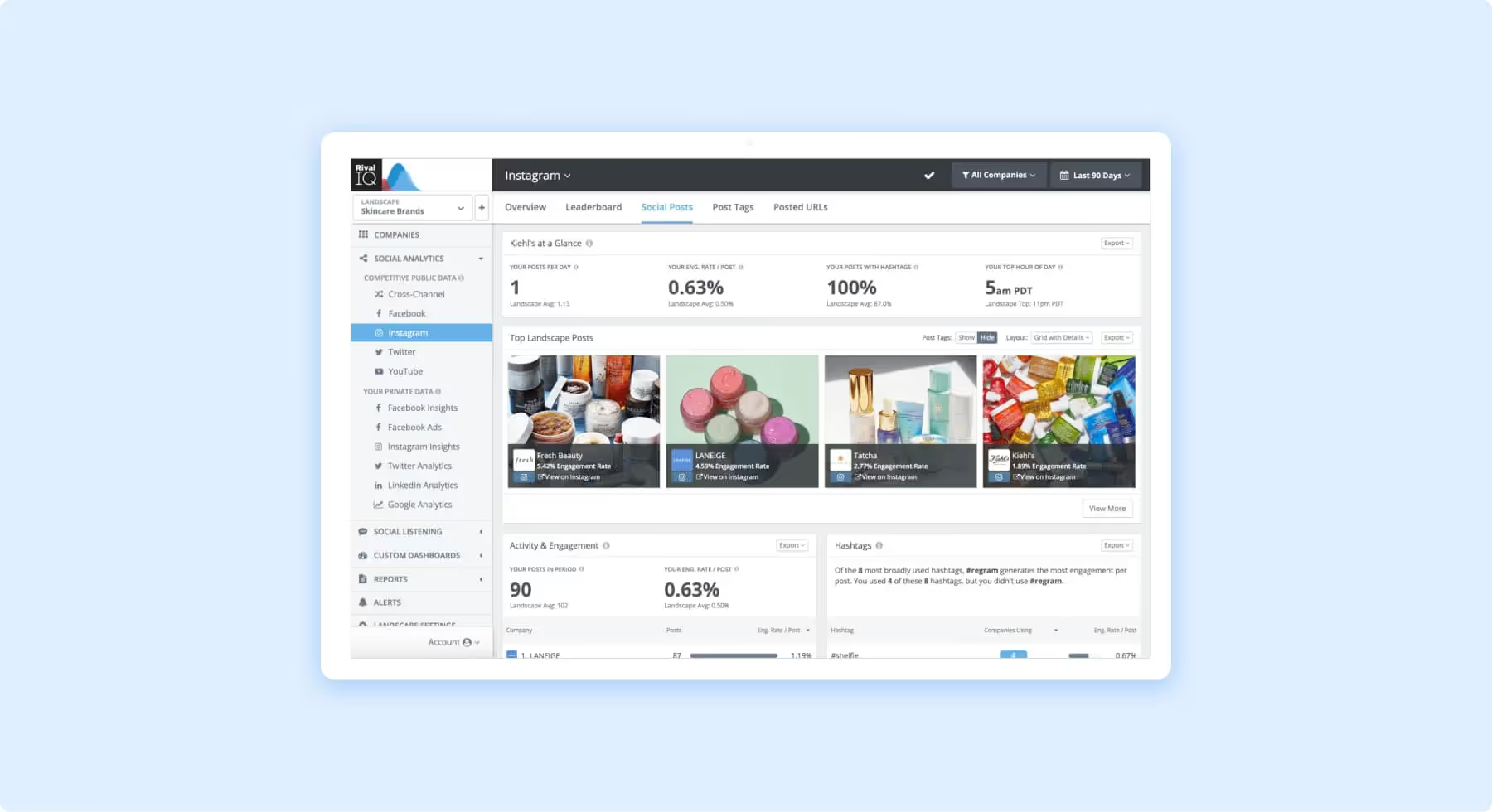
Rival IQ is a social media analytics tool that uses publicly available insights across a variety of channels for competitive research and benchmarking purposes. Getting started is relatively quick and simple, making it easy to start monitoring competitor activity and content.
Rival IQ is best suited for smaller teams looking to regularly monitor competitor social media performance.
Pros:
- Provides a clear, head-to-head social media performance comparison.
- Detects and flags if posts were likely promoted.
- Sends automatic alerts about significant changes in competitor performance.
Cons:
- Lacks customization options for metrics and report layouts.
- Only offers up to five user seats, even in their most expensive plan.
7. Talkwalker - Consumer Intelligence Focused
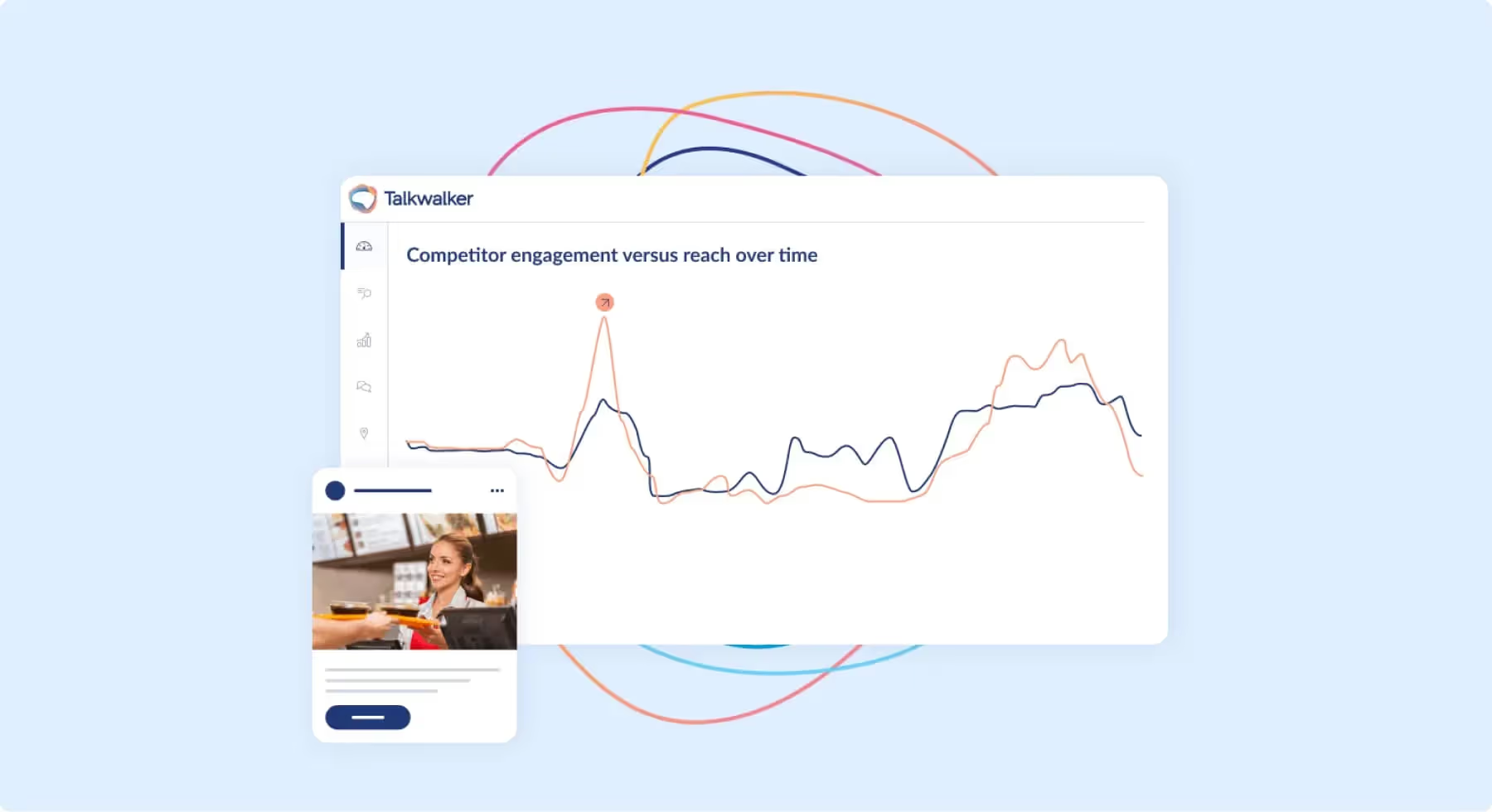
Talkwalker is a consumer intelligence tool with social listening, monitoring and benchmarking tools available across a vast range of data sources for comprehensive coverage. It monitors competitors’ mentions on social media channels and other online platforms to help you understand how your competitors are perceived.
Talkwalker’s consumer insights are a strong choice, best suited for enterprise brands that have the budget and resources to take full advantage of its in-depth suite of features.
Pros:
- Includes sentiment insights to understand how audiences feel about competitor content.
- Identifies trending topics within your industry.
- Spots potential PR crises impacting your competitors.
Cons:
- High cost, making it less accessible for smaller businesses.
- Can be complex to use without in-depth training.
8. BuzzSumo - Content Research Focused
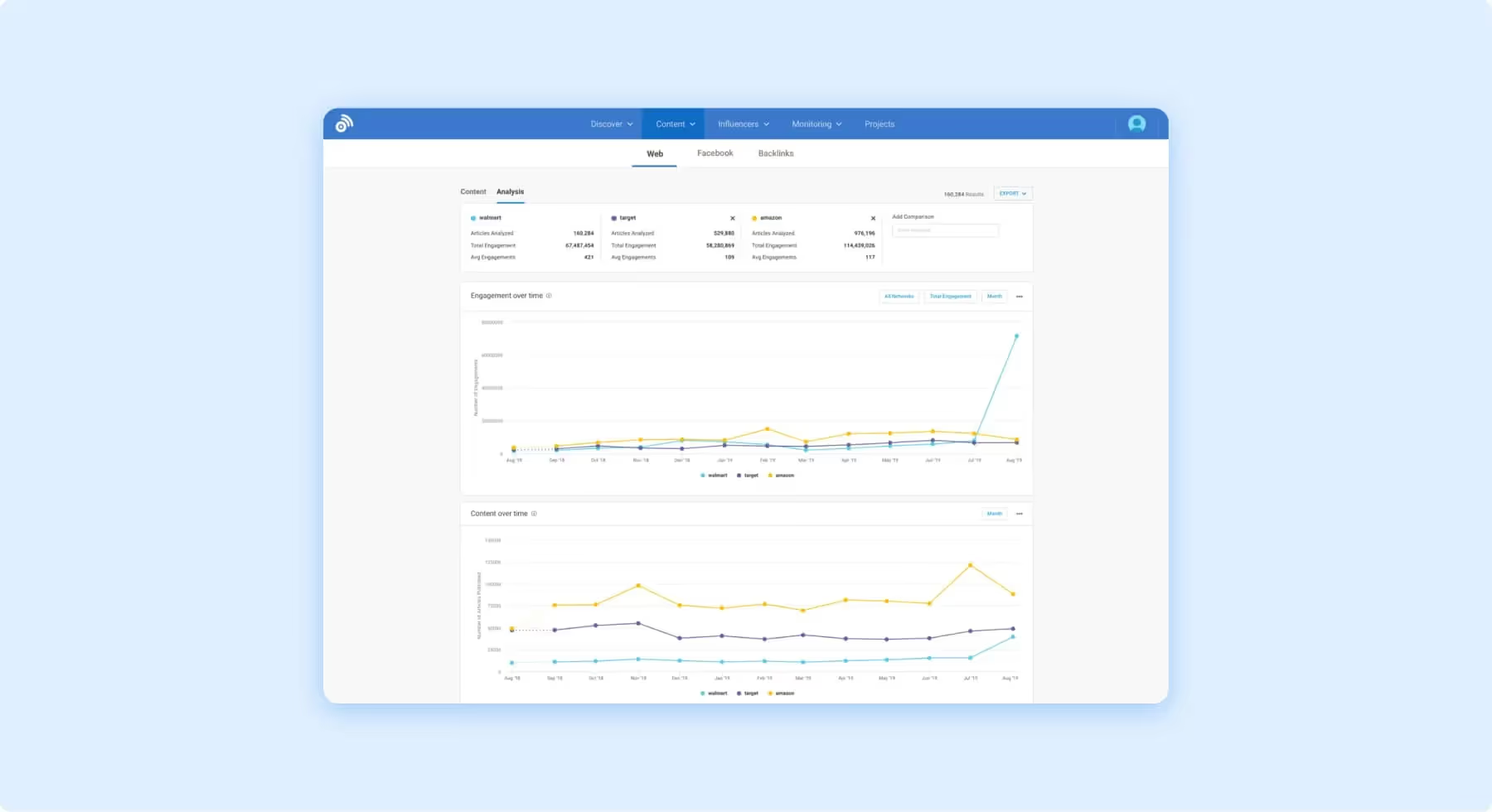
BuzzoSumo is a content research and analysis platform that offers tools like content discovery, influencer identification and media monitoring across multiple platforms, including web and social media. BuzzSumo makes it easy to find trending content among your competitors and analyze how well it’s engaging audiences on social media.
Although it's more content-focused than other, similar options out there, BuzzSumo is a great choice to stay on top of trends and discover new content ideas.
Pros:
- Helps you spot trending topics in your industry.
- Compares the performance of different competitor content types.
- Identifies potential influencers in your space.
Cons:
- Offers limited options for exporting data.
- Includes fewer social media channels.
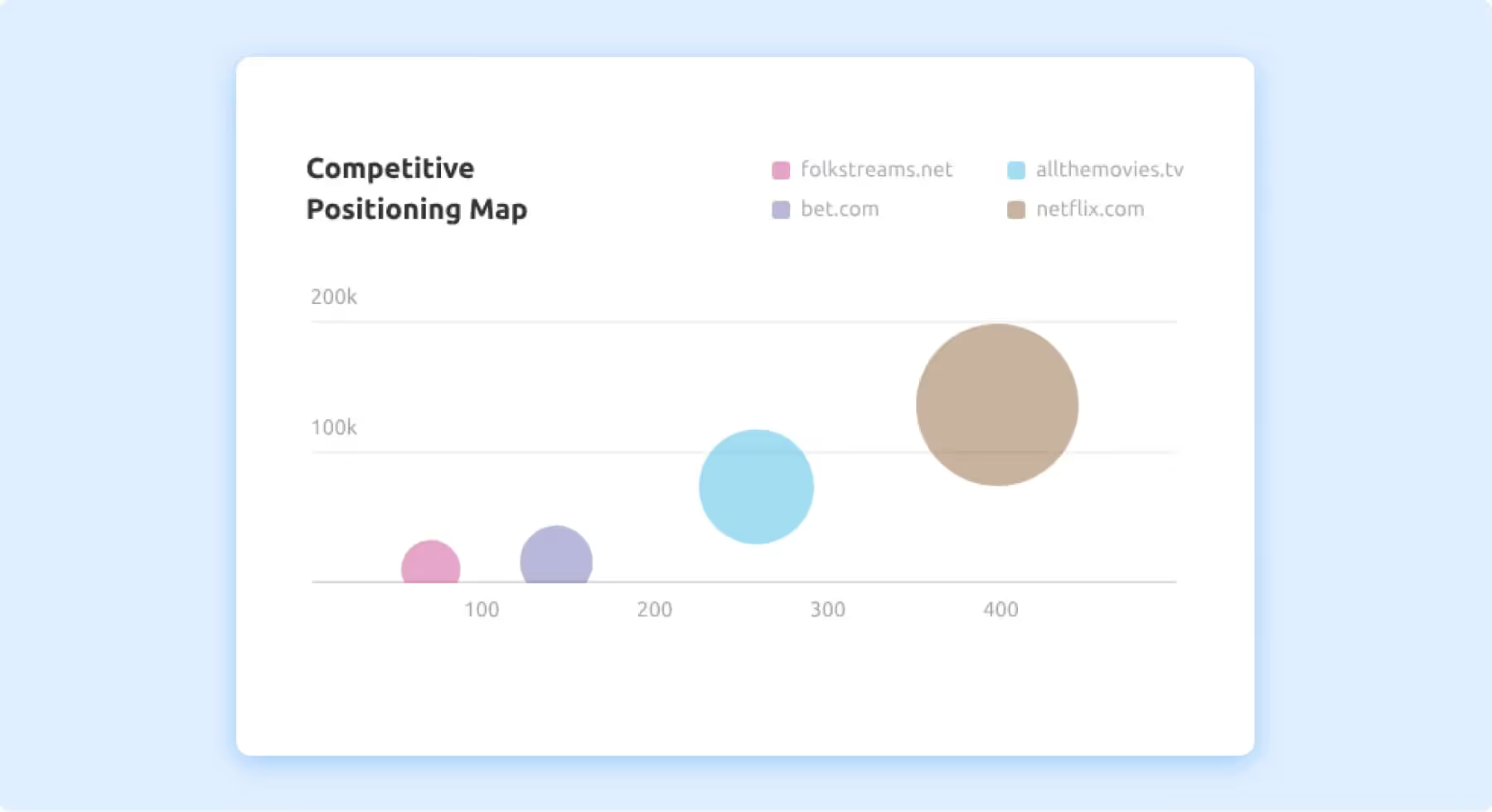
9. Semrush - SEO and Keyword Research Focused
Semrush is a popular SEO tool that also offers features for tracking competitor keywords, backlinks, site traffic and more. This is a valuable resource to advise your content strategy by helping you better understand competitor performance from a primarily SEO perspective.
Although Semrush can track social media activity, its strengths are best suited for content marketers looking to conduct competitive keyword and SEO analysis.
Pros:
- Monitors traffic to competitors’ web pages and identifies which keywords are driving traffic.
- Shows how competitors rank in search results.
Cons:
- The volume of data can be overwhelming and difficult to navigate.
- Lacks in-depth competitor insights for social media performance.
10. Crayon - Competitor Analysis Tools That Use AI
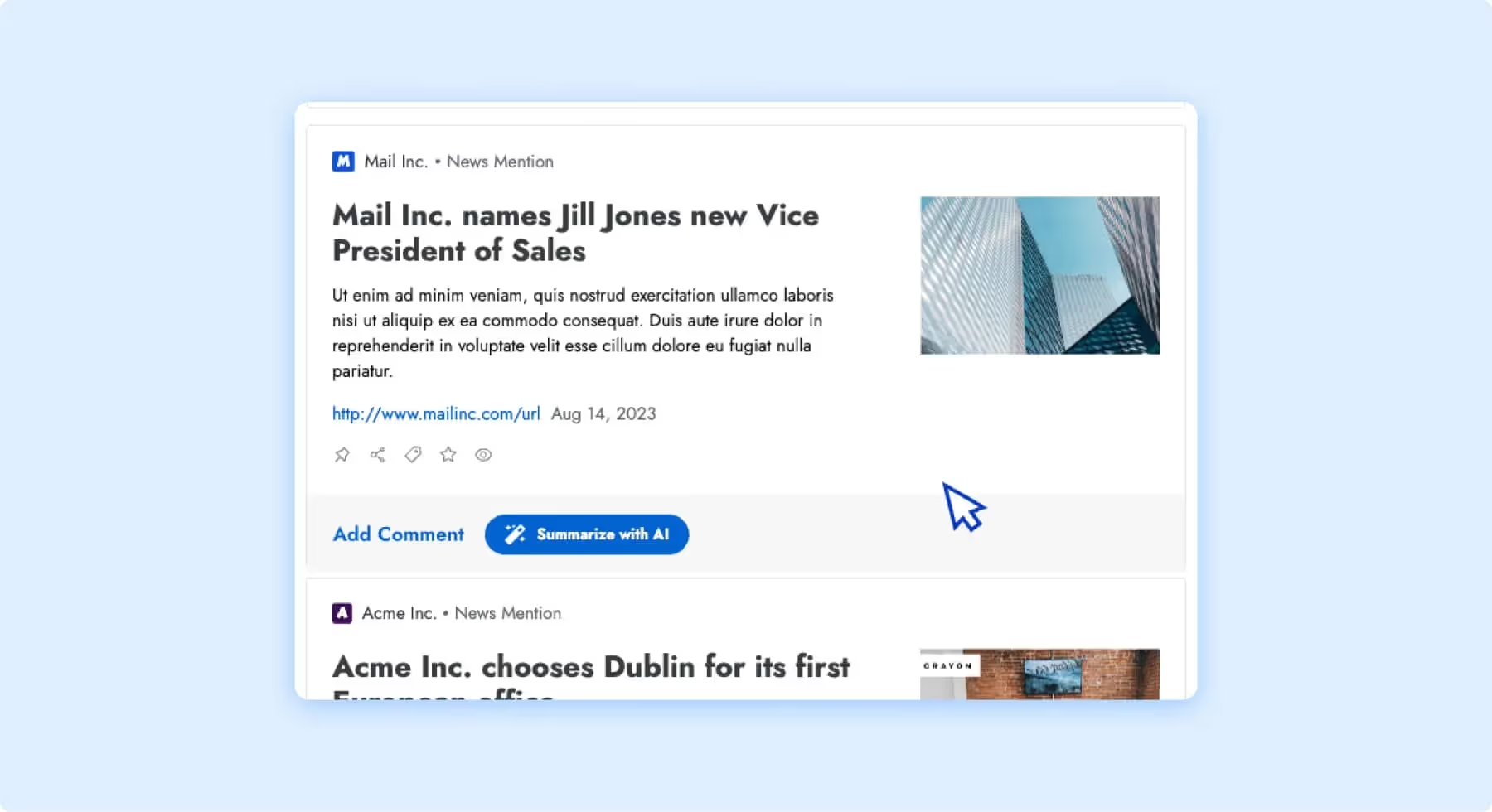
Crayon is a dedicated competitive intelligence platform that tracks your competitors’ complete online presence. It monitors and compiles real-time competitor activity across a wide variety of sources including website updates, job postings, press releases and more. Using Crayon, you can create customizable reports, dashboards and battle cards about your competitors.
Crayon includes significant depth and a robust feature set to help you stay on top of what your competitors are up to in the market, making it best suited for sales-focused competitive analysis.
Pros:
- Provides detailed insights into competitor pricing, products, and strategies.
- Offers ways to summarize insights using AI.
- Delivers customizable alerts straight to your email inbox.
Cons:
- Insights can contain a lot of noise.
- Getting started with the platform can be quite complex.
- Pricing varies based on the number of competitors you want to track.
Final Competitive Analysis Tools Thoughts
With so many competitor analysis tools available, the key isn’t to find the best platform, it’s to find the one that aligns with your goals.
Whether you’re focused on social media performance, content trends or deeper consumer insights, the right tool should help you move from data to decisions, faster.
Start by identifying what you want to learn from your competitors, then choose a solution that helps you uncover those insights consistently. Because in a landscape that moves this quickly, the brands that win are doing more than watching the competition, they’re learning from it and acting on it.
Competitor Analysis Tools FAQs
What's the best social media management platform for competitor analysis and benchmarking?
The best platform depends on how deep you want to go, but tools like Sprout Social and Brandwatch are often considered top options. If your focus is primarily social performance, a platform with dedicated benchmarking features (like Dash Social or Rival IQ) may be the best fit.
What's the best Software for social media benchmarking and competitor tracking?
For benchmarking and competitor tracking specifically, tools like Rival IQ, Sprout Social, and Dash Social are among the most popular. The right choice comes down to whether you want a dedicated benchmarking tool or a more comprehensive social media suite.
What's the best social media management tool for competitive benchmarking and industry benchmarks?
If you’re looking for both competitive benchmarking and industry benchmarks, all-in-one platforms like Dash Social, Sprout Social, and Brandwatch are strong options. Ultimately, the best tool is one that helps you understand why and what to do next.
What's the best social media management tool for competitive benchmarking and reporting?
The best tool is always going to depend on your goals, but a few top options stand out. Sprout Social is a popular all-in-one choice for benchmarking and polished reporting. Dash Social is ideal for content performance and visual benchmarking, especially on platforms like Instagram and TikTok. Hootsuite is a solid option for simpler reporting and day-to-day management.