5 Beauty Brands Winning on Pinterest in 2026
A look at the beauty brands using Pinterest to meet shoppers earlier, inspire action, and make product discovery feel natural.

Contents
Why Pinterest Matters for Beauty BrandsWhat the Best Beauty Brands on Pinterest Have in Common5 Beauty Brands Marketers Should Watch on PinterestPinterest Content Ideas Beauty Brands Can BorrowHow Beauty Brands Should Use Pinterest TrendsCommon Pinterest Mistakes Beauty Brands MakeHow To Measure Pinterest PerformanceBeauty Brands on Pinterest FAQs
Pinterest is still one of the most useful discovery platforms for beauty brands, but polished product imagery alone won’t drive lasting results. The brands that stand out understand how people actually use the platform to search for looks, save routines, compare products, and plan future purchases.
That is what makes Pinterest such a strong fit for beauty. Makeup, skincare, and accessories all lend themselves to visual discovery, evergreen search behavior, and saveable inspiration.
To see what that looks like in practice, here are five beauty brands worth watching on Pinterest, plus the strategy lessons marketers can take from each one.
Key Takeaways:
- Pinterest is a high-intent discovery platform for beauty brands, where users search, save, compare, and plan before they buy.
- The strongest beauty brands build content around search behavior, including looks, routines, occasions, product questions, and seasonal moments.
- Useful content performs better than polished product imagery alone. Tutorials, routine breakdowns, shade guides, and shopping-friendly inspiration give users a reason to save and return.
- Pinterest performance should be measured by more than traffic. Saves, clicks, content themes, board performance, and creative patterns all help marketers understand what is worth repeating.
Why Pinterest Matters for Beauty Brands
Beauty and Pinterest are a natural fit. People use Pinterest to plan looks, research products, compare routines, save seasonal inspiration, and explore purchase ideas before they’re ready to buy. That behavior sits much closer to consideration than passive scrolling, which gives beauty marketers a real opportunity to shape discovery early.
Pinterest also rewards content with a longer shelf life. A strong beauty tutorial, skincare routine, ingredient explainer, or seasonal trend board can continue surfacing over time, especially when it is built around clear search intent.
For beauty brands, that means Pinterest can support:
- Trend discovery.
- Evergreen traffic.
- Product education.
- Shopping inspiration.
- Campaign planning.
- Seasonal merchandising.
- Visual brand storytelling.
The brands winning here know pretty images are only the starting point. Their content helps users imagine the look, plan the routine, and take the next step.

What the Best Beauty Brands on Pinterest Have in Common
The strongest beauty brands on Pinterest tend to share a few similar habits.
First, they create content that is useful, not just branded. Instead of treating Pinterest as an image filing cabinet, they build around routines, results, categories, aesthetics, and occasions.
Second, they understand that Pinterest is search-led. Their content gets Pinned because it’s built to be found and answers specific needs like summer makeup ideas, glass skin inspiration, wedding-related looks, holiday gifting, and skincare layering references.
Third, they make products discoverable without making every Pin feel like an ad. The best beauty content on Pinterest often leads with inspiration first and product connection second.
Finally, they are consistent in their visual language. Their Pins feel natural to the platform while still looking unmistakably on-brand.
That combination is what makes beauty marketing on Pinterest work. The content feels useful enough to save and strong enough to remember.
5 Beauty Brands Marketers Should Watch on Pinterest
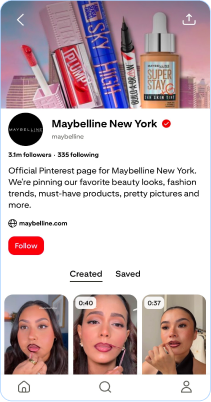
Maybelline, Build Around Everyday Search Intent
Maybelline’s Pinterest presence is a strong example of meeting beauty shoppers where they already are. Instead of relying only on campaign imagery, the brand organizes content around familiar search behaviors, including everyday makeup looks, beginner-friendly ideas, product-led inspiration, and trend-driven boards. Its “Get the Look” board series, for example, includes ideas tied to makeup tutorials, beginner makeup tips, products, and practical beauty skills everyone can develop and improve on.
Build Pinterest content around what your audience is already searching for, from specific looks and occasions to routines and product questions. Then make the next step obvious, whether that’s saving a Pin, exploring a product, or recreating the look.
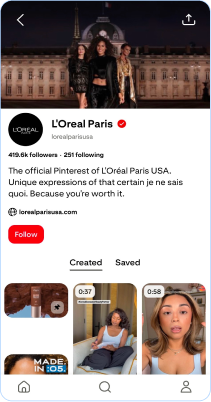
L’Oréal Paris, Make Education Easy to Save
L’Oréal Paris uses Pinterest to connect inspiration with education. Its various beauty tips, ideas, and trends boards bring together makeup looks, skincare products, hair care tips, nail designs, tutorials, and hacks, creating a clear destination for users who want more than product discovery.
That makes the brand a useful example for beauty marketers with large product portfolios. When you have makeup, skincare, hair care, and more under one brand, Pinterest can help organize the story. Strong boards make it easier for your target audience to find what they need, save what is useful, and return when they are ready to purchase.
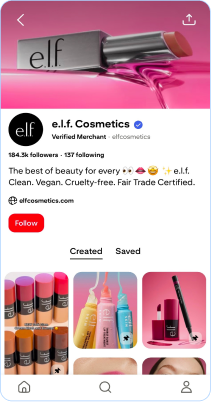
e.l.f. Cosmetics, Turn Product Discovery Into Culture
e.l.f. Cosmetics brings a platform-native feel to Pinterest. The brand’s boards lean into product storytelling, community content, and visual formats that feel closer to a user’s saved inspiration than a traditional product catalog. e.l.f. Collages board, for example, features product-focused content around skincare, makeup, and brightening serum themes in a way that feels highly savable.
For marketers, the takeaway is to make product discovery feel natural to the platform. Pinterest users are often looking for ideas before they are looking for a product page. Content that connects products to moods, routines, aesthetics, and creator-style visuals gives people a reason to save first and shop later.
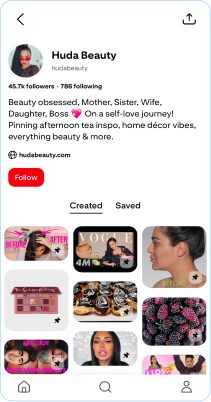
Huda Beauty, Expand the Brand World
Huda Beauty shows how a beauty brand can use Pinterest to build a broader visual world. Its profile includes beauty content alongside lifestyle, home, fashion, and aesthetic inspiration, which gives the brand more ways to connect with users beyond a single product moment.
That approach works especially well for brands with a strong founder, community, or lifestyle identity. Pinterest is built for aspiration and planning, so beauty brands can use it to show the world around their products. The goal is to create a visual universe that people want to save in their own lives.
House of Lashes, Own a Specific Beauty Moment
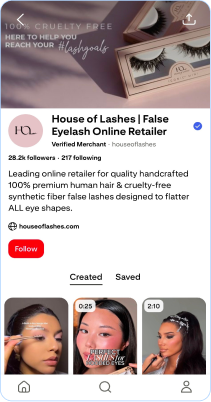
House of Lashes is a strong example of focus. Its Pinterest content is built around a clear category, with boards for lash looks, bridal makeup inspiration, holiday beauty, demi lashes, luxe lashes, and celebrity makeup.
That focus gives marketers a smart lesson. You do not need to cover every beauty category to make Pinterest work. A clear product niche can become a strength when content is organized around use cases, occasions, and outcomes. For House of Lashes, that means helping Pinners find the right lash look for everyday wear, special events, holidays, and full-glam moments.
Pinterest Content Ideas Beauty Brands Can Borrow
The best beauty brands on Pinterest are not all using the same playbook, but they often rely on similar content patterns. The strongest ideas usually have one thing in common: they help users do something.
For beauty marketers, the opportunity is to create content that feels useful at the exact moment someone is searching for it.
Routine-based content
Routine-based content gives users a reason to save now and come back later. Morning skincare, nighttime routines, pre-event prep, and category-specific regimens all work well because they fit how people already plan their beauty habits.
For skincare brands, this could look like step-by-step routines for dry skin, sensitive skin, acne-prone skin, or post-travel recovery. For makeup brands, it could be a five-minute everyday routine, a full-glam event routine, or a minimal makeup routine built around a specific product category.
The value is in making the routine feel clear and achievable. A Pin that shows product order, use case, timing, or expected result gives users more than inspiration. It gives them a plan.
Look-led inspiration
Pinterest is built for visual planning, which makes look-led content especially valuable for beauty brands. People search for makeup looks, hair goals, nail ideas, seasonal beauty, and aesthetic trends because they are trying to picture an outcome before they commit to it.
This content works best when it is specific. “Soft glam makeup” is stronger than “makeup inspiration.” “Summer blush look,” “brown lip combo,” “holiday party makeup,” or “copper hair color ideas” all connect more directly to search behavior.
Beauty brands can use this format to turn products into possibilities. Instead of only showing the product, show the finished look, the mood it creates, and the moment it fits into.
Product education
Product education helps move users from curiosity to confidence. Ingredient spotlights, texture explainers, finish comparisons, shade guides, and how-to content all help answer the questions that come up before someone buys.
This is especially useful for categories that require more consideration, like skincare, complexion products, hair color, fragrance, and beauty tools. Users may want to understand what an ingredient does, which finish is right for them, how two products compare, or where a product fits in their routine.
The strongest educational Pins keep things simple. Lead with one clear question or benefit, then give users an answer they can save, reference, and act on later.
Seasonal and occasion-based boards
Seasonal and occasion-based content gives beauty brands a natural reason to show up in planning moments. Holiday beauty, festival looks, bridal beauty, summer skin, vacation makeup, back-to-school routines, and gifting ideas all align with how people use Pinterest.
The key is to plan ahead. Pinterest users often search before the moment arrives, so beauty brands should build boards and Pins early enough to meet that demand. A holiday gifting board published in December is useful, but one built earlier can capture users while they are still researching, comparing, and saving.
This type of content also gives brands a practical way to refresh evergreen ideas. A hydrating skincare routine can become winter skin prep. A long-wear foundation can become wedding guest makeup. A lip product can become part of a holiday party look.
Shopping-friendly inspiration
The best commerce-adjacent beauty content does not feel like a catalog. It shows your audience how a product fits into a broader routine, style, or outcome.
Instead of leading with “shop this product,” beauty brands can lead with the problem, look, or moment the product supports. Think “products for a glossy skin routine,” “the lip combo for a soft glam look,” or “everything you need for summer-proof makeup.”
This approach makes shopping on Pinterest feel like the next natural step, rather than the whole point of the content. Users get the inspiration they came for, and the product connection feels helpful because it gives them a way to recreate the result.
For beauty brands investing in paid Pinterest content, the same rule applies. Strong Pinterest ads should lead with what the user is searching for, whether that’s a routine, a seasonal look, or a product comparison, then make the next step easy to act on.
How Beauty Brands Should Use Pinterest Trends
Beauty marketers should think about Pinterest trends as planning signals, not just reactive moments.
Pinterest is full of early-intent behavior. People often search before they buy, before they post, and before a trend fully peaks elsewhere. That makes the platform especially useful for beauty brands building content around:
- Seasonal looks.
- Gifting moments.
- Beauty routines.
- Aesthetic shifts.
- Hair and makeup inspiration.
- Product discovery journeys.
The important thing is not to chase every trend. The goal is to identify which themes connect to your brand and deserve repeatable creative treatment.
Common Pinterest Mistakes Beauty Brands Make
Many beauty brands still underuse Pinterest because they treat it as a secondary content channel. They republish campaign assets, upload polished product shots, and hope the content finds an audience.
But Pinterest works differently. People come to the platform with intent. They are searching, saving, comparing, and planning. Beauty brands that ignore that behavior miss the biggest opportunity Pinterest offers.
Here are some of the most common mistakes.
Posting without a search strategy
If your content is not aligned with what Pinners actually search for, it becomes harder to discover and save.
Beauty brands should think beyond product names and campaign language. A user may not search for a specific lipstick, serum, or hair tool right away. They are more likely to search for the look, concern, routine, or occasion behind it.
A Pinterest Business account can help brands bring more structure to that strategy, from content planning to performance tracking. Once the foundation is in place, Pins can be built around phrases like “summer makeup ideas,” “glowy skin routine,” “wedding guest makeup,” “skincare routine for dry skin,” or “holiday beauty gifts.”
Relying only on polished product images
Beautiful packaging helps, but Pinterest rewards usefulness. Users want ideas, looks, routines, and visual answers.
A clean product shot can support brand recognition, but it rarely gives the user enough context on its own. Beauty marketers should show what the product does, how it looks in use, where it fits in a routine, and what result it helps create.
For example, a moisturizer image becomes more valuable when it is part of a “winter skincare routine.” A lip product becomes more savable when it is shown as part of a “soft glam lip combo.” A hair product becomes easier to act on when it appears in a “frizz-control routine for humid weather.”
The goal is to make the product feel useful, not isolated.
Ignoring evergreen discovery
Pinterest content can keep working over time. Brands that only publish around campaign moments miss long-tail value.
A launch campaign may create a short-term spike, but evergreen beauty content can keep driving discovery after the campaign ends. Tutorials, routines, shade guides, ingredient explainers, and seasonal inspiration can stay relevant because users continue searching for those ideas.
Beauty brands should build a mix of timely and evergreen content. Trend-led Pins can capture current interest, while evergreen content gives the brand a stronger foundation for ongoing Pinterest algorithm discovery. A strong “how to layer skincare” Pin, “everyday makeup routine” board, or “bridal beauty inspiration” collection can keep supporting the brand long after the original post date.
Treating every Pin like a promotion
The strongest Pinterest content builds interest before it asks for action.
Users are not always ready to buy the first time they see a Pin. They may be collecting ideas, comparing options, or planning for a future event. If every Pin leads with a hard product push, the content can feel less helpful and easier to ignore.
Beauty brands should lead with the user’s goal. Help them find the right look, solve a concern, understand a product category, or plan a routine. Once the content creates value, the product connection feels natural.
A Pin about “summer-proof makeup” can still feature primer, setting spray, or long-wear foundation. The difference is that the content starts with the need, then shows the product as part of the answer.
Failing to measure creative patterns
If teams cannot see which content themes drive engagement, they end up guessing instead of improving.
Beauty marketers should look beyond top-level performance and ask what the winning Pins have in common. Are routine-led Pins driving more saves? Are ingredient explainers earning more clicks? Do seasonal boards outperform the always-on product content? Are certain formats, colors, categories, or visual styles showing up in the strongest results?
Those patterns matter because they show what users actually respond to. Once teams understand which creative directions are working, they can build stronger boards, repeat high-performing themes, and make smarter decisions about what to create next.
Pinterest should be a place where marketers learn what people are planning, saving, and ready to explore.

Try Dash Social Today
Less busywork, more growth. Find out how to save 10 hours each week with Dash Social.
Get a demoHow To Measure Pinterest Performance
Inspiration becomes more valuable when teams can connect it to performance. For beauty marketers, that means looking at Pinterest as both a discovery channel and a source of creative insight.
The most useful questions go beyond traffic alone:
- Which Pins earn the most engagement?
- Which content themes drive saves or clicks?
- Which seasonal topics are worth repeating?
- Which product stories support discovery best?
- Which boards or formats deserve more investment?
This is where a tool like Pinterest Insights becomes especially valuable. Instead of treating Pinterest as a side channel, teams can see what content is resonating, how performance changes over time, and which creative directions are worth scaling.
That matters because the difference between pretty content and effective content is not always obvious at first glance. A polished product shot might look strong, while a simple routine Pin could drive more saves, clicks, or long-term discovery. Pinterest analytics tools help teams understand the difference and build on what works.
The best beauty brands on Pinterest make it easy for their audience to discover ideas, imagine outcomes, and save content for later. That is the real opportunity for beauty marketers: building content that supports planning, discovery, and measurable engagement.
Once that content is live, the next step is knowing what is working. With the right Pinterest marketing strategy, teams can move from inspiration to insight and make smarter creative decisions over time.
Beauty Brands on Pinterest FAQs
Why is Pinterest important for beauty brands?
Pinterest is important for beauty brands because it supports visual discovery, product research, and save-first behavior. Users come to the platform looking for routines, looks, trends, and shopping inspiration, which makes it a strong fit for beauty marketing.
What types of Pins work best for beauty brands?
Tutorials, routine content, look-based inspiration, seasonal boards, ingredient explainers, and product discovery content tend to work well. The strongest Pins combine strong visuals with a clear user benefit.
How do beauty brands use Pinterest for product discovery?
Beauty brands use Pinterest to connect inspiration with purchase intent. That can include routine-led content, look-based guidance, gifting ideas, trend boards, and visually searchable product storytelling.
How often should beauty brands post on Pinterest?
Consistency matters more than volume alone. Beauty brands should publish often enough to support evergreen discovery, seasonal planning, and testing across multiple content themes.
What should beauty brands measure on Pinterest?
Teams should measure engagement, saves, clicks, top-performing content themes, board-level performance, and changes over time. They should also look at which visual directions and product stories drive the strongest results.
How can marketers tell which Pinterest content is working?
Marketers can evaluate which Pins and themes earn the most engagement, discovery, and repeat performance. A measurement tool like Pinterest Insights can help teams understand what is resonating and where to invest next.



.avif)