AI in Retail: How To Build a Smarter Retail Marketing Strategy
See how AI is changing marketing for retail brands, from personalization and social commerce to retail media, customer insights, and campaign optimization.
Contents
What Is AI in Retail?Why AI Is Becoming Central to Retail Marketing StrategyHow AI Supports a Stronger Retail Marketing StrategyRetail Marketing Tactics and Techniques AI Can ImproveAI in Retail Industry ExamplesRetail Marketing Opportunities Created by AIRisks and Challenges of AI in Retail MarketingHow To Build an AI-Powered Retail Marketing StrategyThe Future of AI in Retail MarketingRetail Marketing Strategy FAQs
AI is impossible for retail marketers to ignore. It’s helping brands identify trends, create content, personalize customer experiences, optimize campaigns, and make smarter decisions more efficiently. The result is stronger marketing performance across every channel.
But with so many AI tools entering the market every single day, it’s increasingly difficult for retail brands to distinguish buzzy new technology from real business value. In this guide, we'll explore how retail marketers are using AI today, where it's creating the biggest opportunities, and how leading brands are building AI-powered strategies.
Key Takeaways:
- AI helps retail marketers uncover customer insights, predict trends, personalize experiences, and optimize campaigns across channels.
- The most effective AI strategies are built on brand intelligence, giving AI the context it needs to create on-brand creative and deliver more relevant content.
- Retailers have the biggest opportunities to leverage AI for creative production, retail media, social commerce, forecasting, and reporting, but human oversight remains essential.
- Leading retailers like Walmart, Ulta Beauty, and Lowe's are using AI to improve product discovery, personalize shopping experiences, and connect digital and in-store journeys.
What Is AI in Retail?
AI in retail is the use of technologies like machine learning, predictive analytics, generative AI, computer vision, and automation to help brands make smarter decisions, work more efficiently, and create personalized customer experiences.
You'll find AI across almost every part of modern retail. It helps shoppers discover products, delivers personalized recommendations, forecasts demand, optimizes inventory, improves customer service, and creates more engaging in-store experiences.
For retail marketers, AI is becoming especially valuable because it can help teams move from reacting to results to anticipating them. Predictive analytics can spot emerging trends, uncover what your customers care about, and help teams understand what's likely to perform before a campaign goes live. Computer vision can analyze thousands of images and videos to identify the products, creators, and creative elements that drive engagement.
Generative AI is also changing how retailers create content. As retail media grows, brands need to refresh creative faster to avoid fatigue and maintain performance. AI helps teams create new assets with less manual work, but speed alone isn’t enough.
Without brand context, AI often produces generic content that needs heavy editing. Brand intelligence gives AI the context it needs, including your voice, audience, and historical performance, so that teams can create more relevant, campaign-ready content from the start.
When AI is grounded in your brand's unique voice, visual identity, and performance data, it can help generate campaign-ready creative that feels authentic, support community management without losing brand voice, and automate reporting so teams spend less time pulling data and more time acting on it.
As AI becomes a bigger part of retail marketing, success won't come from just adopting AI. It will come from using AI that helps your team move faster while staying true to your brand ethos.

Why AI Is Becoming Central to Retail Marketing Strategy
Retail marketing is moving faster than ever. Consumers are shopping across social platforms, ecommerce, marketplaces, apps, and physical stores, often moving between multiple channels before making a purchase. At the same time, customer expectations continue to rise. Shoppers expect personalized experiences, relevant recommendations, and timely responses wherever they interact with a brand.
For marketers, there is more data, more content to create, and more channels to manage than ever before. Teams are under growing pressure to improve return on ad spend (ROAS) and prove the impact of every marketing dollar.
This is why AI in retail marketing continues to grow rapidly. AI helps brands process large amounts of data, identify patterns, and act on insights more quickly than manual workflows allow. Instead of spending hours pulling reports or searching for trends, teams can focus on making decisions and executing campaigns.
AI is also becoming increasingly important as trend cycles accelerate. A product, creator, or conversation can gain momentum overnight, especially on social media. By the time traditional reporting surfaces an opportunity, it may already be gone. AI helps brands spot emerging trends earlier to understand what drives engagement and respond while the opportunity is still relevant.
The real value of AI is speed with context. It helps retail marketers see what’s working, understand why it’s working, and act while the opportunity is still fresh. That means faster creative decisions, more relevant customer engagement, and less time spent pulling reports that are already out of date.
How AI Supports a Stronger Retail Marketing Strategy
As AI continues to evolve, retailers have more opportunities to use it across their organization. It can support marketing, customer service, operations, and finance by helping teams reduce manual work, move faster, and make smarter decisions.
But just adopting AI shouldn’t be the goal. The real value comes from using it to save time, improve results, and remove the work that slows teams down.
To do so effectively, AI needs context. It needs to understand your brand, your audience, and historical performance. Without that understanding, AI produces generic outputs that require more editing, approvals, oversight, and work. When AI is built on brand intelligence, it becomes a tool that helps teams move faster while staying true to their brand.
Customer Insights and Audience Segmentation
AI helps retailers uncover patterns in customer behavior that would be time-consuming and tedious to spot manually. By analyzing data across channels, it can identify audience segments, purchase habits, content preferences, and customer sentiment trends.
These insights help marketers better understand who their customers are, what they care about, and how to deliver more relevant content.
Personalized Retail Digital Marketing
In today’s retail marketing landscape, customers expect personalized experiences at every touchpoint. AI helps retailers deliver by tailoring product recommendations, email campaigns, paid social ads, and loyalty offers based on customer behavior and historical performance.
This gives brands a stronger foundation for creating relevant creative that improves engagement and drives conversions across channels.
Social Listening and Trend Detection
Trends move faster than ever. AI-powered social listening enables retailers to identify emerging conversations, creator trends, and shifts in audience behavior before they ever become mainstream.
With Dash Social's Social Listening, teams can move beyond trend tracking and understand what to do next. By connecting real-time insights to your audience and performance data, marketers can act faster, make smarter decisions, and always know their next move.

Creative Intelligence and Content Performance
AI can help marketers understand which visuals, captions, formats, and products are most likely to resonate with their unique audience. Analyzing past performance uncovers patterns that can inform future creative decisions.
Brand-intelligent AI takes this a step further by understanding your brand guidelines, audience preferences, and performance history. This helps teams create content that's not only more likely to perform but also consistent with their brand.
Retail Media and Paid Campaign Optimization
AI helps retailers optimize retail media and paid campaigns through audience modeling, budget pacing, bid optimization, product feed management, and campaign testing.
As brands invest more in retail media, creative fatigue has become a growing challenge. Audiences need fresh content to stay engaged. Brand-intelligent AI helps marketers generate new creative variations at scale, making it easier to keep campaigns fresh, stay on-brand, and maintain performance.
Omnichannel Customer Experiences
Customers move between social media, e-commerce sites, email, retail media placements, loyalty programs, and physical stores throughout their buying journey.
AI helps connect these touchpoints, creating more consistent experiences across channels. When every interaction feels relevant and connected, brands can build stronger customer relationships and drive better results.
Retail Marketing Tactics and Techniques AI Can Improve
AI can support almost every part of a retail marketing strategy, from content creation and campaign optimization to customer insights and trend detection. The table below highlights some of the most common retail marketing tactics and how AI can help teams work more efficiently, make smarter decisions, and deliver better customer experiences.
AI in Retail Industry Examples
Many of today's leading retailers are making significant investments in AI and moving beyond experimentation to real-world use cases. AI-powered product recommendations, personalized loyalty offers, shopping assistants, and retail media optimization are already showing how the technology is shaping the future of retail.
The examples below highlight how retailers are putting AI into practice and where the industry is headed next.
Walmart: testing AI shopping assistants as a new product discovery channel
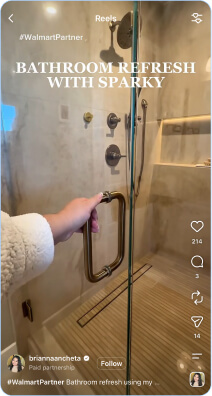
Walmart's AI shopping assistant, Sparky, offers a glimpse into the future of product discovery. Instead of searching for products with a few keywords, shoppers can describe what they’re looking for and get recommendations tailored to their specific needs.
These more conversational shopping experiences help retailers like Walmart better understand customer needs while making it easier for shoppers to discover products they may not have found through a traditional search.
Ulta Beauty: connecting AI search, personalization, and checkout
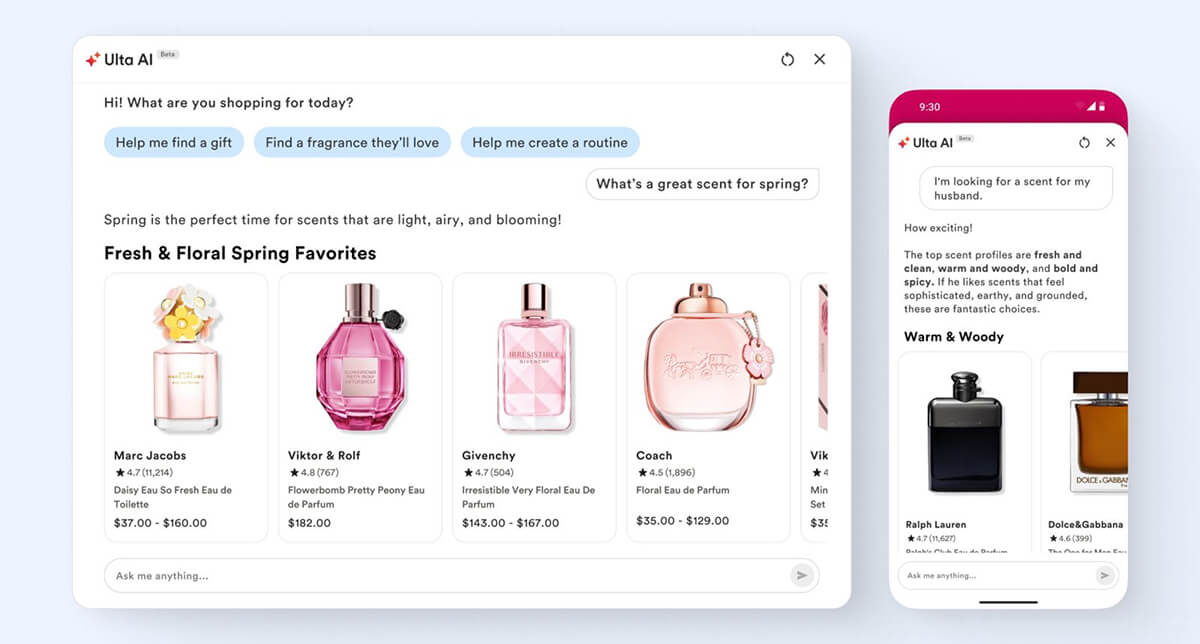
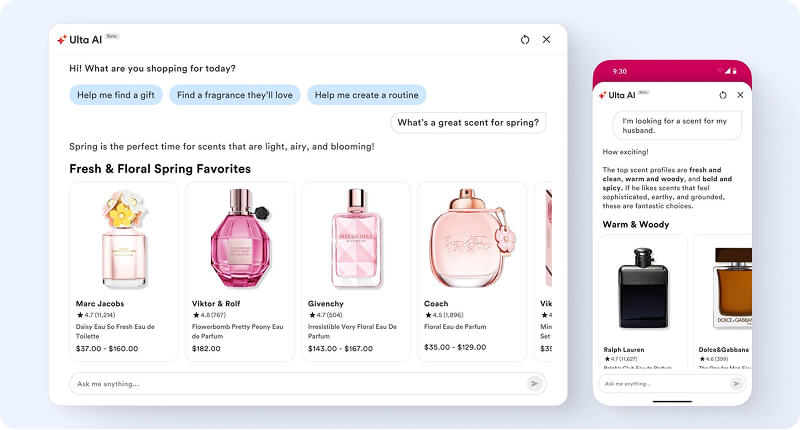
Ulta Beauty is preparing for a future where product discovery doesn't start on a retailer's website. Through its partnership with Google, shoppers can discover, compare, and purchase Ulta products directly in Google AI Mode and the Gemini app, and receive AI-powered recommendations on Ulta.com and in the Ulta Beauty app. Rather than limiting personalization to its own channels, Ulta is expanding its presence across the AI-powered experiences customers are already using.
Lowe’s: connecting online and in-store retail with AI-powered shopping tools
Lowe's is using AI to connect the online and in-store shopping experience for DIY customers. Its AI shopping assistant, Mylow, helps customers research projects, find products, and get personalized recommendations online, while store associates can use AI tools to provide more informed in-person support.
The goal isn't to replace the in-store experience, but to make it easier for customers to move between digital and physical channels. Whether someone is browsing ideas online, planning a home improvement project, or visiting a store for advice, Lowe's is creating a more connected and personalized shopping journey.

Retail Marketing Opportunities Created by AI
AI is helping retail marketers cut down on time-consuming work, giving teams more space to focus on the creative thinking and strategic decisions that drive growth. Tasks that once required hours of analysis can now happen in seconds, helping teams make better decisions and respond more quickly to changing consumer behavior.
Some of the biggest opportunities include faster campaign testing, more personalized customer experiences, and better use of first-party data. AI can also help brands produce creative more efficiently, strengthen social commerce strategies, improve forecasting for key shopping moments, and better understand what drives conversions.
Perhaps most importantly, AI is strengthening the link between content and social commerce. By understanding which content influences purchasing decisions, retailers can create more seamless shopping experiences and measure the impact of their marketing efforts more accurately.
Risks and Challenges of AI in Retail Marketing
While AI creates significant opportunities for retailers, it's not without risks. AI is only as effective as the data and context behind it. Poor data quality, disconnected systems, and limited visibility into customer behavior can lead to inaccurate insights, ineffective recommendations, and risk for your brand.
Retailers must also balance personalization with privacy. Customers expect relevant experiences, but overly personalized messaging can feel intrusive if it's not handled thoughtfully. Brand safety and brand integrity are also important considerations, particularly as more teams adopt generative AI. Without the right context, AI-generated content can be generic, inconsistent, or misaligned with a brand's voice and values.
If human oversight is skipped, AI can also introduce bias into recommendations, miss important context, or make decisions that don't reflect customer needs. This can create disconnected experiences that weaken trust rather than strengthen it.
The most successful retailers use AI to support their teams, not replace them. AI can help marketers reduce manual work, uncover insights, and scale content production, but it can’t replace brand judgment, customer empathy, or creative strategy. Those are still essential to building meaningful customer relationships and long-term brand loyalty.
How To Build an AI-Powered Retail Marketing Strategy
1. Define the business goal
Before investing in AI, identify the outcome you're trying to achieve. Whether the goal is increasing sales, driving loyalty, improving ROAS, boosting engagement, increasing in-store foot traffic, or improving customer retention, a clear objective will help you prioritize the right AI use cases and measure success with greater confidence.
2. Audit customer and content data
AI is only as valuable as the intelligence behind it. Start by evaluating the data sources available across your business, including social performance, e-commerce analytics, CRM data, retail media results, search insights, and product feeds. Understanding what data you have and where gaps exist will create a stronger foundation for AI-driven decision-making.
3. Choose high-impact AI use cases
Start with use cases that can deliver measurable value quickly. Personalization, creative testing, social listening, and campaign optimization are often good starting points because they can help teams improve performance without requiring major operational changes.
4. Connect AI insights to content planning
AI should help inform what content to create, where to publish it, and when to scale it. Brand-intelligent AI makes those recommendations more useful because it understands your brand, audience, and past performance. That context helps teams create content that feels on-brand, resonates with customers, and is easier to improve over time.
5. Measure performance and iterate
AI is not a set-it-and-forget-it solution. Track key metrics such as engagement, conversion rate, ROAS, customer acquisition cost (CAC), average order value (AOV), and retention. Use those insights to refine your strategy and improve results over time.
The Future of AI in Retail Marketing
AI is reshaping how consumers discover, evaluate, and buy products. Shoppers are using AI-powered search, conversational commerce and agentic shopping assistants to compare options, get recommendations, and make decisions with more confidence.
Social is becoming even more influential in that journey. Product discovery now happens through creators, communities, and personalized feeds, often before a shopper visits a retailer’s website or store. For retail marketers, that makes social insight more valuable than ever.
The brands best positioned for what’s next will understand what customers are buying and how they’re discovering products in the first place. They’ll be able to spot emerging trends early, create relevant content quickly, and connect social performance to real business outcomes.
That’s where brand intelligence becomes essential. As AI changes the customer journey, retailers need AI that understands their brand, audience, and performance history, so every insight, recommendation, and piece of content is grounded in what actually works.
With Dash Social, retail brands can uncover emerging trends, understand what resonates with their audience, create on-brand content at scale, and make faster, more confident decisions. As discovery becomes more fragmented, those insights will help brands stay ahead of changing consumer behavior and show up where their customers are already paying attention.

Retail Marketing Strategy FAQs
How can retailers use AI for social media marketing?
Retailers can use AI to identify trends, analyze audience behavior, generate content, and measure performance. Brand-intelligent AI takes this a step further by helping teams create content that aligns with their brand and audience.
What is AI in retail?
AI in retail is the use of technologies like machine learning, predictive analytics, generative AI, computer vision, and automation to help brands make smarter decisions, work more efficiently, and create personalized customer experiences.
How is AI used in retail marketing?
AI is used in retail marketing to generate content, uncover trends, predict performance, personalize customer experiences, and analyze large amounts of data.
How can AI improve a retail marketing strategy?
AI can help retailers deliver more personalized experiences, identify opportunities faster, and make more informed marketing decisions.
What are the biggest AI opportunities for retail brands?
Some of the biggest AI opportunities for retail brands include personalization, predictive analytics, creative generation, social listening, and retail media optimization. Brand-intelligent AI helps make these efforts more effective by providing brand-specific context.